
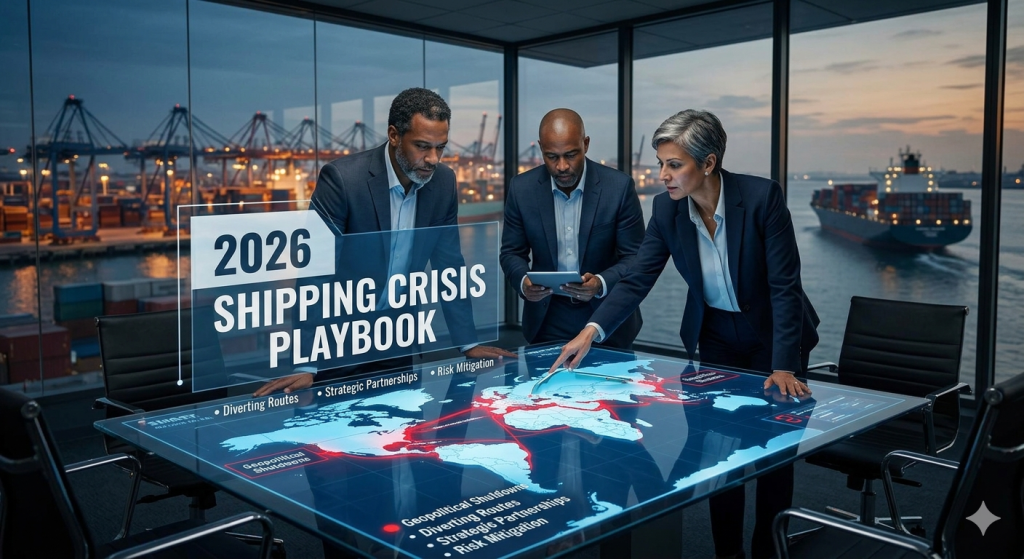
In the fractured maritime landscape of Q2 2026, the intersection of kinetic warfare, regional environmental taxation, and algorithmic trade routing has turned international supply chain management into a complex financial risk vector. For private equity allocations, sovereign wealth funds, and multinational corporations operating out of the USA, UK, Singapore, and the UAE, managing geopolitical trade disruptions is no longer an issue of basic cargo logistics; it is an active effort to prevent immediate capital destruction, coverage defaults, and regulatory enforcement actions.
The Economic Impact: Margin Compression, Debt Contagion, and Volatility Surcharges
The “Million-Dollar Problem” of 2026 maritime operations is the severe erosion of corporate balance sheets caused by unexpected trade reroutings and protracted port bottlenecks. When primary shipping lanes—such as the Bab-el-Mandeb Strait, the Strait of Hormuz, or the Panama Canal—suffer operational delays, the financial impact ripples through an enterprise’s entire capital framework.
Capital Stack Volatility and Financing Vulnerabilities
Most global trade infrastructure is built on complex leveraged financing models. When a fleet is forced to bypass standard shipping routes and divert around the Cape of Good Hope, the journey adds 10 to 14 days of transit time, instantly inflating daily operating expenses (OPEX) due to increased bunker fuel consumption, crew overtime, and higher maintenance requirements.
This unexpected increase in daily operational costs compresses the shipowner’s net operating income (NOI), threatening the financial parameters established in their lending covenants.
[Geopolitical Bottleneck / Forced Rerouting] —> [10-14 Day Transit Extension]
|
v
[OPEX Spike via Fuel & Crew Overtime]
|
v
[Covenant Breach: DSCR Compression]
|
+———————————+———————————+
| |
v v
[Senior Secured Debt Restructuring] [High-Yield Mezzanine Financing]
(Frozen Corporate Credit Lines) (Asset Yield & IRR Destruction)
In the current high-interest market of 2026, breaking a Debt Service Coverage Ratio (DSCR) or minimum liquidity covenant allows banks to invoke protection clauses. This can result in frozen credit lines or the forced restructuring of Senior Secured Debt & Mezzanine Financing facilities.
When principal lenders adjust their terms due to volatility, replacing that capital with alternative high-yield credit lines introduces significant basis point surcharges, lowering the internal rate of return (IRR) for institutional equity investors and institutional funds.
The True Cost of Extended Transit Delays
Beyond immediate capital strains, extended transit delays create compounding financial challenges across active commercial agreements:
| Operational Risk Vector | Direct Operational Root Cause | 2026 Balance Sheet Impact |
| Route Diversions | Bypassing volatile corridors, adding significant transit days. | Significant increase in daily fuel expenditures and unbudgeted vessel depreciation. |
| Port Demurrage Peaks | Port congestion and administrative custom holds at secondary hubs. | Substantial accumulation of daily port fees and cargo holding surcharges. |
| Contractual Failures | Missing strict laycan windows for high-value commodity deliveries. | Immediate contract cancellations, product degradation, and high Arbitration & Litigation Costs. |
When a vessel fails to meet its strict delivery windows due to maritime delays, buyers frequently reject the cargo or claim damages for market value fluctuations. Resolving these disputes over off-hire clauses and force majeure terms results in heavy, unrecoverable Arbitration & Litigation Costs that must be funded directly out of corporate working capital.
The 2026 Regulatory Enforcement Grid
The regulatory framework governing international trade lanes in 2026 connects physical vessel security with aggressive climate penalties and international trade sanctions. Regulatory bodies use advanced satellite tracking and automated compliance audits to remove traditional administrative grace periods.
+—————————————–+
| 2026 GEOPOLITICAL COMPLIANCE GRID |
+—————————————–+
| – JWLA-032 Expanded High-Risk Zones |
| – EU ETS Phase-In (Methane Surcharges) |
| – OFAC Sanctions & Dark Fleet Tracking |
+—————————————–+
|
v
+———————————————————–+
| Severe Operational Levies, Coverage Gaps, & Asset Seizure |
+———————————————————–+
I. The Geopolitical Underwriting Shift: The Realities of JWLA-032
The main driver of maritime insurance risk in 2026 is the updated framework established by the Joint War Committee (JWC) Circulars, specifically the strict enforcement of the JWLA-032 directive. This update has significantly expanded the active boundaries of listed high-risk geographic areas to account for modern drone capabilities and state-sponsored maritime interference.
Under JWLA-032, hull and cargo underwriters use satellite telemetry to track a vessel’s position and speed continuously. If a vessel enters a listed high-risk zone without providing advanced notification or paying the necessary premium surcharges, the primary insurance policies are suspended automatically.
If a vessel is attacked, detained, or damaged during an unverified transit window, underwriters hold the right to declare a breach of navigation warranties. This can result in the automatic denial of claims, voiding Asset Seizure & Hull War Risk coverages and leaving the institutional investor to absorb a total asset loss on the corporate balance sheet.
II. Algorithmic Navigation Risks and the Red Sea Liability Loop
To manage the security risks of high-conflict trade lanes, modern fleets utilize automated, AI-driven voyage optimization platforms. However, this technology introduces AI-driven navigation liability in the Red Sea and other volatile maritime corridors.
If an autonomous navigation platform alters a vessel’s heading or speed to avoid a localized security threat, the software may inadvertently steer the ship into unrecognized territorial waters or conflict with specific navigation instructions outlined in the charter party.
If the autonomous system’s choice causes a collision, grounding, or capture by hostile forces, establishing legal liability between the ship manager, the hardware manufacturer, and the AI software vendor remains highly complex, often leading to prolonged international arbitration.
[Autonomous AI System Reroutes Vessel] —> [Inadvertent Entry into Hostile Waters]
|
v
[Vessel Captured or Detained by Forces]
|
v
[Underwriter Denies Claims for Breach]
|
v
[Prolonged, Costly International Arbitration]
III. The Environmental Dimension: Carbon Accounting and Rerouting Penalties
In 2026, route diversions also carry significant environmental penalties. While bypassing a high-conflict canal protects physical cargo, the extended journey significantly increases the vessel’s total emissions profile under new regional reporting frameworks.
The full implementation of the EU ETS Phase-In costs for methane slip and carbon dioxide emissions dictates that any vessel trading into or out of European waters faces significant financial levies for incomplete combustion profiles, which are common when marine engines run continuously at high speeds to make up for lost time.
Failing to properly account for and report these extended transit emissions profiles creates an immediate ESG Disclosure Liability. This exposure can trigger automated divestment mandates from institutional green funds and invite enforcement actions from financial regulators for corporate misrepresentation.
IV. Supply Chain Vetting and OFAC Sanctions Compliance
International trade lanes in 2026 must also navigate strict geopolitical trade barriers. Under current enforcement rules, OFAC Sanctions Compliance applies directly to the sourcing of marine fuels, shipyard subcomponents, and corporate co-loading agreements.
Many traditional bunkering hubs and secondary shipping companies use complex corporate networks that hide business relationships with sanctioned entities. If a vessel takes on fuel or handles cargo connected to a restricted state or a blocked entity, the asset faces immediate administrative detention or asset freezing upon entering a Western port.
Underwriters treat any contact with sanctioned supply chains as a fundamental breach of policy terms, which can result in the automatic denial of claims and leave the asset vulnerable to regulatory Asset Seizure.
Strategic Recommendations: 3 Actionable Steps for the CEO
I. Institutionalize Multi-Source Telemetry and Independent Sourcing Audits
Cease relying on single-source voyage data or basic shipyard compliance statements. Mandate the implementation of independent, cloud-based tracking systems that verify your fleet’s positions against orbital satellite networks, protecting your operations from localized signal spoofing or digital interference.
Simultaneously, establish strict supply chain tracking systems that require all fuel suppliers, repair yards, and co-loading partners to provide verified, auditable documentation tracing all raw materials and subcomponents back to non-sanctioned origins. This proactive approach helps protect your Senior Secured Debt facilities from covenant defaults driven by unexpected compliance delays or administrative port holds.
II. Restructure Transit Cash Flow Risks via Parametric Insurance Hedges
Traditional hull and cargo insurance policies do not cover the indirect financial losses caused by prolonged trade route closures, canal bottlenecks, or geopolitical delays. CEOs should integrate specialized Parametric Insurance Premiums into their fleet operating budgets.
These parametric policies utilize objective data triggers—such as a documented closure of a major shipping lane or an administrative customs hold beyond a set number of days—to execute immediate cash payouts without requiring a lengthy claims adjustment process. This immediate liquidity helps keep your operations funded, ensuring you can meet your fixed financial obligations during unexpected supply chain disruptions.
III. Revise Standard Charter-Party and Commercial Sales Agreements
Instruct your legal counsel to update your standard charter-party and commercial sales agreements with specific risk-allocation clauses. Clearly define which party bears the financial burden of extended route diversions, increased bunker consumption, and regional emissions levies like the EU ETS.
Additionally, ensure your agreements contain clear language regarding AI-driven navigation liability, establishing clear financial responsibilities before a transit occurs. Setting these terms proactively reduces your exposure to unexpected legal liabilities and helps lower potential Arbitration & Litigation Costs.
Specialized Maritime Underwriting and Political Risk Advisory
Managing the operational and regulatory risks of modern global trade lanes requires a partner with deep risk management expertise. Navigating changing Joint War Committee (JWC) Circulars, complex carbon regulations, and strict international trade compliance demands specialized advisory support. Traditional, off-the-shelf marine policies are no longer adequate to protect high-value maritime investments from sudden regulatory interventions, environmental penalties, or Asset Seizure & Hull War Risk events.
We provide the Professional Advisory Services and Specialized Insurance Cover required to protect your fleet from these systemic disruptions. Whether you are restructuring financing across Senior Secured Debt & Mezzanine Financing or defending your firm against unexpected subrogation claims involving ESG Disclosure Liability, our underwriter-led risk solutions help ensure your fleet remains compliant, efficient, and fully insurable.
FAQ: 2026 Global Trade Lane Risk & Capital Allocation
Q: Why does a geopolitical trade route closure pose a direct threat to an investor’s Senior Secured Debt?
A: When a major shipping lane closes, vessels are forced onto longer alternative routes, which significantly increases daily fuel and operational costs. This unexpected increase in expenses compresses the operating company’s Net Operating Income (NOI), which can trigger immediate breaches of Debt Service Coverage Ratio (DSCR) covenants within lending agreements, allowing banks to accelerate debt repayment schedules.
Q: How does the JWLA-032 circular impact insurance coverage during an emergency route diversion?
A: The JWLA-032 directive outlines the precise boundaries of high-risk geographic zones. If a vessel enters or operates near these areas during a route diversion without providing advanced notification to underwriters and paying the required premium surcharges, their Asset Seizure & Hull War Risk coverage can be suspended automatically, leaving the asset owner exposed to total loss from kinetic threats.
Q: Can an enterprise use Parametric Insurance Premiums to cover the costs of supply chain delays?
A: Yes. Specialized parametric policies can be structured to trigger immediate cash payouts based on objective, data-driven parameters—such as a documented transit delay past a specific target date or the closure of a primary maritime choke point—providing immediate liquidity to help meet ongoing financial obligations.
Q: How do the EU ETS Phase-In costs for methane slip apply to vessels forced onto longer alternative routes?
A: Longer trade routes increase total fuel consumption and overall emissions profiles. If marine engines run at elevated speeds to make up for transit delays, incomplete combustion can increase methane slip. Under the 2026 rules, these emissions face significant financial levies, creating an unhedged operating expense and an increased ESG Disclosure Liability if omitted from corporate reports.
Q: What steps should a company take to maintain OFAC Sanctions Compliance when rerouting cargo?
A: Commercial agreements must include strict clauses requiring all bunkering partners, port agents, and freight forwarders to provide verified documentation tracing all fuels and materials back to non-sanctioned sources. Failure to maintain these records can lead to regulatory port detentions or administrative asset freezing.
6. Extended Analysis: Technical Execution and Fleet Security Strategy
The Technical Reality of Alternative Route Management
The financial performance of an ocean asset during an emergency route diversion is directly tied to its technical and operational efficiency. Prolonged ocean voyages increase the thermal and mechanical strain on main propulsion units and auxiliary boiler systems.
+—————————————————————–+
| THE PROPULSION STRAIN & EMISSIONS PENALTY |
+—————————————————————–+
| Continuous High-Speed Operation on Extended Alternative Routes |
| -> Increased Thermal Strain on Main Engines & Boiler Plants |
| -> Accelerated Cylinder Wear & Increased Maintenance Intervals |
| -> Incomplete Fuel Combustion & Elevated Exhaust Methane Slip |
| -> Increased Vulnerability to Port State Environmental Audits |
+—————————————————————–+
If a fleet operating manager increases vessel speeds to maintain scheduled arrival times on longer routes, the main engines operate near peak thermal thresholds for extended periods. This continuous high-load operation accelerates mechanical wear, increases maintenance requirements, and can lower fuel efficiency, driving up operating costs and elevating the vessel’s emissions profile.
Advanced Risk Management in Autonomous Navigation
When deploying automated voyage optimization systems to navigate around high-conflict zones, corporate risk management frameworks must account for the legal and operational parameters of algorithmic control.
+————————————————————+
| ALGORITHMIC ROUTING LIABILTY PATHWAY |
+————————————————————+
| AI System Dynamically Adjusts Heading to Avoid Hazard |
| -> Vessel Departs from Charter-Party Specified Route |
| -> Automated Entry into Restricted or Sensitive Waters |
| -> Triggering of Contractual Disputes over Off-Hire Time |
| -> Increased Exposure to Prolonged Legal Arbitration Costs|
+————————————————————+
Autonomous routing choices must be monitored continuously by qualified shore-based operations teams. If an automated system adjusts a vessel’s heading without human review, the ship can deviate from the routes specified in its insurance warranties. Ensuring your operational workflows include mandatory human-in-the-loop verification for any major route changes is essential to protecting your assets and minimizing your exposure to unexpected legal liabilities.
Conclusion: Building a Resilient Corporate Supply Chain
In the contemporary international trade environment, managing risk requires a comprehensive approach that connects technical fleet operations with proactive regulatory compliance and structured risk transfer. By utilizing independent satellite tracking, enforcing strict component and fuel sourcing standards, and securing advanced parametric hedges, you protect your business from sudden operational and financial disruptions.
Oitha Marine offers the underwriting expertise and specialized risk management solutions required to guide your portfolio through these changing technical and regulatory environments. Protect your capital, safeguard your returns, and build a compliant corporate infrastructure designed to withstand modern operational challenges.
Recent Comments