
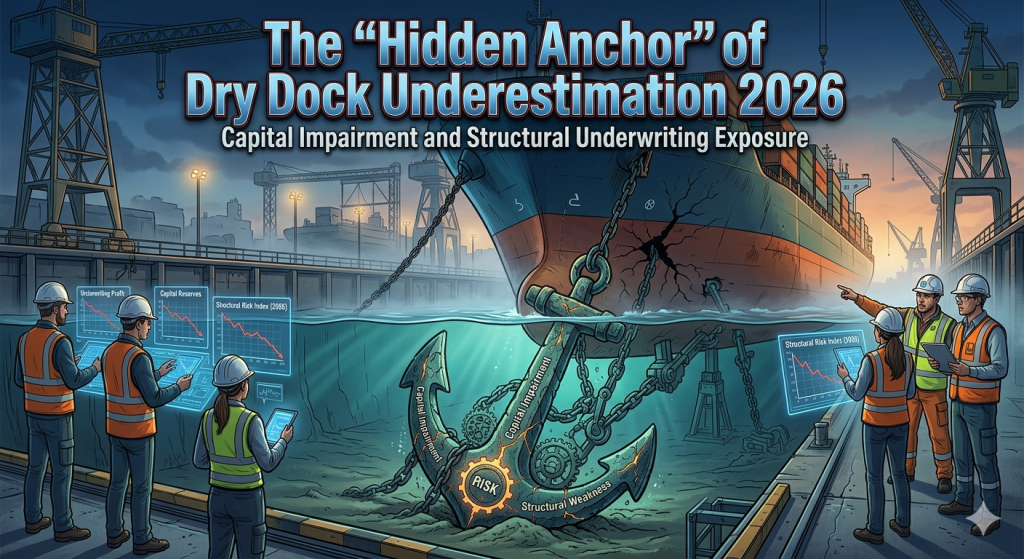
In the tightly constrained maritime economy of Q2 2026, underestimating the scope, technical requirements, and regulatory compliance parameters of a vessel’s dry dock cycle is no longer a simple operational miscalculation; it is a direct path to capital impairment. For institutional asset managers, private equity sponsors, and ship operators across the USA, UK, Singapore, and the UAE, failure to proactively align dry dock planning with evolving environmental mandates and geopolitical risk frameworks will trigger immediate technical loan defaults, severe hull coverage exclusions, and unrecoverable revenue losses.
Capital Erosion, Debt Covenants, and Off-Hire Cascades
The “Million-Dollar Problem” of 2026 dry dock management lies in the compounding financial penalties that occur when a vessel remains off-hire longer than budgeted. In a highly leveraged asset class, time out of service represents an immediate disruption to the predictability of corporate cash flows.
Debt Facility Vulnerability and Mezzanine Capital Triggering
Most blue-water commercial fleets operate under strict credit agreements. When a dry dock cycle is extended by even 10 to 14 days due to unforeseen structural degradation, steel procurement delays, or class certification backlogs, the vessel’s net operating income (NOI) for the quarter is severely compromised.
This drop in revenue frequently causes immediate breaches of the Debt Service Coverage Ratio (DSCR) and minimum liquidity covenants embedded within financial agreements. Once a covenant breach occurs, primary commercial lenders are increasingly quick to enforce protection clauses, placing limitations on capital or accelerating the repayment schedules of Senior Secured Debt & Mezzanine Financing facilities.
[Dry Dock Schedule Extension] —> [Immediate Cash Flow Drop]
|
v
[DSCR & Liquidity Covenant Breach]
|
+———————+———————+
| |
v v
[Senior Secured Debt Acceleration] [Emergency Mezzanine Surcharges]
(Capital Preservation Freeze) (Asset Yield / IRR Destruction)
Forcing an operator to secure emergency mezzanine lines or alternative high-yield credit structures adds significant basis point surcharges. This unexpected cost structure can severely diminish the asset’s internal rate of return (IRR), impairing capital preservation efforts for institutional equity investors.
Structural Off-Hire Cascades and Revenue Leakage
The financial strain of an underestimated dry dock cycle extends directly into active commercial relationships. When a vessel exceeds its shipyard stay, it fails to meet its delivery windows under active time charters.
If charterers exercise their right to terminate the contract due to missing a strict laycan window, the owner is forced to re-let the vessel into a volatile spot market. The resulting legal disputes over off-hire durations, unearned hire retainers, and consequential damages create heavy, unrecoverable Arbitration & Litigation Costs that must be paid directly out of working capital.
| Operational Risk Vector | Technical Root Cause | 2026 Cash Flow Impact |
| Extended Off-Hire | Unplanned hull blasting, coating failure, or tail-shaft alignment adjustments. | Immediate loss of daily charter-hire revenue and accumulation of shipyard holding fees. |
| Emissions Penalties | Inefficient hull hydrodynamics or un-upgraded auxiliary systems post-docking. | Accelerated carbon tax liabilities directly reducing net voyage margins. |
| Contractual Default | Missing strict laycan windows for high-value time charters. | Immediate contract cancellations and exposure to extensive Arbitration & Litigation Costs. |
The Compliance/Legal Framework: The 2026 Regulatory Enforcement Grid
The legal and regulatory framework governing dry dock operations in 2026 connects physical shipyard activities with regional climate penalties, trade restrictions, and strict maritime underwriting requirements.
+—————————————–+
| 2026 DRY DOCK COMPLIANCE PARAMETERS |
+—————————————–+
| – EU ETS Phase-In (Methane & CO2) |
| – JWLA-032 Navigation Warranties |
| – OFAC Material Sourcing Sanctions |
+—————————————–+
|
v
+———————————————————–+
| Severe Operational Levies, Coverage Gaps, & Asset Seizure |
+———————————————————–+
I. The Environmental Risk: EU ETS Infrastructure and Methane Upgrades
The primary regulatory driver of dry dock scope expansion in 2026 is the strict enforcement of regional environmental frameworks. The full integration of the EU ETS Phase-In costs for methane slip and carbon emissions dictates that any dry dock cycle that fails to explicitly modernize a vessel’s internal fuel delivery and auxiliary systems will result in significant future penalties.
If a dual-fuel vessel or an LNG carrier undergoes a standard hull cleaning but leaves its fuel injectors, boiler combustion chambers, or exhaust systems uncalibrated, the subsequent methane slip during service will face significant environmental levies.
Under current reporting rules, these unmanaged emissions profiles represent a direct ESG Disclosure Liability. This exposure can trigger automated divestment mandates from green-capital funds and expose corporate directors to personal liability for failing to properly disclose material climate risks.
II. Underwriting Frameworks: The Impact of JWLA-032
The global maritime insurance market has adjusted its underwriting guidelines to account for mechanical reliability. The Joint War Committee (JWC) Circulars, notably the active JWLA-032 framework, place strict operational obligations on shipowners.
Under JWLA-032, underwriters utilize satellite telemetry to monitor fleet performance within listed high-risk geographic areas. If a vessel suffers a mechanical failure or propulsion slowdown within a high-risk zone, and a subsequent investigation shows the root cause was deferred hull maintenance or an abbreviated dry dock cycle, underwriters hold the right to declare a breach of seaworthiness warranties.
This can result in the immediate voidance of Asset Seizure & Hull War Risk policies, leaving the asset owner and its institutional backers completely unhedged against total asset loss from kinetic threats.
[Deferred Dry Dock Maintenance] —> [Propulsion Slowdown / Failure in Listed Zone]
|
v
[Satellite Telemetry Underwriter Audit]
|
v
[Breach of Seaworthiness / Policy Voided]
|
v
[Unhedged Exposure to Hull War Risk Losses]
III. The Automated Operational Risk: AI Navigation Liability
To balance strict carbon caps with optimal voyage speeds, modern ship operators rely heavily on automated, algorithmic voyage optimization platforms. However, this technology introduces AI-driven navigation liability in the Red Sea and other high-conflict maritime lanes.
If an autonomous navigation system automatically alters a vessel’s heading or increases its speed to avoid a localized security hazard, it may force the main engine to operate at peak thermal thresholds. If the vessel’s hull and cooling systems were not fully overhauled during its last dry dock, this sudden operational strain can trigger emergency shutdowns.
When an algorithmic routing command causes a critical mechanical failure within a high-risk transit corridor, determining liability between the ship manager, the hardware manufacturer, and the AI software vendor remains highly complex, often leading to prolonged international arbitration.
IV. Geopolitical Sourcing Contagion: OFAC Compliance in the Shipyard
Dry dock operations in 2026 must also navigate strict geopolitical trade barriers. Under current enforcement rules, OFAC Sanctions Compliance applies directly to the sourcing of marine raw materials, hull coatings, specialized propeller alloys, and replacement machinery parts.
Many global repair yards rely on intermediate supply chains that source raw metals or subcomponents from sanctioned regions. If a shipyard installs replacement parts containing materials originating from a restricted state, the vessel faces immediate administrative detention or asset freezing upon entering a Western port.
Underwriters treat any contact with sanctioned supply chains as a fundamental breach of contract terms, which can result in the automatic denial of claims and leave the asset vulnerable to regulatory Asset Seizure.
Strategic Recommendations: 3 Actionable Steps for the CEO
I. Institutionalize Pre-Dry Dock Digital Twin Simulations and Hull Scans
Cease relying on legacy shipyard quotes and historical maintenance logs to determine your dry dock budgets. Mandate the implementation of high-resolution robotic hull scans and digital twin modeling at least six months prior to the vessel entering dry dock.
By utilizing predictive analytics to accurately map internal structural corrosion and steel replacement needs before arrival, your technical teams can secure necessary materials well in advance. This proactive approach helps protect your Senior Secured Debt facilities from covenant defaults driven by unexpected shipyard extensions.
II. Restructure Yard Overrun Risks via Parametric Hedges
Traditional hull and machinery insurance policies do not cover the indirect financial losses caused by extended dry dock periods or contractual disputes with a shipyard. CEOs should integrate specialized Parametric Insurance Premiums into their fleet operating budgets.
These parametric policies utilize objective data triggers—such as a documented shipyard delay beyond a set number of days or an administrative hold following an emissions audit—to execute immediate cash payouts without a lengthy claims adjustment process. This immediate liquidity helps keep your operations funded, ensuring you can meet your ongoing lease and debt obligations during unexpected vessel down-time.
III. Implement Strict Sourcing Safeguards in Repair Agreements
When negotiating dry dock contracts, ensure your legal teams insert explicit, multi-tier indemnification clauses regarding component origins. Require the shipyard to provide verified, auditable documentation tracing all steel, valves, and equipment back to non-sanctioned mills.
Explicitly allocate all costs associated with potential OFAC Sanctions Compliance violations, including port delays and administrative holds, directly to the repair yard. This contractual protection reduces your exposure to unexpected legal liabilities and helps lower potential Arbitration & Litigation Costs.
Specialized Underwriting and Infrastructure Risk Advisory
Managing the operational and regulatory risks of modern dry dock cycles requires a partner with deep risk management expertise. Navigating changing Joint War Committee (JWC) Circulars, complex emissions rules, and strict international trade compliance demands specialized advisory support. Traditional, off-the-shelf marine policies are no longer adequate to protect high-value maritime investments from sudden regulatory interventions, environmental penalties, or Asset Seizure & Hull War Risk events.
We provide the Professional Advisory Services and Specialized Insurance Cover required to protect your fleet from these systemic disruptions. Whether you are restructuring financing across Senior Secured Debt & Mezzanine Financing or defending your firm against unexpected subrogation claims involving ESG Disclosure Liability, our underwriter-led risk solutions help ensure your fleet remains compliant, efficient, and fully insurable.
FAQ: 2026 Dry Dock Optimizations and Asset Protection
Q: Why does an underestimated dry dock schedule pose a direct threat to a shipowner’s Senior Secured Debt?
A: When a vessel’s dry dock stay is extended, it remains off-hire and ceases to generate revenue. This revenue drop compresses the company’s Net Operating Income (NOI), which can trigger immediate breaches of Debt Service Coverage Ratio (DSCR) covenants within lending agreements, allowing banks to accelerate debt repayment schedules.
Q: How does the JWLA-032 circular impact insurance coverage following a dry dock cycle?
A: The JWLA-032 protocol allows hull and war-risk underwriters to evaluate a vessel’s maintenance history if a breakdown occurs within a listed high-risk zone. If the underwriting investigation reveals that the propulsion or mechanical failure resulted from deferred dry dock maintenance, insurers can deny the claim, leaving the owner exposed to total asset loss.
Q: Can a maritime asset manager use Parametric Insurance Premiums to mitigate shipyard delay risks?
A: Yes. Specialized parametric policies can be structured to trigger immediate cash payouts based on objective, data-driven parameters—such as a vessel remaining in dry dock past a specific target date—providing immediate liquidity to help meet fixed financial obligations.
Q: How do the EU ETS Phase-In costs for methane slip influence dry dock planning in 2026?
A: Shipowners must use their dry dock cycles to upgrade and calibrate auxiliary boiler burners and fuel systems. Failing to address incomplete combustion during maintenance will result in significant emissions penalties once the vessel enters service, creating an unhedged operating expense and a reportable ESG Disclosure Liability.
Q: What steps should a shipping firm take to ensure OFAC Sanctions Compliance during hull repairs?
A: Repair contracts must include strict clauses requiring the shipyard to provide verified documentation tracing all steel alloys and components back to non-sanctioned manufacturers. Failure to secure these records can lead to regulatory port holds or administrative asset freezing.
Extended Analysis: Technical Execution and Capital Allocation Strategy
The Structural Reality of Hull Degradation and Biofouling Control
The financial performance of a deep-sea asset during its operational cycle is directly tied to the technical choices made within the dry dock. Hull micro-fouling and macro-fouling increase frictional resistance, requiring additional propulsion power to maintain a constant speed.
+—————————————————————–+
| THE FUEL CONSUMPTION & EMISSIONS PENALTY |
+—————————————————————–+
| Degraded Hull Coating / Macro-Fouling Accumulation |
| -> Increased Frictional Resistance (Drag) |
| -> Main Propulsion Demands Higher Shaft Power Output |
| -> Elevated Daily Fuel Consumption & CO2/Methane Emissions |
| -> Immediate Acceleration of Regional Environmental Levies |
+—————————————————————–+
If a dry dock scope is abbreviated to save on short-term maintenance costs, the application of lower-grade antifouling coatings can result in significant long-term expenses. Increased hull friction raises daily fuel consumption, which drives up operational costs and elevates the vessel’s emissions profile under regional reporting frameworks.
Advanced Quality Control in Marine Engineering Overhauls
During a major dry dock cycle, specialized marine engineering overhauls must focus heavily on the vessel’s auxiliary power and steam generation plants. Exhaust gas economizers and auxiliary boilers require complete tube inspections, soot-blowing system calibrations, and refractory assessments.
+————————————————————+
| AUXILIARY SYSTEM DEGRADATION PATHWAY |
+————————————————————+
| Deferred Boiler Tube Cleaning & Burner Miscalibration |
| -> Reduced Thermal Efficiency in Steam Generation |
| -> Higher Fuel Allocation to Auxiliary Systems |
| -> Incomplete Combustion Profiles & Elevated Methane Slip |
| -> Increased Vulnerability to Port State Control Holds |
+————————————————————+
Neglecting these internal thermal systems to shorten a dry dock stay introduces operational risks. Poor auxiliary performance compromises cargo temperature control and fuel heating efficiency, increasing the risk of mechanical breakdowns during transit and exposing the fleet to potential charter-party disputes.
Managing Shipyard Subcontractor Risk and Legal Protections
A primary cause of dry dock timeline overruns is poor coordination between the shipyard and specialized engineering subcontractors. When an owner contracts for major propulsion or automation upgrades, the work is frequently delegated to third-party technical providers.
+———————————————————————–+
| SUBCONTRACTOR LIABILITY CHAIN |
+———————————————————————–+
| Primary Shipyard Contract —> Controls Basic Dry Dock Infrastructure|
| Technical Subcontractors —> Execute Propulsion & System Upgrades |
| Coordination Malfunction —> Drives Timeline Overruns & Delays |
+———————————————————————–+
If the primary shipyard agreement fails to clearly define the coordination responsibilities and timeline penalties for subcontractors, the shipowner often absorbs the financial losses caused by project delays. Ensuring your maritime attorneys draft clear, multi-tier liquidated damages clauses within the master repair contract is essential to protecting your working capital and minimizing your exposure to unexpected legal liabilities.
Safeguarding Portfolio Value through Rigorous Maintenance
The contemporary maritime market penalizes operational shortcuts. Managing an international fleet requires an integrated approach that connects technical maintenance with proactive regulatory compliance and structured risk transfer. By utilizing predictive hull analytics, enforcing strict component sourcing standards, and securing advanced parametric hedges, you protect your fleet from sudden operational and financial disruptions.
Oitha Marine offers the underwriting expertise and specialized risk management solutions required to guide your portfolio through these changing technical and regulatory environments. Protect your capital, safeguard your returns, and build a compliant corporate infrastructure designed to withstand modern operational challenges.
Recent Comments