
The global dry bulk shipping landscape is operating under a state of structural volatility. While international supply chain networks have historically adapted to cyclical economic shifts, the modern maritime industry faces an entirely different challenge: the weaponization of critical ocean bottlenecks. Among these, the Black Sea has emerged as a premier theater of operational friction, where kinetic conflict directly dictates global commodity pricing, vessel routing, and the actuarial math of marine insurance.
For chief risk officers, agricultural trading houses, and dry bulk charterers, executing transits through these waters requires navigating an intricate matrix of geopolitical risk. From asymmetric drone warfare targeting port infrastructure to the rapid re-pricing of single-voyage insurance premiums, the cost of moving critical bulk commodities—such as grain, fertilizer, ore, and coal—has structurally altered global trade patterns.
The Black Sea Conflict and Kinetic Hazards to Commercial Shipping
The operational reality for merchant shipping in the Black Sea has moved past predictable naval blockades into highly unpredictable, asymmetric threat vectors. Commercial tonnage transiting these waters faces a dual threat from targeted aerial strikes and drifting naval mines, fundamentally altering the safety parameters of traditional maritime routes.
Asymmetric Drone Warfare and Port Infrastructure Vulnerability
Commercial shipping infrastructure in the western Black Sea, specifically around the Ukrainian ports of Odesa, Chornomorsk, and Pivdennyi, remains under persistent threat from unmanned aerial vehicles (UAVs) and missile strikes. These operations do not just target military installations; they actively disrupt the agricultural and industrial loading terminals essential for dry bulk logistics.
When strikes hit port siloing networks, conveyor systems, or foreign-flagged vessels tied to the berth, the operational disruption ripples across the entire sector. A strike on a single Handysize or Supramax bulk carrier does not just result in localized structural hull damage; it immediately forces a suspension of terminal operations, triggers dockworker labor shortages, and stalls the regional supply chain.
The Threat of Drifting Naval Mines
Beyond targeted strikes, the presence of moored and drifting naval mines across the western basin represents a severe hazard to navigation. These unanchored explosive devices wander outside declared combat zones into international shipping lanes, creating an environment where a merchant vessel can suffer catastrophic hull breaches without warning.
This risk extends well into the Exclusive Economic Zones (EEZs) and territorial waters of neutral coastal states, including Romania, Bulgaria, and Turkey. Consequently, mastering safe navigation requires continuous coordination with regional navies, specialized mine-clearing detachments, and the integration of real-time satellite monitoring systems to plot low-risk alternative corridors.
The Insurance Layer: War-Risk Premiums and P&I Liability
The true gatekeeper of commercial maritime transit through volatile chokepoints is not naval power, but the marine underwriting market. When a sea lane or geographic corridor is listed by the Joint War Committee (JWC) of the London insurance market, standard hull and machinery (H&M) policies undergo a structural transformation.
Actuarial Risk Escalation Matrix
[JWC Listed Region Entry] ──> [7-Day War-Risk Premium Activation] ──> [P&I Club Liability Re-evaluation] ──> [Bank Letter of Credit Freeze]
Actuarial Volatility in War-Risk Cover
Vessels operating in the Black Sea must secure specialized Enhanced War Risk Insurance (EWRI) on a single-voyage, time-bound basis—typically structured around a 7-day operational window. These premiums are exceptionally sensitive to kinetic flashpoints on the ground.
While baseline war-risk premiums for neutral Romanian or Bulgarian ports like Constanța maintain a relatively stable risk addition of 0.10% to 0.25% of the total vessel hull value, entries into active loading zones fluctuate wildly. Any escalation in missile activity or a direct drone strike on a commercial vessel instantly drives single-voyage premiums up toward peak thresholds of 0.50% to 0.80% of total asset valuation. For an aging Supramax bulk carrier valued at $20 million, a single weekly premium can easily exceed $100,000, drastically shifting the voyage economics and eating into charterer margins.
P&I Clubs and Third-Party Liabilities
Beyond structural hull protection, Protection and Indemnity (P&I) Clubs face complex liabilities concerning crew casualties, cargo contamination, and wreck removal in contested waters. If a vessel suffers a major kinetic impact, the resulting fires or structural failures can lead to complex general average claims.
Under a general average declaration, the shipowner and all cargo interests are legally bound to share the financial losses and salvage expenditures incurred to save the venture. If the vessel is carrying tens of thousands of tons of premium agricultural output or industrial commodities, these claims become incredibly legally complex to untangle, tying up millions in corporate capital for years in maritime arbitration.
Altered Ton-Mile Trajectories and Dry Bulk Fleet Optimization
The long-term restrictions on Black Sea trade flows have structurally reconfigured global shipping routes, creating an artificial supply squeeze on global dry bulk carrier capacity. This phenomenon is best analyzed through the metric of ton-mile demand, which measures the volume of cargo moved multiplied by the distance of the maritime transit route.
Structural Squeezes on Global Fleet Capacity
When Black Sea export volumes are throttled or redirected due to escalating risk profiles, global buyers are forced to source replacement bulk commodities from geographically distant markets, such as the United States Gulf Coast, Brazil, or Australia.
This shift dramatically expands global ton-mile trajectories. Because vessels are tied up on longer transits around the world, the global supply of available bulk carriers effectively shrinks. This structural capacity squeeze keeps global freight rates elevated, even during periods of broader economic slowdowns.
Asset Selection and Draft Constraints
The shifting geometry of Black Sea logistics has driven intense demand for specific vessel classes. While Capesize vessels are restricted by draft limitations and infrastructure constraints in the region, smaller, geared assets like Supramax and Handysize bulk carriers offer the operational flexibility needed to navigate alternative routes.
| Vessel Class | Typical DWT Range | Primary Role in Black Sea Trade | Key Vulnerability / Constraint |
| Handysize | 15,000 – 35,000 | Secondary river ports, shallow draft berths, Danube distribution | High exposure to localized shallow-water risks |
| Supramax | 50,000 – 60,000 | Mid-range agricultural exports, regional ore/coal logistics | Heavy reliance on functioning on-board gear |
| Panamax | 65,000 – 80,000 | Long-haul grain corridors, deep-water port operations | Highly restricted by chokepoint transit queues |
The intense reliance on Handysize and Supramax vessels to tap into alternative river corridors—such as the Danube network—has placed an absolute premium on these mid-sized assets. Consequently, modern fleet optimization requires charterers to hedge against prolonged port congestion delays by factoring robust demurrage clauses directly into their baseline charter party agreements.
Charter Party Engineering and Legal Safeguards
Operating within high-risk maritime zones requires precise, bulletproof legal drafting. Standard, off-the-shelf charter party templates are fundamentally unsuited to protect corporate interests when dealing with modern geopolitical escalations.
Weaponizing War Risk and Force Majeure Clauses
Sophisticated maritime lawyers and chartering managers must manually restructure CONWARTIME or VOYWAR clauses to explicitly outline what constitutes an unacceptable risk level. These clauses must clearly answer:
- At what specific threshold can a vessel master legally refuse to enter a designated port due to escalating hostilities?
- Who carries the financial burden of the time lost while a ship sits idling outside an active combat zone awaiting orders?
Furthermore, force majeure provisions must move beyond boilerplate definitions. They must explicitly detail the legal allocation of risk regarding government-mandated trade suspensions, sudden terminal seizures, or the administrative collapse of regional transit agreements.
Demurrage Allocation and Safe Port Warranties
When an operational terminal comes under attack, incoming vessels face lengthy queues in safe anchorage zones, waiting for clearance to berth. If a shipowner has extended an absolute safe port warranty to the charterer, any unexpected hazard within that port can lead to massive breach-of-contract litigation.
To mitigate this exposure, modern B2B fixtures increasingly include modified demurrage clauses. These agreements split the financial losses from operational downtime 50/50 between the shipowner and the charterer if the delay is directly caused by geopolitical interference, drone activity, or military shutdowns.
The Strategic Blueprint for High-Risk Maritime Sourcing
To maintain resilient corporate supply chains amidst shifting chokepoints, international procurement operations must transition from reactive crisis management to proactive, diversified logistics planning.
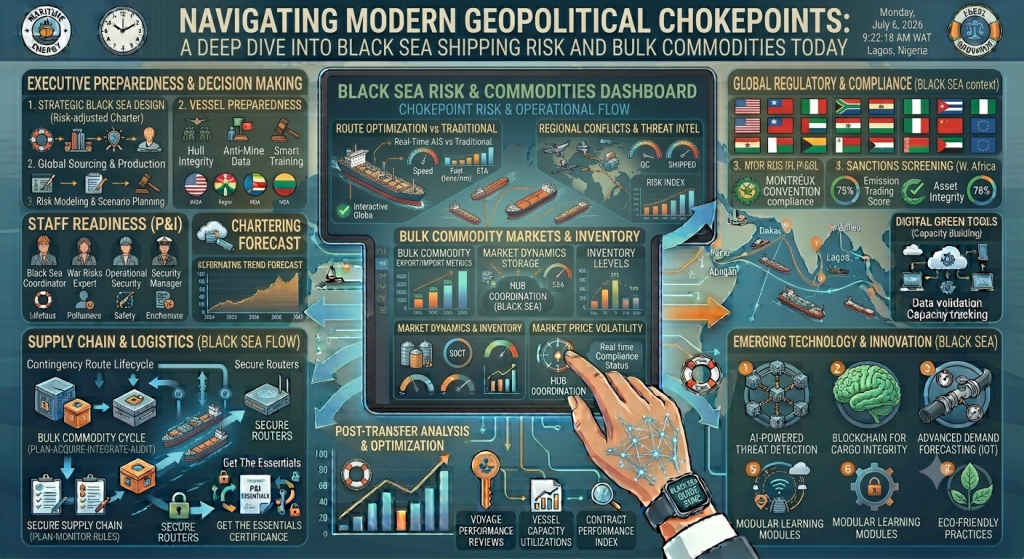
As detailed in the logistics guide above, maintaining complete visibility over port infrastructure capability and fluctuating insurance parameters is non-negotiable. Enterprise organizations must establish diverse sourcing networks, ensuring that a sudden closure of one regional chokepoint can be immediately offset by activating replacement volume corridors in stable maritime jurisdictions.
Frequently Asked Questions
What is the difference between H&M War Risk and P&I War Risk insurance in commercial shipping?
Hull and Machinery (H&M) War Risk insurance covers physical damage inflicted directly on the vessel’s hull, engines, and on-board equipment by weapons, drones, or naval mines. Protection and Indemnity (P&I) War Risk insurance, conversely, covers third-party liabilities resulting from war perils, including crew casualty medical costs, repatriation expenses, sudden pollution liability, and the multi-million-dollar expenses associated with wreck removal.
How do changes in Black Sea war-risk premiums affect the final consumer price of global bulk grains?
Because dry bulk commodities like wheat, corn, and barley operate on incredibly thin commodity trading margins, any sudden spike in freight or insurance overhead is passed directly down the supply chain. When single-voyage war risk premiums climb, international trading houses immediately adjust their Cost, Insurance, and Freight (CIF) formulas, driving up global food prices and increasing the risk of inflation in import-dependent developing economies.
What legal protections does a shipowner have under a standard Safe Port Warranty during an active conflict?
A standard Safe Port Warranty implies that a port must be inherently safe for the designated vessel to enter, utilize, and exit without being exposed to dangers that cannot be avoided by good seamanship. If a port experiences a sudden escalation in military drone strikes or missile attacks after a vessel has been ordered there, the shipowner can legally declare the port unsafe, refuse the charterer’s routing orders, and demand an alternative, risk-free discharge port.
How do dry bulk charterers manage the financial risk of demurrage when a port terminal is shut down by a drone strike?
Charterers manage this exposure by drafting customized “Stoppage of Laytime” clauses directly into the charter party agreement. These tailored provisions state that if loading or discharging operations are completely halted by acts of war, military intervention, or port strikes, the standard laytime clock pauses, preventing the accumulation of ruinous daily demurrage charges for the charterer during the period of disruption.
Why are Supramax and Handysize vessels preferred over larger bulk carriers in volatile regions?
Smaller Supramax and Handysize vessels are highly valued because they feature self-contained, on-board cranes (geared assets), allowing them to load and unload cargo independently of specialized shore-side infrastructure. This capability makes them ideal for operating at smaller, alternative river ports or handling cargo shifts at compromised terminals that cannot accommodate the massive size or deep-draft requirements of larger Panamax or Capesize bulk carriers.
Recent Comments