
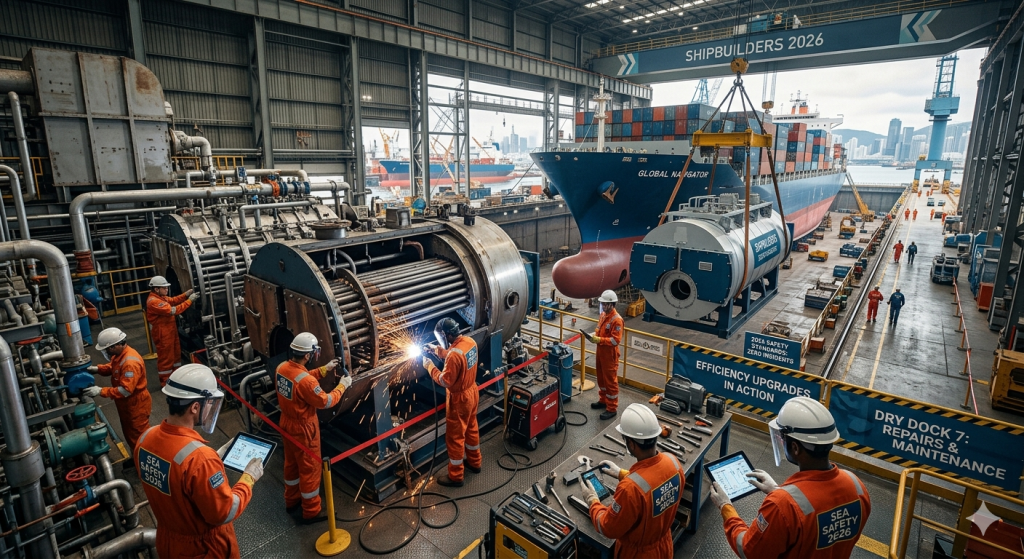
In Q2 2026, auxiliary and exhaust gas boiler systems have evolved from routine mechanical components into high-stakes points of financial risk under strict international carbon accounting frameworks and aggressive underwriting mandates. For institutional asset managers, private equity sponsors, and ship operators across the USA, UK, Singapore, and the UAE, a failure to modernize boiler maintenance protocols and optimize dry dock thermal efficiency immediately exposes a fleet to unbudgeted environmental levies, sudden policy cancellations, and credit facility defaults.
The Economic Impact: Thermal Inefficiency, Capital Impairment, and Yield Erosion
The “Million-Dollar Problem” of 2026 boiler operations is not found in simple mechanical failures; it lies in the catastrophic financial impact of a degraded thermal profile on a ship’s balance sheet. A fouled, corroded, or inefficient boiler system demands increased fuel oil consumption to generate mandatory auxiliary steam, which distorts a vessel’s operational cost structure and alters its debt covenants.
The Threat of Technical Default on Senior Debt
Modern shipping portfolios are built on highly leveraged capital allocations. When an auxiliary boiler or economizer operates below peak design parameters, the vessel’s overall fuel consumption profile degrades. For a fleet of modern VLCCs or large container assets, a 5% drop in boiler thermal efficiency can translate to millions of dollars in unbudgeted annual fuel costs.
In the tightly structured lending markets of 2026, these elevated operating expenses directly compress the vessel’s Net Operating Income (NOI). This compression can trigger immediate breaches of debt service coverage ratios (DSCR) embedded within credit agreements.
Once a covenant breach is flagged, primary commercial lenders often invoke “Material Adverse Change” (MAC) clauses, accelerating Senior Secured Debt & Mezzanine Financing facilities. Replacing stable senior debt with emergency alternative credit lines in today’s market adds significant basis point surcharges, instantly erasing the asset’s internal rate of return (IRR) and diminishing fund valuations for institutional investors.
The Financial Surcharge of Extended Dry Dockings
Boiler repairs during standard dry dock cycles have become significantly more expensive due to specialized labor shortages and strict steel-traceability rules. If a boiler retubing or refractory replacement extends a vessel’s dry dock stay by even 72 hours, the compounding financial loss can be severe:
| Risk Vector | Mechanical Root Cause | 2026 Balance Sheet Impact |
| Dry Dock Extension | Unplanned boiler shell plating replacement or refractory rebuilding. | Excessive daily shipyard penalties and lost charter hire revenues. |
| Carbon Levy Surcharges | Inefficient auxiliary steam generation leading to high fuel consumption. | Compounding carbon tax penalties impacting quarterly operating cash flows. |
| Legal Disputes | Class suspension following temporary boiler repair failure. | Immediate trigger of Arbitration & Litigation Costs with charterers. |
When a vessel is delayed in dry dock due to boiler repair hold-ups, the owner faces significant revenue losses under active time charters. If the charterer exercises their right to cancel the agreement due to missing a strict delivery window, the resulting legal disputes over off-hire clauses and consequential damages can generate heavy, unrecoverable Arbitration & Litigation Costs.
The Compliance/Legal Framework: The 2026 Enforcement Grid
The regulatory framework governing ship boiler operations in 2026 connects technical safety with aggressive climate legislation and geopolitical sanctions. Regulators and underwriters are utilizing real-time digital monitoring to eliminate the traditional grace periods historically granted for mechanical upgrades.
[Auxiliary Boiler / Economizer] —> [Thermal Degradation / High Emissions]
|
v
[EU ETS & FuelEU Maritime Real-Time Audit]
|
+————————–+————————–+
| |
v v
[Severe Methane Slip Surcharge] [CII Rating Downgrade]
| |
v v
[Balance Sheet Penalty] [Underwriting Exclusions]
I. The Environmental Risk: EU ETS Methane Slip and FuelEU Maritime Mandates
The primary driver of boiler compliance risk in 2026 is the full implementation of global and regional emissions accounting. While early regulations focused mainly on main propulsion units, the EU ETS Phase-In costs for methane slip and unburned hydrocarbons now apply directly to auxiliary systems, including dual-fuel boilers.
If a vessel utilizes liquefied natural gas (LNG) or alternative fuels, incomplete combustion within the boiler furnace—frequently caused by miscalibrated automated burners or degraded burner cones—triggers significant financial penalties. In 2026, these environmental surcharges are measured automatically via continuous emissions monitoring systems (CEMS).
Failing to properly manage and report these auxiliary combustion profiles creates a direct, reportable ESG Disclosure Liability. This exposure can trigger automated divestment mandates from institutional green funds and expose directors to personal liability for corporate greenwashing.
II. Underwriting Realities: Shifting JWC Frameworks
The maritime insurance market has adjusted its terms to account for these operational vulnerabilities. The Joint War Committee (JWC) Circulars, notably the recent updates following the JWLA-032 protocol, have expanded the operational responsibilities placed on shipowners.
Under the JWLA-032 framework, hull and machinery underwriters use satellite data to track a vessel’s speed and operational status. If a boiler failure occurs in or near a high-risk listed zone—such as the Red Sea or the Gulf of Aden—and leaves a vessel drifting or operating at reduced speed, the ship becomes an open target for kinetic threats.
If an investigation reveals that the breakdown resulted from deferred boiler maintenance or a skipped dry dock inspection, underwriters hold the right to declare a breach of seaworthiness covenants. This can result in the immediate voidance of Asset Seizure & Hull War Risk policies, leaving the owner and its financial backers completely unhedged against total asset loss.
III. Automated Systems and the AI Liability Loop
To balance fuel efficiency with strict emissions limits, many modern fleets have deployed automated, AI-driven boiler control systems. However, this technology introduces a new compliance risk: AI-driven navigation liability in the Red Sea and other high-risk corridors.
If an autonomous voyage optimization system automatically adjusts a vessel’s speed or power distribution to lower emissions, it may force the auxiliary boilers to rapidly cycle or run at low-load levels. This rapid cycling can cause thermal shock, economizer soot fires, and unexpected flameouts.
If an algorithmic command causes a boiler failure that leaves a vessel vulnerable to attack or collision in a high-risk lane, determining legal liability between the software provider, the ship manager, and the equipment manufacturer remains highly complex, frequently resulting in prolonged international arbitration.
IV. Supply Chain Vetting and OFAC Sanctions Compliance
Boiler production, component sourcing, and dry dock repairs in 2026 must navigate strict geopolitical trade barriers. Under current enforcement rules, OFAC Sanctions Compliance applies directly to the sourcing of specialized boiler tubes, pressure vessels, and automation alloys.
Many traditional boiler manufacturing and repair hubs rely on raw steel or subcomponents processed in intermediate transshipment countries. If a shipyard utilizes components containing materials originating from a sanctioned nation, the vessel is subject to immediate administrative detention or asset freezing upon entering a Western port.
Underwriters treat any contact with sanctioned supply chains as a fundamental breach of policy terms, which can result in the automatic denial of claims and leave the asset vulnerable to regulatory Asset Seizure.
[Raw Component Source] —> [Intermediate Transshipment Hub] —> [Dry Dock Repair Yard]
|
[Automated Port Authority Scan]
|
+—————–+—————–+
| |
v v
[Verified Compliant] [Sanctioned Taint]
(Vessel Cleared) (Immediate Seizure)
4. Strategic Recommendations: 3 Actionable Steps for the CEO
I. Institutionalize Forensic Thermal Audits and Digital Twin Monitoring
Cease relying on manual boiler log entries or basic class inspections to assess system health. Mandate the implementation of high-resolution digital twin monitoring for all auxiliary and exhaust gas boiler systems across your fleet.
By analyzing real-time data on exhaust gas temperatures, feed water quality, and fuel-to-air combustion ratios, your technical team can identify and resolve minor inefficiencies before they impact your vessel’s carbon rating. This proactive approach helps protect your Senior Secured Debt facilities from covenant defaults driven by rising operational costs.
II. Restructure Operational Cash Flow Risks via Parametric Insurance Hedges
Traditional hull and machinery policies do not cover the indirect financial losses caused by dry dock extensions or extended regulatory holds. CEOs should integrate specialized Parametric Insurance Premiums into their fleet operating budgets.
These parametric policies utilize objective data triggers—such as a documented shipyard delay beyond a set number of days or an administrative detention following an emissions audit—to execute immediate cash payouts without a lengthy claims adjustment process. This immediate liquidity helps keep your operations funded, ensuring you can meet your lease and debt obligations during unexpected vessel down-time.
III. Implement Strict Sourcing Controls in Dry Dock Repair Contracts
When negotiating dry dock and boiler maintenance agreements, ensure your legal teams insert explicit, multi-tier indemnification clauses regarding component origins. Require the shipyard to provide verified, auditable documentation tracing all steel tubes, valves, and control elements back to non-sanctioned mills.
Explicitly allocate all costs associated with potential OFAC Sanctions Compliance violations, including port delays and administrative holds, directly to the repair yard. This contractual protection reduces your exposure to unexpected legal liabilities and helps lower potential Arbitration & Litigation Costs.
Specialized Underwriting and Advisory Services for Marine Infrastructure
Managing the operational and regulatory risks of modern ship boiler systems requires a partner with deep risk management expertise. Navigating changing Joint War Committee (JWC) Circulars, complex emissions rules, and strict international trade compliance demands specialized advisory support. Traditional, off-the-shelf marine policies are no longer adequate to protect high-value maritime investments from sudden regulatory interventions, environmental penalties, or Asset Seizure & Hull War Risk events.
We provide the Professional Advisory Services and Specialized Insurance Cover required to protect your fleet from these systemic disruptions. Whether you are restructure financing across Senior Secured Debt & Mezzanine Financing or defending your firm against unexpected subrogation claims involving ESG Disclosure Liability, our underwriter-led risk solutions help ensure your fleet remains compliant, efficient, and fully insurable.
FAQ: 2026 Ship Boiler Risk & Capital Optimization
Q: How do auxiliary boiler inefficiencies impact a vessel’s compliance under the 2026 carbon rules?
A: Auxiliary boilers burn fuel to generate steam for heating cargo, bunkers, and accommodation spaces. If the boiler’s internal tubes are fouled or corroded, it requires more fuel to meet that steam demand, which increases the vessel’s reported emissions profile and elevates your overall ESG Disclosure Liability exposure.
Q: What is the connection between the JWLA-032 circular and a boiler breakdown at sea?
A: The JWLA-032 update expanded the active boundaries of high-risk listed zones. If a vessel suffers a boiler failure that reduces its speed or leaves it drifting within these areas, underwriters can review past maintenance records. If they find evidence of deferred dry dock repairs, they may deny coverage for any resulting war-risk or asset damage claims.
Q: Can a shipowner utilize Mezzanine Financing to fund emergency boiler retrofits?
A: Yes, Mezzanine Financing can provide rapid capital to fund unexpected efficiency upgrades if traditional banks refuse to extend further credit. However, this capital carries higher interest rates and structural conditions, meaning it should only be used if necessary to prevent a regulatory port ban or a major covenant default.
Q: How do the EU ETS Phase-In costs for methane slip apply to auxiliary boiler systems?
A: If a vessel operates on LNG or dual-fuel systems, any unburned methane that escapes through the boiler exhaust stack is calculated as methane slip. Under the 2026 rules, these emissions face significant financial levies, meaning operators must maintain precise control over burner air-to-fuel ratios to avoid unexpected operational charges.
Q: Who bears the liability if an automated boiler control system fails and causes a shipyard delay?
A: If the software or automation hardware was integrated by an approved vendor during dry dock, liability depends on the specific terms of the installation contract. If the agreement lacks clear indemnification clauses, the shipowner often absorbs the initial loss, leading to protracted disputes over Arbitration & Litigation Costs to recover damages from the manufacturer.
Recent Comments