
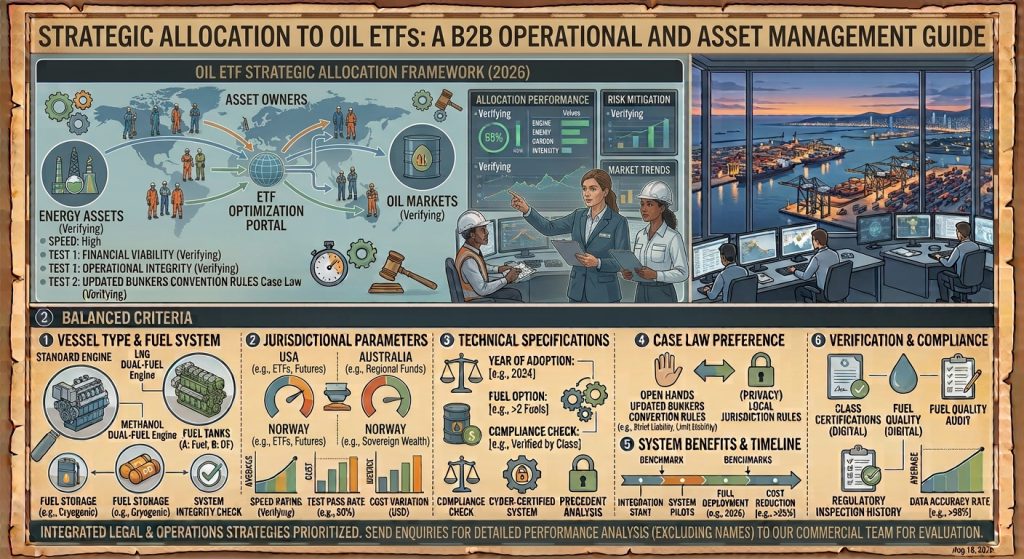
Energy markets remain a core component of global portfolio diversification, corporate treasury hedging, and institutional asset allocation. Evaluating an oil ETF requires recognizing that these vehicles are split into two distinct structures: equity-based energy ETFs (which hold shares of exploration, production, and midstream corporations) and futures-based commodity pools (which track short-term crude oil contracts).
Institutional investors, corporate treasurers, and family office allocation managers must evaluate these structural differences before committing capital. Mismatches between investment horizons and ETF mechanics can lead to unexpected drag, tax friction, or structural tracking errors.
1. Structural Categorization: Equity ETFs vs. Futures-Based Commodity Pools
The term oil ETF encompasses fundamental differences in underlying asset classes, legal frameworks, and performance drivers.
[ Global Oil ETF Asset Class Taxonomy ]
│
┌───────────────────────────────┴───────────────────────────────┐
▼ ▼
[ Physical Equity-Backed ETFs ] [ Futures-Based Commodity Pools ]
• Underlying: E&P, Midstream, Downstream • Underlying: WTI / Brent Futures Contracts
• Primary Drivers: Dividends, Earnings, CapEx • Primary Drivers: Spot Price, Roll Yield, Contango
• Legal Form: Open-End Fund / RIC • Legal Form: Delaware Limited Partnership / Grantor
• Examples: XLE, VDE, XOP • Examples: USO, DBO, BNO
A. Equity Energy ETFs (Physical Producers & Refiners)
Equity ETFs track indexes composed of publicly traded energy companies. They generate returns through corporate profitability, free cash flow generation, and dividend distributions.
- Major Holdings: Integrated supermajors (e.g., ExxonMobil, Chevron), independent E&P firms (e.g., ConocoPhillips), and oilfield services companies (e.g., SLB).
- Investment Horizon: Suitable for medium- to long-term buy-and-hold strategies, core portfolio diversification, and income generation.
- Structural Advantage: Operational leverage allows energy equities to maintain cash flow generation during range-bound commodity environments.
B. Futures-Based Commodity Funds (Direct Price Exposure)
Futures-based funds seek daily price tracking of physical crude oil (such as West Texas Intermediate or Brent) by holding derivative contracts rather than physical shares.
- Mechanics: The fund buys near-month futures contracts and continuously “rolls” them into later-dated contracts before expiration to prevent taking physical delivery.
- Investment Horizon: Designed primarily for tactical short-term hedging, active trading, or immediate price speculation.
- Structural Risk: Long-term buy-and-hold returns can diverge significantly from spot crude prices due to roll yield dynamics.
2. Institutional Comparative Analysis: Major Energy & Oil ETFs
When allocating capital, asset managers evaluate liquid vehicle structures across equity sectors, E&P pure-plays, and direct futures funds.
| Ticker | Fund Name | Legal Structure | Underlying Asset Class | Management Fee | Primary Institutional Utility |
| XLE | Energy Select Sector SPDR Fund | Regulated Investment Co. (RIC) | Mega-Cap US Energy Equities (S&P 500) | 0.08% | High-liquidity core institutional equity exposure. |
| VDE | Vanguard Energy ETF | Regulated Investment Co. (RIC) | Broad-Market US Energy Equities | 0.09% | Broad market-cap equity diversification across E&P and services. |
| XOP | SPDR S&P Oil & Gas Explore & Prod | Regulated Investment Co. (RIC) | Equal-Weighted US E&P Equities | 0.35% | Direct sensitivity to upstream E&P capital expenditures. |
| USO | United States Oil Fund, LP | Commodity Pool (LP) | Near-Month WTI Crude Oil Futures | 0.60% | Tactical short-term hedging against spot crude volatility. |
| DBO | Invesco DB Oil Fund | Commodity Pool (LP) | Optimized-Roll WTI Futures | 0.77% | Futures exposure designed to mitigate contango friction. |
3. Futures Mechanics: The Economics of Roll Yield, Contango, and Backwardation
For tactical asset managers utilizing futures-based oil funds (such as USO), performance is governed by the shape of the futures curve.
[ The Futures Roll Yield Mechanism ]
│
┌───────────────────────────────┴───────────────────────────────┐
▼ ▼
[ Contango Condition ] [ Backwardation Condition ]
• Curve: Near-Month < Far-Month • Curve: Near-Month > Far-Month
• Process: Selling Low ➔ Buying High • Process: Selling High ➔ Buying Low
• Result: Structural Negative Roll Yield (Drag) • Result: Positive Roll Yield (Tailwind)
A. The Contango Trap (Negative Roll Yield)
Contango occurs when longer-dated futures contracts trade at a premium to shorter-dated contracts.
- Mechanics: As the near-month contract approaches expiration, the fund sells the lower-priced expiring contract and purchases a higher-priced later-month contract.
- Impact: This constant “sell-low, buy-high” roll cycle creates a structural performance drag. Even if spot crude oil prices remain flat over a twelve-month period, a fund operating under sustained contango can experience substantial Net Asset Value (NAV) erosion.
B. Backwardation (Positive Roll Yield)
Backwardation occurs when near-month futures trade at a premium relative to further-dated months due to near-term supply tightness.
- Mechanics: The fund sells the higher-priced expiring contract and buys the lower-priced next-month contract.
- Impact: This creates a positive roll yield, allowing the fund to outperform spot crude oil price increases over time.
4. Institutional Portfolio Allocation and Risk Management Strategy
Integrating energy asset allocations into corporate balance sheets or multi-asset funds requires matching the appropriate vehicle to the specific mandate.
[ Tactical Implementation Flowchart ]
│
[Step 1] Determine Mandate Horizon (Short-Term Tactical vs. Strategic Multi-Year)
└─► [Step 2] Select Asset Class (Futures Derivative vs. Corporate Equity)
└─► [Step 3] Evaluate Index Weighting (Market-Cap Concentration vs. Equal-Weight)
└─► [Step 4] Audit Tax Structure (Form 1099 Security vs. Schedule K-1 Partnership)
└─► [Step 5] Execute Risk Oversight (Liquidity Vetting & Rebalancing)
- Short-Term Corporate Treasury Hedging: Use near-month futures-based funds (or direct OTC swaps) for short holding periods (1 to 30 days) to offset rising operational fuel costs.
- Inflation-Hedged Income Strategies: Allocate to market-cap-weighted equity funds (such as XLE or VDE). These vehicles provide high dividend yields, underlying corporate cash flows, and standard 1099 tax reporting without K-1 partnership tax complexities.
- Pure Commodity Rally Speculation: Mid-cap equal-weighted funds (such as XOP) offer higher beta sensitivity to crude oil price swings than mega-cap integrated energy stocks, capturing upstream margin expansion more directly.
Frequently Asked Questions (FAQ)
Q1: What is the main structural difference between XLE and USO?
XLE is a open-end equity fund holding shares of publicly traded energy corporations (like ExxonMobil and Chevron). USO is a commodity pool holding WTI crude oil futures contracts. XLE generates returns through corporate earnings and dividends, whereas USO seeks to track short-term moves in physical crude futures prices.
Q2: Why can a crude oil futures ETF lose value when spot oil prices remain flat?
When the crude oil futures curve is in contango (later contracts are more expensive than expiring contracts), the fund incurs a cost every month when it rolls its expiring position into a higher-priced contract. Over time, this negative roll yield causes the ETF’s NAV to decline even if the spot price of oil does not drop.
Q3: Which oil ETF is best suited for long-term buy-and-hold investors?
Equity-based ETFs like XLE or VDE are generally better suited for long-term allocations. Because they own dividend-paying operating companies rather than futures contracts, they are not subject to decay from negative roll yields.
Q4: Do oil ETFs issue standard Form 1099s or Schedule K-1s for tax reporting?
Regulated Investment Company (RIC) equity ETFs (such as XLE, VDE, and XOP) issue standard Form 1099s. Conversely, futures-based commodity pools structured as limited partnerships (such as USO) historically issue Schedule K-1s, which report partnership income, gains, losses, and deductions for tax filings.
Q5: How does an inverse oil ETF work?
An inverse oil ETF uses financial derivatives (such as swaps or short futures) to produce the inverse (-1x) or leveraged inverse (-2x/-3x) daily return of a crude oil benchmark or equity index. Due to daily compounding, these products are designed strictly for intra-day or short-term tactical hedging rather than multi-week investments.
Energy Asset Vetting & Tactical Procurement with Oitha Marine
Navigating international marine logistics, fuel chartering, and offshore infrastructure requirements demands independent operational oversight and technical risk management. Oitha Marine provides specialized advisory, chartering administration, and marine engineering oversight across global maritime corridors.
Advisory & Asset Desk Inquiry:
Institutional asset managers, marine operators, and charterers seeking professional advice on offshore vessel placement, fuel logistics management, or maritime compliance can contact the Oitha Marine Advisory Desk.
- Direct Email: oithamarine.com
- Official Web Portal: Oitha Marine Technical Insights
Recent Comments