
The Q2 2026 escalation of EU/UK ETS carbon quota obligations represents a systemic repricing of maritime risk, where unmitigated emissions liabilities now threaten the seniority of Senior Secured Debt & Mezzanine Financing. For institutional investors, the “Million-Dollar Problem” is no longer the cost of fuel, but the risk of Asset Seizure and technical default triggered by forensic carbon audits and the aggressive enforcement of ESG Disclosure Liability.
The Economic Impact: Margin Compression and Capital Stack Instability
As of April 2026, the transition from the initial phase-in to the 100% surrender requirement for voyages within the EEA/UK—and 50% for extra-regional voyages—has effectively transformed carbon from an operational expense into a balance sheet contagion.
The Repricing of the Voyage IRR
For a standard Capesize vessel or a Long Range (LR) tanker, the carbon surcharge now accounts for 18% to 25% of the total freight rate. This is not a static cost; the volatility of European Union Allowances (EUAs) and UK Allowances (UKAs) has created a liquidity trap. If a vessel owner fails to hedge their carbon position, a 10% spike in allowance prices can wipe out the quarterly dividend of a mid-sized fleet. In this environment, we are seeing Tier-1 lenders include “Carbon Solvency” clauses in Senior Secured Debt agreements, where a failure to maintain a carbon reserve can trigger a margin call or a shift to high-yield Mezzanine Financing.
The “Methane Slip” Multiplier
Crucially, the 2026 mandate now incorporates EU ETS Phase-In costs for methane slip. For owners who pivoted to LNG as a “bridge fuel,” the financial impact is devastating. Methane is penalized at a CO2-equivalent rate that is significantly higher, meaning “clean” dual-fuel vessels are often facing higher per-voyage surcharges than optimized Tier-III diesel engines. This has led to a structural devaluation of LNG-reliant assets, impacting Net Asset Value (NAV) across maritime private equity portfolios.
The Compliance/Legal Framework: The 2026 Regulatory Convergence
Navigating the 2026 freight market requires an understanding of how carbon pricing intersects with traditional maritime law and war-risk designations.
I. BIMCO Emission Clauses and Arbitration & Litigation Costs
The 2026 iteration of BIMCO’s ETS clauses has shifted the primary liability to the “Commercial Operator.” However, “Poor Data Fidelity” has become the leading cause of Arbitration & Litigation Costs. When a charterer disputes the “forensic actuals” of a vessel’s methane slip during a heavy-weather transit, the resulting legal fees often exceed the value of the carbon allowances in question. Without automated, sensor-verified reporting, owners are effectively self-insuring against a litigious chartering environment.
II. JWLA-032 and the War Risk Surcharge Connection
The Joint War Committee (JWC) Circulars, specifically JWLA-032, have expanded the definition of “War Risk” to include areas subject to electronic navigation interference. This has a direct impact on carbon costs: if AI-driven navigation liability in the Red Sea forces a vessel to reroute around the Cape of Good Hope, the voyage distance increases by 40%. This rerouting doesn’t just double the fuel bill; it doubles the ETS carbon surrender obligation. Under 2026 rules, “Force Majeure” rerouting does not exempt the owner from carbon surcharges, creating a compounding liability of Hull War Risk premiums and carbon quotas.
III. OFAC Sanctions Compliance and the Carbon “Ghost” Fleet
The UK and EU are now utilizing carbon reporting as a proxy for OFAC Sanctions Compliance. Vessels that “go dark” (disable AIS) to engage in illicit STS transfers often fail to report accurate emissions data for those periods. In 2026, a “Data Gap” in your carbon filing is flagged as a potential sanctions violation, leading to immediate Asset Seizure by port authorities in Rotterdam, Antwerp, or Felixstowe.
Strategic Recommendations: 3 Actionable Steps for the CEO
I. Integrate Parametric Insurance for Carbon Volatility
Traditional indemnity cannot protect you from the spot market volatility of EUAs. Institutional owners should shift a portion of their risk budget into Parametric Insurance Premiums. These products trigger an immediate cash injection if EUA prices exceed a predetermined strike price, ensuring that the vessel’s cash flow remains sufficient to service Senior Secured Debt without liquidating operational reserves.
II. Mandate “Sensor-to-Bank” Emissions Reporting
To mitigate ESG Disclosure Liability, CEOs must move beyond manual logbook entries. Implement high-fidelity, IoT-based emissions monitoring that feeds directly into your lender’s compliance portal. This “Digital Trust” reduces the likelihood of an audit-triggered technical default and provides a forensic defense in the event of Arbitration & Litigation Costs regarding bunker quality and methane slip.
III. Restructure Charterparty Agreements for “Red Sea AI” Rerouting
Given the ongoing impact of AI-driven navigation liability and JWLA-032 designations, ensure that all 2026 contracts include a “Carbon Pro-Rata” clause for rerouting. This clause must explicitly state that the charterer assumes 100% of the additional ETS/UK ETS costs incurred if a vessel must deviate to avoid war-risk zones. Without this, the owner is essentially subsidizing the charterer’s carbon footprint in a high-risk environment.
Professional Advisory for the Decarbonized Capital Stack
The 2026 carbon landscape has turned freight rates into a high-stakes financial derivative. Managing this complexity requires more than a chartering desk; it requires Professional Advisory Services that bridge the gap between technical emissions monitoring and structured finance. At Oitha Marine, we specialize in helping investors navigate the intersection of OFAC Sanctions Compliance, Senior Secured Debt & Mezzanine Financing, and the lethal enforcement of the Joint War Committee (JWC) Circulars. Whether you are facing an Asset Seizure risk due to data discrepancies or seeking Specialized Insurance Cover to hedge against Parametric Insurance Premiums, our forensic approach ensures your capital remains shielded. Protect your IRR from the escalating Arbitration & Litigation Costs of the ETS era by securing your “Regulatory Safe-Harbor” today.
FAQ: EU/UK ETS & Maritime Risk (April 2026 Update)
Q: Does the UK ETS treat methane slip differently than the EU ETS in 2026? A: No, as of the January 2026 alignment, both jurisdictions utilize a Global Warming Potential (GWP) multiplier for methane that effectively penalizes “methane slip” at 28x the rate of CO2. This is a primary driver of the current spike in Parametric Insurance Premiums for LNG-fueled tonnage.
Q: Can a vessel be seized for failing to surrender carbon allowances? A: Yes. Under the 2026 “Clean Port” enforcement mandate, a cumulative failure to surrender allowances results in an “Expulsion Order” and, if the vessel enters a designated port, Asset Seizure. This is now a standard “Event of Default” in most Senior Secured Debt agreements.
Q: How does JWLA-032 impact the calculation of freight surcharges? A: JWLA-032 defines the zones where Hull War Risk premiums are highest. Because vessels must often navigate at higher speeds or take longer routes to avoid these zones, the “Carbon Intensity” of the voyage increases. Under 2026 BIMCO terms, these “Conflict-Induced Emissions” are a major point of Arbitration & Litigation Costs.
Q: What is the risk of “Carbon Leakage” audits for US-based investors? A: US investors with UK/EU exposure face ESG Disclosure Liability under both European rules and the latest SEC climate mandates. If a US-owned fleet is found to be “diverting” emissions data to non-EU entities, it can trigger a cross-border regulatory audit.
Q: Why is AI-driven navigation mentioned in carbon cost discussions? A: Because in 2026, AI navigation systems in the Red Sea are optimized for “Risk-Aversion” rather than “Carbon-Efficiency.” An AI may decide to deviate from a fuel-efficient path to avoid a drone-threat zone, inadvertently increasing the ETS surrender obligation by $150,000 for a single Suezmax transit.
Forensic Deep Dive: The Devaluation of the “Bridge Fuel” Fleet
The 2026 ETS landscape has created a “Stranded Asset” crisis for dual-fuel LNG vessels. Historically marketed as a “green” alternative, the forensic inclusion of methane slip has turned these ships into a liability.
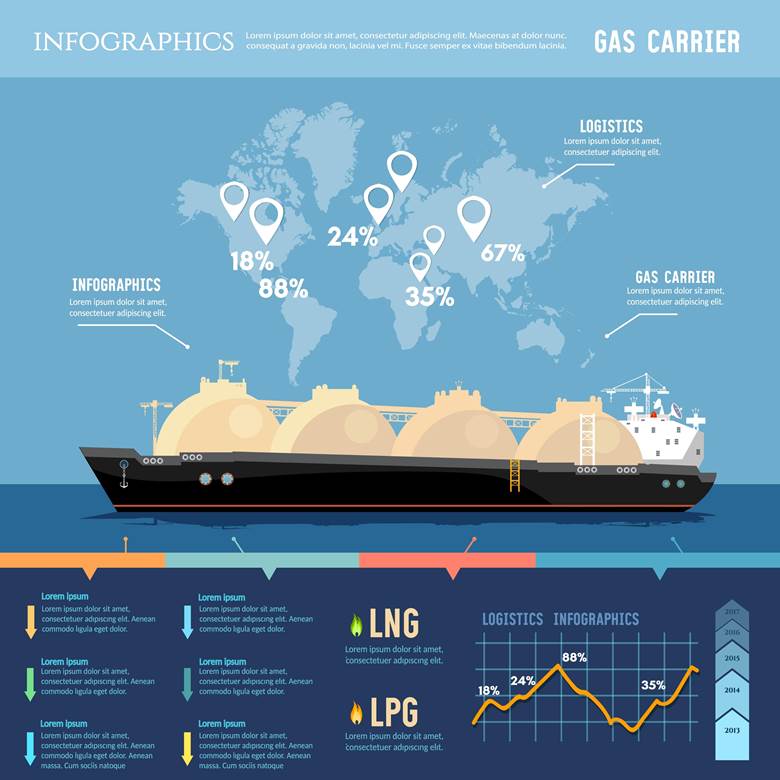
For a CEO, the “Million-Dollar Problem” is the Mezzanine Financing required to retrofit these vessels with methane catalysts. Without these retrofits, the “Carbon Surcharge” on an LNG-fueled voyage is now 12% higher than a modern scrubbed-VLSFO vessel. This disparity is causing a “Flight to Quality” among charterers, leaving un-retrofitted legacy LNG ships with declining utilization rates and rising Parametric Insurance Premiums.
In the London market, we are seeing a 15% discount on the valuation of non-catalyst LNG tonnage. If your fund is holding these assets, the 2026 carbon quota increases are not just a freight issue—they are a threat to your fund’s solvency.
Recent Comments