
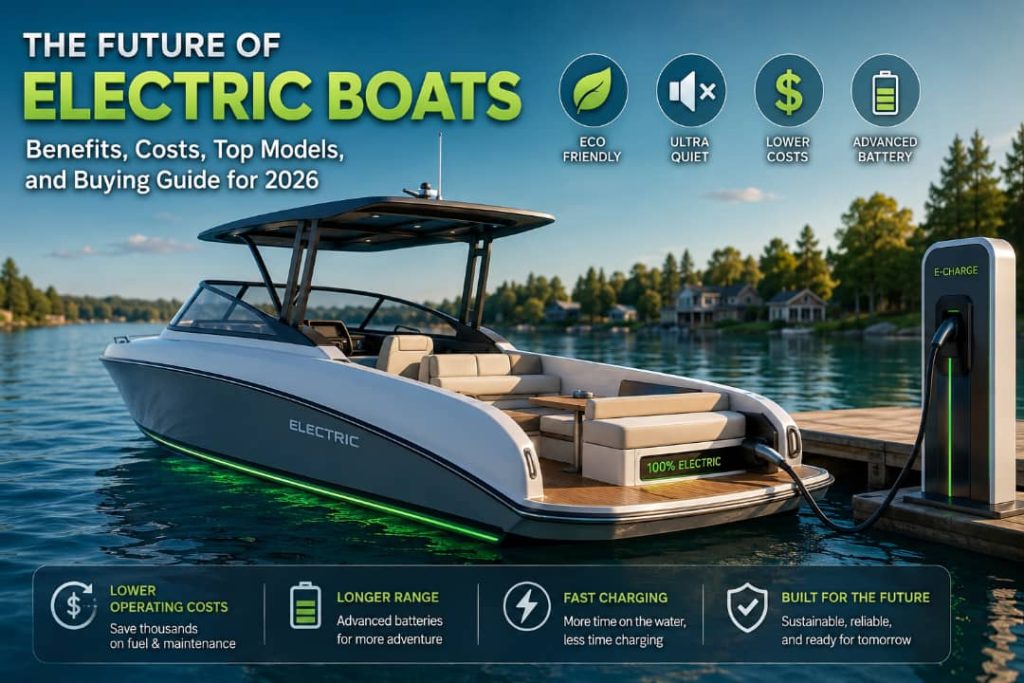
The boating industry is undergoing a major transformation. Just as electric vehicles have revolutionized transportation on land, electric boats are changing the way Americans enjoy lakes, rivers, and coastal waters. With advancements in battery technology, lower operating costs, quieter operation, and growing environmental awareness, electric boats are becoming an increasingly attractive option for recreational and commercial boaters alike.
Whether you’re considering buying your first electric boat, comparing electric boats versus gas-powered boats, or researching the latest electric marine technology, this comprehensive guide answers the most common questions Americans search online about electric boats.
What Is an Electric Boat?
An electric boat is a watercraft powered entirely or primarily by electric motors rather than traditional gasoline or diesel engines. Energy is stored in rechargeable batteries and delivered to electric propulsion systems that move the vessel through the water.
Electric boats come in various sizes, including:
– Electric fishing boats
– Electric pontoon boats
– Electric yachts
– Electric sailboats
– Electric ferries
– Electric speed boats
– Electric recreational boats
Modern electric boats can operate for several hours on a single charge depending on battery size, speed, weather conditions, and passenger load.
Why Electric Boats Are the Future of Boating
The United States has seen increasing demand for environmentally friendly transportation solutions. Electric boats are gaining popularity because they solve many problems associated with traditional marine engines.
1. Zero Direct Emissions
Unlike gas-powered boats, electric boats produce no direct exhaust emissions during operation.
Benefits include:
– Cleaner waterways
– Reduced air pollution
– Lower carbon footprint
– Improved environmental sustainability
Many states and municipalities are encouraging cleaner boating technologies through grants and incentives.
2. Quiet Operation
One of the biggest advantages of electric boats is silence.
Traditional boat engines can be loud and disruptive. Electric motors operate almost silently, allowing boaters to:
– Enjoy peaceful cruising
– Improve wildlife observation
– Enhance fishing experiences
– Reduce noise pollution
For anglers, quiet operation can be a significant advantage when approaching fish-rich areas.
3. Lower Operating Costs
A common long-tail keyword searched online is:
“How much does it cost to run an electric boat?”
The answer surprises many boat owners.
Electricity generally costs far less than gasoline.
Savings include:
– No fuel purchases
– Reduced maintenance expenses
– Fewer moving parts
– No oil changes
– No spark plug replacements
– Reduced engine servicing
Over several years, many owners save thousands of dollars compared to operating conventional boats.
Electric Boat vs Gas Boat
One of the most frequently searched questions online is:
Electric Boat vs Gas Boat: Which Is Better?
Electric Boat Advantages
– Lower operating costs
– Quiet performance
– Environmentally friendly
– Less maintenance
– Instant torque
– Better boating experience
Gas Boat Advantages
– Longer range
– Faster refueling
– Wider availability
– Lower upfront cost in some cases
Winner?
For recreational lake boating, fishing, short coastal trips, and family cruising, electric boats are increasingly becoming the preferred choice.
For extremely long-distance offshore travel, traditional fuel-powered vessels still maintain an advantage.
How Much Does an Electric Boat Cost?
Another popular search term is:
“How much does an electric boat cost in the USA?”
Prices vary significantly.
Entry-Level Electric Boats
Typical range:
$5,000 to $20,000
Examples include:
– Small fishing boats
– Jon boats
– Inflatable electric boats
Mid-Range Electric Boats
Typical range:
$20,000 to $100,000
Examples include:
– Family pontoons
– Recreational cruisers
– Premium fishing boats
Luxury Electric Boats
Typical range:
$100,000 to over $1 million
Examples include:
– Electric yachts
– High-performance electric cruisers
– Luxury marine vessels
Battery capacity, technology, and vessel size are the primary factors affecting price.
Understanding Electric Boat Batteries
The battery is the heart of every electric boat.
Lithium-Ion Batteries
Most modern electric boats use lithium-ion batteries because they offer:
– High energy density
– Long lifespan
– Faster charging
– Lower weight
– Better efficiency
How Long Do Electric Boat Batteries Last?
Many buyers search:
“How long do electric boat batteries last?”
Most quality lithium batteries last:
– 8 to 15 years
– 3,000 to 8,000 charging cycles
Actual lifespan depends on:
– Charging habits
– Storage conditions
– Operating temperature
– Depth of discharge
Premium marine lithium batteries can often exceed these estimates with proper maintenance.
How Far Can an Electric Boat Travel?
Range depends on several factors:
– Battery size
– Boat weight
– Water conditions
– Passenger load
– Speed
Typical Range
Slow cruising:
50–100+ miles
Moderate cruising:
20–60 miles
High-speed operation:
10–30 miles
Advances in battery technology continue to improve these numbers each year.
Charging an Electric Boat
One of the biggest concerns among buyers is charging.
How Do You Charge an Electric Boat?
Most electric boats can be charged through:
Home Charging
Many owners charge directly from home power systems.
Marina Charging Stations
Increasing numbers of marinas now offer charging facilities.
Solar-Assisted Charging
Some electric boats integrate solar panels to supplement charging and extend range.
Best Electric Boat Types for American Boaters
Electric Fishing Boats
Ideal for:
– Bass fishing
– Freshwater lakes
– Wildlife areas
– Quiet waterways
Benefits include stealth and reduced operating costs.
Electric Pontoon Boats
Popular among families because they offer:
– Comfortable seating
– Easy handling
– Quiet cruising
– Excellent energy efficiency
Electric Sailboats
Electric auxiliary systems are replacing diesel engines in many sailboats.
Advantages include:
– Cleaner operation
– Less maintenance
– Improved reliability
Electric Yachts
Luxury electric yachts are becoming increasingly popular among environmentally conscious buyers.
They combine:
– Premium comfort
– Modern technology
– Sustainable travel
Are Electric Boats Worth It?
Many potential buyers ask:
“Are electric boats worth buying?”
For many Americans, the answer is yes.
Electric boats make sense if you:
– Boat on lakes or rivers
– Take day trips
– Value sustainability
– Want lower maintenance costs
– Prefer quieter boating
The long-term savings often offset the higher initial purchase price.
Challenges Facing Electric Boats
While electric boats offer many advantages, there are still challenges.
Battery Costs
Marine-grade lithium batteries remain expensive.
Charging Infrastructure
Although improving rapidly, charging stations are not yet as widespread as gas docks.
Range Anxiety
Some buyers worry about running out of power during long trips.
However, modern navigation systems and battery monitoring tools significantly reduce this concern.
Future Trends in Electric Boating
The future looks extremely promising.
Emerging technologies include:
– Solid-state batteries
– Fast-charging systems
– Solar-powered boats
– AI-assisted navigation
– Hybrid-electric marine systems
– Autonomous electric vessels
Industry experts expect electric boat adoption to accelerate significantly throughout the next decade.
Tips for Buying an Electric Boat
Before purchasing, consider:
1. Define Your Boating Needs
Ask yourself:
– Fishing?
– Family cruising?
– Watersports?
– Coastal travel?
Your answer determines the ideal boat type.
2. Evaluate Battery Capacity
Bigger batteries generally provide:
– Longer range
– Greater flexibility
– Better resale value
3. Consider Charging Options
Ensure charging is convenient at:
– Home
– Marina
– Dock location
4. Research Warranty Coverage
Look for:
– Battery warranties
– Motor warranties
– Hull warranties
Comprehensive coverage provides peace of mind.
5. Compare Lifetime Ownership Costs
Don’t focus solely on purchase price.
Calculate:
– Fuel savings
– Maintenance savings
– Resale value
– Battery lifespan
The total cost of ownership is often lower than comparable gas boats.
Conclusion
Electric boats are no longer a futuristic concept—they are a practical reality transforming boating across the United States. Improved battery technology, lower operating costs, quieter operation, and environmental benefits are driving adoption among recreational and commercial boaters alike.
For lake enthusiasts, anglers, families, and eco-conscious consumers, electric boats offer an exciting glimpse into the future of marine transportation. As charging infrastructure expands and battery technology improves, electric boats are positioned to become a dominant force in the American boating market.
If you’re considering your next boat purchase, now may be the perfect time to explore the growing world of electric boating.
Frequently Asked Questions (FAQ)
What is the average cost of an electric boat?
Most electric boats cost between $5,000 and $100,000, although luxury models can exceed $1 million.
How long do electric boat batteries last?
Most lithium marine batteries last between 8 and 15 years depending on usage and maintenance.
Are electric boats cheaper to operate?
Yes. Electricity is generally cheaper than gasoline, and maintenance requirements are significantly lower.
can electric boats be used in saltwater?
Yes. Many modern electric boats are specifically designed for saltwater environments.
How long does it take to charge an electric boat?
Charging time ranges from a few hours to overnight depending on battery size and charger type.
Are electric boats environmentally friendly?
Yes. They produce zero direct emissions during operation and reduce water and air pollution.
Can electric boats go fast?
Yes. Some modern electric boats achieve speeds comparable to traditional gas-powered vessels.
Do electric boats require less maintenance?
Yes. Electric motors have fewer moving parts and generally require less maintenance than combustion engines.
Are electric boats good for fishing?
Absolutely. Their quiet operation makes them ideal for fishing in lakes and rivers.
Will electric boats become more popular in the future?
Most industry experts believe electric boats will experience rapid growth over the next decade due to advances in battery technology and increasing environmental awareness.
Recent Comments