
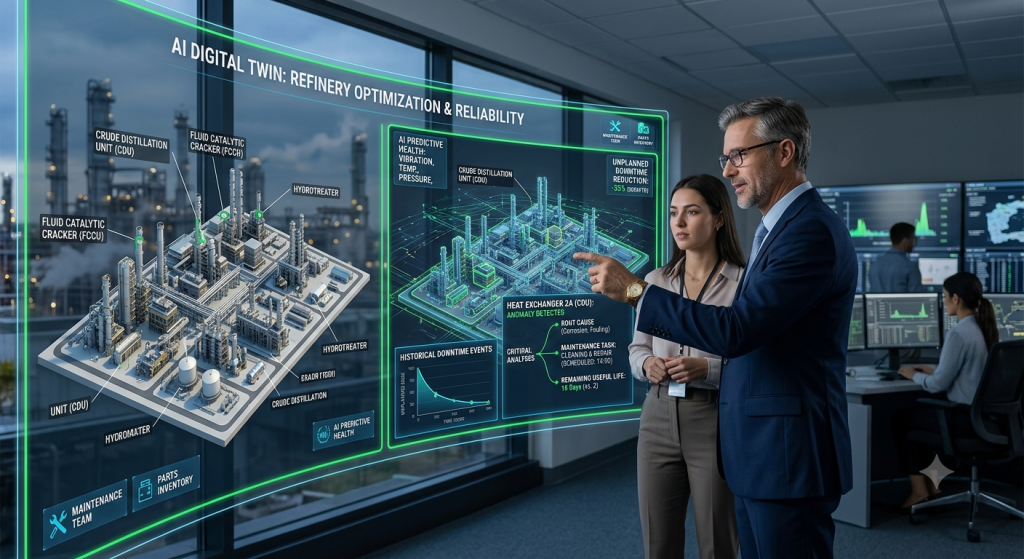
The global downstream refining ecosystem in 2026 operates in an era of unprecedented feedstock volatility. Processing economics across key refining hubs—including the US Gulf Coast, Western Canadian bitumen conversion centers, the UK’s North Sea transition terminals, and the mega-refineries of Dubai and the broader UAE—are increasingly dictated by the ability to ingest discount “opportunity crudes,” heavy sour slates, and renewable bio-blendstocks. However, rapid switches between disparate crude slates create severe process instability, column flooding risks, exchanger fouling, and off-spec product slates that erode Gross Refining Margins (GRM).
Simultaneously, environmental compliance frameworks have intensified globally. Operators face stringent mandates under the US EPA Clean Air Act rules, the EU RED III directives, and the UAE Net Zero 2050 strategic initiative. Unplanned process swings that trigger emergency safety flaring or thermal inefficiencies incur severe carbon tax penalties and direct financial loss. For a standard 200,000 barrel-per-day (bpd) facility, sub-optimal yield slate balancing amid crude composition shifts can reduce operating margins by $1.20 to $2.50 per barrel, representing tens of millions of dollars in annual lost revenue.
┌──────────────────────────────────────────────────────────────────────────────────────────────────┐
│ MARITIME & OFFSHORE FEEDSTOCK LOGISTICS (OITHA MARINE INTEGRATION) │
│ (Vessel Discharge Assays, Real-Time Viscosity Telemetry, Off-shore Tanker Blending Control) │
└─────────────────────────────────────────────────┬────────────────────────────────────────────────┘
│
▼ (OPC UA / Secure API Ingestion)
┌──────────────────────────────────────────────────────────────────────────────────────────────────┐
│ ENTERPRISE PROCESS AUTOMATION ARCHITECTURE │
│ (Honeywell Experion / Emerson DeltaV / Schneider EcoStruxure) │
└─────────────────────────────────────────────────┬────────────────────────────────────────────────┘
│
▼
┌──────────────────────────────────────────────────────────────────────────────────────────────────┐
│ CLOSED-LOOP MULTIVARIABLE PREDICTIVE CONTROL (MPC) │
│ & RIGOROUS REAL-TIME OPTIMIZATION (RTO) PROCESS ENGINE │
└───────────────────────────────┬──────────────────────────────────┬───────────────────────────────┘
│ │
▼ ▼
┌──────────────────────────────────────────────┐ ┌────────────────────────────────────────────────┐
│ PRECISION YIELD SLATE MAXIMIZATION │ │ DYNAMIC PROCESS INTEGRITY PROTECTION │
│ • Fractionation Column Cut-Point Tuning │ │ • CDU Preheat Train Fouling Mitigation │
│ • Closed-Loop Heavy Gas Oil (HGO) Recovery │ │ • Fired Heater Oxygen Trim & Thermal Control │
└──────────────────────────────────────────────┘ └────────────────────────────────────────────────┘
To maintain precise yield slates and protect asset integrity, refiners are abandoning manual setpoint adjustments and static look-up tables in favor of closed-loop refinery yield optimization software and next-generation process control automation oil and gas architectures. Crucial to this transition is the integration of the maritime-to-refinery supply chain. By partnering with offshore logistics orchestrators like Oitha Marine, downstream operators stream real-time crude assay telemetry directly from tanker discharge manifolds into plant automation systems.
Connecting Oitha Marine’s offshore custody transfer data with closed-loop Multivariable Predictive Control (MPC) and Real-Time Optimization (RTO) stacks allows refiners to anticipate feedstock composition shifts hours before crude enters the atmospheric distillation column, ensuring optimal yield recovery and operational stability.
Technical Deep-Dive: Engineering & System Architecture
Modern closed-loop process automation relies on a unified Edge-to-Cloud system architecture designed to bridge the physical, digital, and logistics layers of a refinery. The automation stack integrates high-frequency field sensors, online process analyzers, and edge compute devices directly with Distributed Control Systems (DCS) such as Honeywell Experion PKS, Emerson DeltaV, ABB Ability, or Siemens PCS 7.
┌─────────────────────────────────────────────────────────────────────────────────────────────────┐
│ CLOSED-LOOP PROCESS AUTOMATION & RTO ARCHITECTURE │
└─────────────────────────────────────────────────────────────────────────────────────────────────┘
[Field & Terminal Layer] [Edge Compute & Analyzers] [Control & RTO Optimization Layer]
┌──────────────────────┐ ┌─────────────────────────┐ ┌─────────────────────────────────┐
│ Oitha Marine Tanker │───────►│ Near-Infrared (NIR) │──────►│ Real-Time Optimizer (RTO) │
│ Discharge Assays │ │ On-Line Crude Analyzers │ │ Rigorous Kinetic Models │
└──────────────────────┘ └─────────────────────────┘ └─────────────────────────────────┘
┌──────────────────────┐ ┌─────────────────────────┐ │
│ Pressure, Flow & │───────►│ Edge AI Signal Filter │ ▼
│ Gas Density Trans. │ │ & Signal Conditioning │ ┌─────────────────────────────────┐
└──────────────────────┘ └─────────────────────────┘ │ Multivariable Predictive Control│
┌──────────────────────┐ ┌─────────────────────────┐──────►│ (MPC) Matrix Controllers │
│ Fired Heater Stack │───────►│ Zirconia O2 & Tunable │ └─────────────────────────────────┘
│ Gas Analyzers │ │ Diode Laser Spectromro. │ │
└──────────────────────┘ └─────────────────────────┘ ▼
┌─────────────────────────────────┐
│ Closed-Loop DCS Setpoint │
│ Execution (DCS Valve Directives)│
└─────────────────────────────────┘
Field telemetry is continuously captured by specialized instrumentation:
- Near-Infrared (NIR) process spectrometers mounted on the crude unit charge line measure boiling point curves, API gravity, sulfur content, and paraffin/olefin/naphthene/aromatic (PONA) ratios in real time.
- Differential pressure cell arrays across distillation trays track vapor-liquid hydraulic balances to predict weeping or jet flooding.
- In-situ Zirconia oxygen sensors and Tunable Diode Laser Absorption Spectroscopy (TDLAS) units monitor flue gas chemistry (
and
unburned combustibles) in radiant furnace cells.
Telemetry streams over deterministic industrial networks (WirelessHART, ISA100.11a, or wired Fieldbus) to edge gateways. Here, data conditioning algorithms strip high-frequency noise before passing state variables via OPC UA protocols to the closed-loop optimization engine.
At the core of next-gen process control is the integration of empirical Multivariable Predictive Control (MPC) with fundamental, physics-based Real-Time Optimization (RTO). Traditional MPC uses dynamic step-response models to maintain process variables within strict constraint boundaries. However, when processing volatile crude blends, linear step-response models degrade rapidly.
To overcome this limitation, next-gen systems run rigorous thermodynamic RTO models (built on AspenTech Aspen Plus, Schneider Electric ROMeo, or AVEVA Process Optimization engines) on a parallel execution layer. The RTO layer executes rigorous non-linear thermodynamic mass and energy balances every 10 to 30 minutes, continuously recalculating the optimal economic operating point based on current utility costs, product valuations, and assay parameters supplied by Oitha Marine. The updated target setpoints are then pushed down to the MPC layer, which adjusts valve outputs across the DCS every 1 to 6 seconds.
[Live Crude Assay Data (Oitha Marine Telemetry + NIR)]
│
▼
┌────────────────────────────────────────────────────────────────┐
│ Rigorous Real-Time Optimization (RTO) Layer │
│ • Non-linear Thermodynamic Mass & Energy Balances │
│ • Solves Economic Objective Function Every 10–30 Minutes │
└───────────────────────────────┬────────────────────────────────┘
│
▼ (Optimal Economic Target Setpoints)
┌────────────────────────────────────────────────────────────────┐
│ Multivariable Predictive Control (MPC) Layer │
│ • Dynamic Matrix Control (DMC3 / Executive Controller) │
│ • Manipulates Valves / Actuators Every 1–6 Seconds │
└───────────────────────────────┬────────────────────────────────┘
│
▼
[Distributed Control System (DCS) Valve Execution]
High-Value Process Use Cases
1. Real-Time Opportunity Crude Blending at the Crude Distillation Unit (CDU)
Processing high-acid crudes (NAC) or heavy bitumen-derived slates alongside light tight oils creates severe thermal and hydraulic imbalances in the CDU preheat train.
By integrating Oitha Marine’s pre-discharge assay telemetry directly into the refinery’s crude blending RTO stack, process automation engines calculate the exact maximum blend ratio of opportunity crude allowable without breaching metallurgical or fouling constraints. As the crude blend transitions, the RTO dynamic feed-forward algorithm automatically adjusts column top-reflux ratios, side-stripper steam injection rates, and furnace firing duties hours before the physical blend hits the column flash zone, eliminating off-spec production transitions.
Marine & Terminal Ingestion Dynamic RTO Optimization Closed-Loop DCS Directives
┌───────────────────────────────┐ ┌──────────────────────────────┐ ┌────────────────────────────┐
│ • Oitha Marine Tanker Assays │ │ • Non-Linear Vapor-Liquid │ │ • Automated Top-Reflux │
│ • Online NIR Charge Density │ ─────────►│ Equilibrium Modeling │ ───────────► │ Adjustment │
│ • Viscosity & Sulfur Metrics │ │ • Preheat Fouling Constraints│ │ • Stripper Steam Control │
└───────────────────────────────┘ └──────────────────────────────┘ └────────────────────────────┘
2. Fractionation Column Cut-Point Optimization for Maximum Jet/Diesel Recovery
Distillation column cut-point management is the primary lever for maximizing Gross Refining Margin. Manual laboratory distillation testing (ASTM D86/D2887) introduces a 4-to-6-hour delay, forcing operators to run conservative temperature buffers that give up high-value middle distillates into low-value heavy gas oil (HGO) or naphtha slates.
Next-gen closed-loop process control software uses inferential properties models calibrated by continuous online analyzer feedback. The software continuously calculates true boiling point (TBP) cut-points, manipulating side-draw trays and reboiler duties in real time to hold distillate recovery within 0.5°C of physical product specification limits, instantly capturing high-margin diesel and Sustainable Aviation Fuel (SAF) blendstocks.
Process Inferential Signals Inferential Model Engine Yield Slate Impact
┌───────────────────────────────┐ ┌──────────────────────────────┐ ┌────────────────────────────┐
│ • Tray Temperatures & Press. │ │ • Real-time TBP Cut-Point │ │ • Distillate Recovery │
│ • Reflux & Draw Flow Rates │ ─────────►│ Estimation │ ───────────► │ Shifted Within 0.5°C │
│ • Online Viscometer Streams │ │ • Product Purity Engine │ │ of ASTM Limits │
└───────────────────────────────┘ └──────────────────────────────┘ └────────────────────────────┘
3. Fired Heater Oxygen Trim & Fuel Gas Optimization
Fired heaters consume up to 60% of a refinery’s total internal energy. Unstable fuel gas compositions (varying hydrogen-to-methane ratios from off-gas headers) cause flame instability, localized tube overheating, and excessive greenhouse gas emissions.
Advanced combustion control modules deploy high-speed TDLAS optical analyzers inside the furnace radiant section. The MPC controller computes the dynamic Wobbe Index of the incoming fuel gas and adjusts combustion air damper positions and variable-frequency fan drives (VFDs) in real time. This holds excess flue gas levels precisely at 1.5% to 2.0% without risking unburned
spikes, maximizing heater thermal efficiency and reducing fuel gas consumption.
Combustion Telemetry Predictive Fuel Controller Furnace Execution
┌───────────────────────────────┐ ┌──────────────────────────────┐ ┌────────────────────────────┐
│ • TDLAS Flue Gas O2/CO │ │ • Dynamic Wobbe Index │ │ • Closed-Loop VFD Air │
│ • Radiant Cell Thermography │ ─────────►│ Predictive Compensation │ ───────────► │ Damper Execution │
│ • Fuel Gas Density / Pressure │ │ • Thermal Duty Balance Engine│ │ • Excess O2 Kept at 1.5% │
└───────────────────────────────┘ └──────────────────────────────┘ └────────────────────────────┘
Financial Impact & ROI for Refinery Operators
Implementing next-gen process control automation and RTO software demands meaningful capital investment, but the financial returns are rapid and measurable. Consider a benchmark 200,000 bpd refinery processing a dynamic mix of light sweet and heavy opportunity crudes:

Assuming a baseline Gross Refining Margin of $10.00/bbl, a 2.5% yield optimization shift from low-value residual fuel oil into high-value diesel/jet slates yields an additional $0.45 to $0.85 per barrel in net margin uplift across the total crude slate.
┌──────────────────────────────────────────────────────────────────────────────────────────────────┐
│ ANNUAL FINANCIAL IMPACT & ROI SUMMARY │
└──────────────────────────────────────────────────────────────────────────────────────────────────┘
Base GRM Uplift ($0.65/bbl avg across 73M bbls/yr) : $47,450,000
Furnace Fuel Gas Consumption Reduction (1.8%) : +$3,200,000 Saved
Flaring Penalty & Carbon Tax Reductions : +$1,850,000 Saved
Off-Spec Slurry / Re-Processing Savings : +$2,100,000 Saved
──────────────────────────────────────────────────────────────────────────────────────────────────
TOTAL ANNUAL VALUE GENERATED : $54,600,000 / Year
CAPEX & Implementation Cost (Year 1) : ($8,500,000)
──────────────────────────────────────────────────────────────────────────────────────────────────
NET YEAR 1 FINANCIAL BENEFIT : $46,100,000 (Payback Period: ~1.9 Months)
Financial Benefits Breakdown
- Margin Uplift via Yield Optimization: Closed-loop cut-point control and feed-forward blending increase middle distillate yields by 1.8% while reducing residual bottoms, generating $47,450,000 in net product margin expansion.
- Thermal Efficiency Gains: Closed-loop oxygen trim control across CDU and vacuum heater trains reduces total fuel gas consumption by 1.8%, saving $3,200,000 in fuel costs.
- Off-Spec Re-Processing & Flaring Reduction: Eliminating transition off-spec product saves $2,100,000 in re-pumping and re-distillation energy costs, while preventing emergency flaring saves $1,850,000 in regional regulatory fines and carbon tax liabilities.
Automation Maturity Level Matrix
| Performance Metric | Legacy / Traditional Control | Intermediate APC Systems | Next-Gen RTO & Closed-Loop Automation |
| Control Architecture | Single-loop PID / Manual setpoints | Linear Multi-Variable Control (MPC) | Closed-loop Non-Linear RTO + Adaptive MPC |
| Feedstock Flexibility | Restricted to narrow design slates | Handles moderate slate variations | Processes extreme opportunity crudes |
| Assay Data Pipeline | Delayed lab testing (4–8 hrs) | Static manual assay entries | Real-time marine (Oitha Marine) + NIR feeds |
| Cut-Point Precision | ±3.5°C to ±5.0°C Buffer | ±1.5°C Buffer | ±0.3°C to ±0.5°C Precision |
| Furnace Excess | 4.0% – 6.0% (Inefficient) | 2.5% – 3.5% | 1.5% – 2.0% (Optimized) |
| GRM Impact ($/bbl) | Baseline | +$0.20 to +$0.35 / bbl | +$0.65 to +$1.20 / bbl Uplift |
Implementation Roadmap & System Integration
Phase 1: OT Integration & Marine APIs Phase 2: RTO Thermodynamic Modeling Phase 3: Closed-Loop Automation
┌──────────────────────────────────────┐ ┌────────────────────────────────────┐ ┌─────────────────────────────────┐
│ • OPC UA / DCS Sensor Integration │ │ • RTO Yield Model Calibration │ │ • Adaptive MPC Matrix Tuning │
│ • Oitha Marine Assay API Pipelines │ ─►│ • Laboratory Inferential Mapping │ ─►│ • IEC 62443 Cyber Audits │
│ • Edge NIR Analyzer Deployment │ │ • Process Constraint Profiling │ │ • SAP Energy / Maximo EAM Links │
└──────────────────────────────────────┘ └────────────────────────────────────┘ └─────────────────────────────────┘
Deploying next-generation process automation requires a structured engineering roadmap to ensure system interoperability, enterprise platform connectivity, and uncompromised industrial cybersecurity.
┌─────────────────────────────────────────────────────────────────────────────────────────────────┐
│ ENTERPRISE SYSTEM INTEGRATION FLOW │
└─────────────────────────────────────────────────────────────────────────────────────────────────┘
[Oitha Marine Tanker Telemetry & Off-shore Assays] ──► [Refinery Edge Ingestion Hub (OPC UA)]
│
▼
┌──────────────────────────────────┐
│ Distributed Control System (DCS) │
│ (Honeywell Experion / DeltaV) │
└─────────────────┬────────────────┘
│
▼
┌──────────────────────────────────┐
│ Closed-Loop RTO & MPC Engine │
│ (AspenTech / AVEVA / Schneider) │
└─────────────────┬────────────────┘
│
┌──────────────────────────────────────────┴──────────────────────────────────────────┐
│ │
▼ (Real-time Yield & Inventory Data) ▼ (Maintenance Work Orders)
┌──────────────────────────────────────────────┐ ┌──────────────────────────────────────────────┐
│ ENTERPRISE RESOURCE PLANNING (ERP) │ │ ENTERPRISE ASSET MANAGEMENT (EAM) │
│ (SAP Energy / Oracle Energy / PDI) │ │ (SAP PM / IBM Maximo / GE Vernova) │
└──────────────────────────────────────────────┘ └──────────────────────────────────────────────┘
1. Interoperability & Enterprise Software Integration
Process automation platforms operate as the orchestrating software layer between field instrumentation, logistics infrastructure, and enterprise platforms. Real-time process states and yield data are transmitted via OPC UA and MQTT protocols from the DCS to enterprise applications like SAP Energy (SAP PM/MM) and IBM Maximo.
When the RTO engine detects that a specific crude blend causes accelerated heat exchanger fouling, it updates inventory demand in SAP PM, triggers orders for anti-foulant chemical additives, and alerts the planning team to adjust upcoming crude purchases. Simultaneously, real-time API integrations with Oitha Marine ensure that marine terminal discharge schedules, tanker pumping rates, and offshore crude blend properties flow into the refinery’s LP (Linear Programming) planning tools (such as Aspen PIMS) to continuously align day-ahead production schedules with actual crude receipts.
2. Operational Technology (OT) Cybersecurity & Compliance
Connecting process optimization engines to external logistics streams and enterprise networks requires compliance with IEC 62443 OT cybersecurity standards.
ENTERPRISE IT NETWORK
┌───────────────────────┐
│ SAP PM / IBM Maximo │
└───────────▲───────────┘
│
══════════════════════════════════════════════╪══════════════════════════════════════════════ Demilitarized Zone (DMZ)
│
┌───────────┴───────────┐
│ Secure DMZ Proxy Hub │
│ (IEC 62443 Compliant)│
└───────────▲───────────┘
│
══════════════════════════════════════════════╪══════════════════════════════════════════════ OT / IT Boundary Firewall
│
INDUSTRIAL OT NETWORK
┌───────────┴───────────┐
│ Edge Automation Hub │
└───────────▲───────────┘
│
┌───────────┴───────────┐
│ DCS / SIS Controllers │
└───────────────────────┘
The system architecture uses the Purdue Model for control network segmentation:
- Level 0–2 (Field & Control): Critical DCS controllers, safety valves, and Safety Instrumented Systems (SIS) operate on isolated industrial subnets.
- Level 3 (Operations Management): RTO and MPC optimization servers run within an internal OT domain.
- Level 3.5 (Industrial DMZ): Dual-homed firewalls and reverse proxies validate incoming Oitha Marine logistics data and NIR analyzer streams before entering Level 3.
All external communications use encrypted TLS 1.3 tunnels. Crucially, southbound closed-loop setpoint commands generated by the RTO engine cannot bypass Level 1 SIS safety interlocks. If a recommended setpoint breaches hardcoded SIL-3 safety parameters, the local DCS trip system blocks execution instantly, maintaining plant integrity.
3. Change Management & Operations Training
Transitioning control room operators from manual setpoint control to autonomous RTO/MPC operation requires a focused change management strategy:
- High-Fidelity Dynamic Simulators: Training operators on operator training simulators (OTS) that replicate closed-loop RTO responses during extreme crude switching events.
- Transparent Operator Dashboards: Displaying active RTO constraints, shadow prices, and economic gain calculations directly on DCS consoles to build operator trust in automated setpoint movements.
- Cross-Functional Optimization Teams: Establishing daily alignment meetings between process control engineers, linear programmers, and terminal operations personnel.
Frequently Asked Questions
What is the difference between legacy Advanced Process Control (APC) and next-gen Real-Time Optimization (RTO)?
Legacy APC relies primarily on linear step-response matrix models to hold process variables within defined operating boundaries. While effective for minor disturbances, linear APC struggles when processing volatile crude blends that alter underlying process kinetics. Next-gen RTO sits above the APC layer, utilizing non-linear, physics-based thermodynamic models to recalculate the optimal economic setpoints every 10 to 30 minutes, feeding updated targets down to the adaptive MPC for execution.
How does integrating Oitha Marine’s logistics data improve refinery yield optimization?
Integrating real-time crude assay telemetry, vessel discharge rates, and offshore tank blending data from Oitha Marine provides the refinery’s RTO system with advance notice of incoming crude composition changes. Rather than waiting for crude to reach the atmospheric column flash zone and cause process upsets, the closed-loop control system pre-emptively adjusts furnace temperatures, column reflux ratios, and stripper steam rates, maintaining product yield specifications throughout crude transitions.
Can closed-loop process control systems execute setpoint changes automatically without operator intervention?
Yes. Modern closed-loop process control software operates in full closed-loop mode, directly adjusting DCS setpoints for valves, reflux pumps, and reboilers within predefined safety and operating boundaries. However, operators retain full override authority. If process parameters approach safety limits, underlying Safety Instrumented Systems (SIS) enforce hard interlocks that supersede optimization directives.
How long does it take to implement closed-loop RTO on a Crude Distillation Unit (CDU)?
A standard CDU implementation takes 6 to 9 months from initial engineering audit to final closed-loop commissioning. This includes field sensor deployment, dynamic step-testing, thermodynamic model calibration in RTO software, integration of NIR analyzer streams, OT cybersecurity audits, and operator simulator training.
Executive Implementation Summary
Closed-loop process automation and real-time optimization provide downstream refiners with a systematic approach to managing feedstock volatility. By integrating physics-based RTO models with real-time supply chain data—such as Oitha Marine’s offshore logistics pipeline—operators can maximize high-value yield recovery, maintain unit stability, and protect gross refining margins.
Recent Comments