
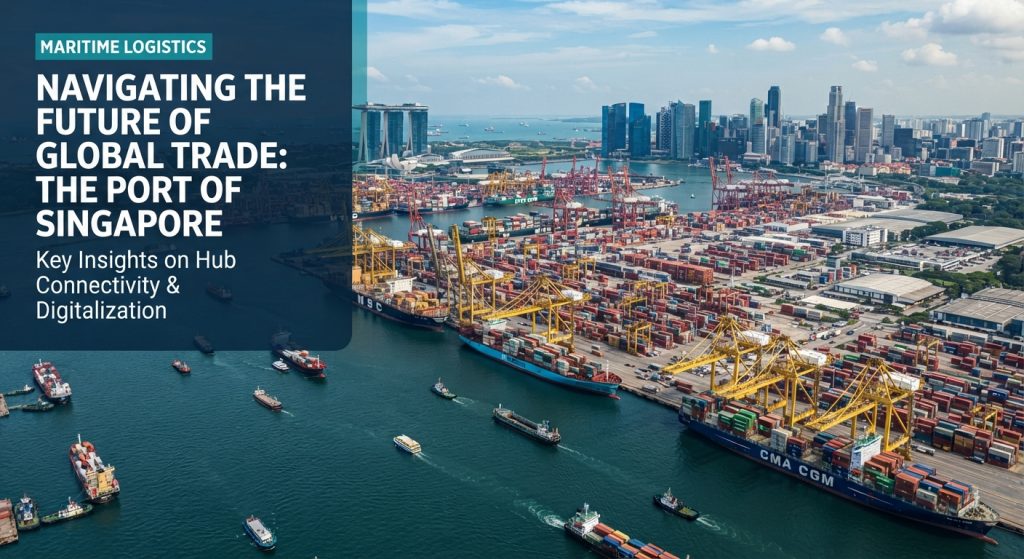
As the world’s premier transshipment hub and top bunkering port, Singapore enforces strict regulatory standards through the Maritime and Port Authority of Singapore (MPA). For shipowners, ship managers, and charterers operating within the Port of Singapore, regulatory compliance directly dictates port turn-around times, operational expenditure, and legal exposure. Non-compliance risks operational delays, vessel detentions, hefty fines, or the revocation of harbor craft and bunkering licenses.
Navigating Singapore’s maritime framework requires a structured operational approach to port arrival reporting, environmental compliance, bunkering protocols, tariff calculations, and flag state administration:
- Digital Port Clearance: All vessel notifications, pre-arrival declarations, and port clearances must be processed digitally via DigitalPORT@SG (incorporating Marinet services) within strict timelines prior to entering port limits.
- Mandatory Bunkering Protocols: Bunkering in Singapore requires licensed bunkering suppliers and craft utilizing Mass Flow Metering (MFM) systems. Electronic Bunker Delivery Notes (e-BDN) are standard across marine fuel deliveries, including conventional fuel oil, biofuel blends, and LNG.
- Decarbonization & Green Shipping Incentives: Under the Maritime Singapore Green Initiative (MSGI), shipowners can leverage significant port dues concessions (up to 30%) by adopting green engines, low-carbon fuels, or achieving high Energy Efficiency Design Index (EEDI/EEXI) benchmarks.
- Port Dues Structure: MPA port dues are calculated based on Gross Tonnage (GT), vessel type, duration of stay, and specific operational purpose (e.g., loading/unloading cargo vs. taking bunkers, stores, or repairs at anchorages).
- Flag State Registration: The Singapore Registry of Ships (SRS) enforces international IMO conventions (SOLAS, MARPOL, STCW, MLC) alongside specific national requirements, offering tax exemptions under Section 13A of the Singapore Income Tax Act for qualifying shipowners.
1. Governance Architecture: Maritime Authorities and Statutory Frameworks
The regulatory landscape in Singapore is defined by clear statutory jurisdiction and centralized enforcement. Understanding which body governs specific operational aspects ensures seamless port calls and administrative efficiency.
+———————————————————————————–+
| SINGAPORE MARITIME GOVERNANCE MATRIX |
+———————————————————————————–+
| MARITIME AND PORT AUTHORITY OF SINGAPORE (MPA) |
| • Port Regulator, Administration & Harbor Master |
| • Enforces MPA Acts, Port Regulations & Circulars |
| • Oversees DigitalPORT@SG, Anchorage Allocation & Navigation Safety |
+———————————————————————————–+
│
┌─────────────────────┴─────────────────────┐
v v
+————————————+ +————————————+
| SINGAPORE REGISTRY OF SHIPS (SRS) | | IMMIGRATION & CHECKPOINTS (ICA) |
| • National Flag State Admin | | • Crew Border Control & Visas |
| • Statutory Vessel Certification | | • Shore Leave & Seaman Permits |
| • Maritime Labor & Crewing (MLC) | | • Customs Clearances (with Singapore|
| • Tax Exemption Frameworks | | Customs & NEA) |
+————————————+ +————————————+
Statutory Frameworks and Port Legislation
Operational requirements in the Port of Singapore are derived from key national acts and international conventions:
- Maritime and Port Authority of Singapore Act (Chapter 170A): Establishes the MPA’s regulatory powers regarding port operations, safety, and marine environment protection.
- Merchant Shipping Act (Chapter 179): Regulates ship registration, crew qualifications, safety at sea, and liability provisions for Singapore-flagged vessels and foreign vessels operating in Singapore waters.
- Prevention of Pollution of the Sea Act (PPSA): Enforces MARPOL Annexes I through VI, imposing strict criminal liability and fines for intentional or accidental marine pollution within Singapore port limits and territorial waters.
2. Vessel Arrival, Navigation, and Clearance Protocols
Efficiencies in Singapore’s anchorages and terminals rely on precise advance notification and digital reporting workflows.
+———————————————————————————–+
| VESSEL PORT ARRIVAL CLEARANCE TIMELINE |
+———————————————————————————–+
| 24 HOURS PRIOR TO ARRIVAL (ETA): |
| • Submit Pre-Arrival Notification (PAN) via DigitalPORT@SG |
| • Submit ISPS Declaration to MPA Vessel Traffic Information System (VTIS) |
| • Submit Crew / Passenger List to ICA |
+———————————————————————————–+
│
v
| 12 HOURS PRIOR TO ARRIVAL: |
| • Confirm ETA with Marine Safety / VTIS Channel |
| • Submit Dangerous Goods (DG) Pre-Arrival Declaration (if carrying IMDG Cargo) |
+———————————————————————————–+
│
v
| UPON CROSSING PORT LIMITS: |
| • Contact VTIS via VHF (Channel 10, 14, or 68 depending on sector) |
| • Await Anchor Allocation or Terminal Berthing Clearance |
+———————————————————————————–+
DigitalPORT@SG Pre-Arrival Declarations
All vessel master or appointed port agents must submit the Pre-Arrival Notification (PAN) through DigitalPORT@SG at least 24 hours prior to entering Singapore Port Limits. For short voyages from nearby ports (e.g., Pasir Gudang, Johor, or Batam), the PAN must be submitted immediately upon departing the previous port.
Required documentation includes:
- Vessel Particulars, IMO Number, Gross Tonnage (GT), and Maximum Draft.
- International Ship Security Certificate (ISSC) details and Security Level declaration.
- Declarations regarding ballast water management status (D-2 performance standard compliance).
- Cargo Manifest, Dangerous Goods (DG) declarations, and arms/ammunition notifications.
- Crew and passenger manifests for Immigration and Checkpoints Authority (ICA) clearance.
Vessel Traffic Information System (VTIS) and Navigation Safety
The MPA operates a sophisticated VTIS divided into distinct operational sectors (VTIS East, VTIS Central, VTIS West) covering the Singapore Strait and Traffic Separation Scheme (TSS).
+———————————-+————————————+————————————+
| Navigation Zone / Sector | Primary VHF Communication Channel | Key Operational Mandates |
+———————————-+————————————+————————————+
| VTIS East (Eastern Approaches) | VHF Channel 10 | Mandatory reporting at Sector Limit|
| VTIS Central (Core Port/Fairways)| VHF Channel 14 | Mandatory pilotage for draft > 14m |
| VTIS West (Western Approaches) | VHF Channel 68 | Strict speed limits in fairways |
| Port Limits Anchorages | Assigned Operations VHF | Maintain continuous watch on Ch 16 |
+———————————-+————————————+————————————+
Operational Rule: Master and bridge teams must maintain a continuous listening watch on VHF Channel 16 and the designated VTIS sector channel. Under the Port Marine Circulars, failure to report crossing reporting points (e.g., Horsburgh Lighthouse or Raffles Lighthouse) constitutes a sea navigation offense.
3. Bunkering Operations: MFM Mandates, Digital Delivery, and Compliance
Singapore maintains its status as the world’s leading bunkering port by enforcing stringent technical and operational standards designed to eliminate quantity disputes and fuel contamination.
+———————————————————————————–+
| SINGAPORE BUNKERS (MFM & e-BDN) WORKFLOW |
+———————————————————————————–+
| PRE-TRANSFER: |
| • Verify Licensed Bunkering Tanker & MFM Meter Seals (MPA Seal Numbers Check) |
| • Conduct Pre-Bunker Safety Checklist & Zero-Verification on Mass Flow Meter |
+———————————————————————————–+
│
v
| TRANSFER PHASE: |
| • Continuous MFM Data Logging (Mass Rate, Density, Temperature) |
| • Continuous Drip Sampling at Receiving Vessel’s Manifold (MARPOL & Commercial) |
+———————————————————————————–+
│
v
| POST-TRANSFER: |
| • Verify MFM Meter Reading & Totalizer Figures |
| • Sign Electronic Bunker Delivery Note (e-BDN) via Digital Bunkering Platform |
+———————————————————————————–+
Mass Flow Metering (MFM) Standard (SS 600 & SS 648)
Bunkering operations in Singapore must be conducted using MPA-approved Mass Flow Metering (MFM) systems in compliance with Singapore Standards SS 600 (Code of Practice for Bunkering) and SS 648 (Code of Practice for Bunker Mass Flow Metering).
Key legal requirements for shipowners taking bunkers:
- Licensed Suppliers Only: Bunkers may only be sourced from MPA-licensed bunker suppliers using MPA-licensed bunker craft.
- Meter Seals and Verification: The vessel chief engineer must physically inspect the physical seals on the bunker barge’s MFM system before fueling begins, confirming seal numbers match the MFM Seal Checklist.
- Digital Bunker Delivery Note (e-BDN): Bunkering operations utilize mandatory digital documentation. The e-BDN must be generated immediately upon transfer completion and transmitted via MPA-approved digital platforms.
Alternative Fuels and Biofuel Bunkering Regulations
With the expansion of green bunkering in Singapore, specific technical standards apply to alternative marine fuels:
- Biofuel Blends (B20/B30/B100): Must comply with WA 2:2022 (Technical Reference for Biofuel Bunkering) and MARPOL Annex VI regulations regarding
emissions impacts.
- Liquefied Natural Gas (LNG): Governed by TR 56 (Technical Reference for LNG Bunkering), enforcing cryogenic safety zones, SIMOPS (Simultaneous Operations) risk assessments, and specialized pilotage requirements during transfer at designated LNG anchorage points.
- Methanol & Ammonia: Operations are conducted under strict MPA pilot trial guidelines, requiring specialized vapor return lines, nitrogen purging protocols, and secondary containment safety zones.
4. Tariff Architecture: Calculating Port Dues, Anchorage Fees, and Pilotage
Port dues in Singapore are structured to optimize vessel turn-around time. Ships entering Singapore waters incur port dues based on vessel size, duration of stay, and operational purpose.
+———————————————————————————–+
| STRUCTURED TARIFF BREAKDOWN IN SINGAPORE |
+———————————————————————————–+
| CATEGORY 1: VESSELS LOADING / DISCHARGING CARGO |
| • Tariff Tier: Standard Cargo Port Dues |
| • Calculation Basis: Gross Tonnage (GT) x Time-based Tier (e.g., first 24h, 5 days) |
+———————————————————————————–+
│
v
| CATEGORY 2: VESSELS TAKING BUNKERS, STORES, OR CREW CHANGE ONLY |
| • Tariff Tier: Concessionary Port Dues (Port Dues Scheme for Non-Cargo Operations)|
| • Rule: Must complete operations within designated time window (e.g., 24h/48h) |
+———————————————————————————–+
│
v
| CATEGORY 3: REPAIRS, REFUGE, OR LAY-UP |
| • Tariff Tier: Specialized Anchorage Dues (e.g., Shipyard / Repair Anchorage) |
| • Requirement: Prior MPA Port Master approval required |
+———————————————————————————–+
Illustrative Example: Port Dues Calculation
To illustrate the application of published MPA port dues tariffs, consider a 50,000 GT Container Vessel calling at Singapore for cargo operations versus taking bunkers at an anchorage.
Illustrative Example: Cargo Call vs. Bunkering Call Dues
Scenario A: Cargo Operations Call (50,000 GT Vessel, Duration 36 Hours)
- Applicable Rate Basis: Standard Port Dues for Cargo Vessels (Tier 1: up to 24 hours + Tier 2: subsequent period per 24-hour block or part thereof).
- Illustrative Assessment:
- First 24-Hour Period:
- Next 12 Hours (part of 24h block):
- First 24-Hour Period:
Scenario B: Bunkering-Only Call at Anchorage (50,000 GT Vessel, Duration 18 Hours)
- Applicable Rate Basis: Concessionary Port Dues for Vessels Taking Bunkers / Services Only (Stay
24 Hours).
- Illustrative Assessment:
- Concessionary Rate:
- Concessionary Rate:
- Operational Savings: Bunkering-only concessionary tariffs yield a reduction of up to 40% to 60% in total port dues compared to commercial cargo rates, provided no commercial cargo handling occurs.
Note: Tariff rates are subject to official MPA schedule adjustments. Shipowners must verify precise per-GT calculations through their appointed port agent or the official MPA Port Dues Tariff Schedule.
5. Environmental Compliance and Decarbonization: MSGI Framework
Singapore accelerates maritime decarbonization through a combination of international enforcement (IMO conventions) and local financial incentives under the Maritime Singapore Green Initiative (MSGI).
+———————————–+———————————+———————————+
| MSGI Incentive Program | Eligibility Criteria | Financial Benefit / Concession |
+———————————–+———————————+———————————+
| Green Ship Programme (GSP) | Singapore-flagged ships | 20% to 75% reduction in Initial |
| | exceeding EEDI/EEXI thresholds | Registration Fees & Annual Tax |
| | or using green fuels (LNG/Meth) | |
+———————————–+———————————+———————————+
| Green Port Programme (GPP) | Ocean-going vessels calling | Up to 30% reduction in Port |
| | at Singapore adopting zero- / | Dues for entire stay |
| | low-emission engines/fuels | |
+———————————–+———————————+———————————+
| Green Energy & Tech Programme | Adoption of certified decarbon- | Up to 50% co-funding for |
| | ization tech & energy devices | qualifying maritime tech trials |
+———————————–+———————————+———————————+
Ballast Water Management & De-sloshing / Washings
- Ballast Water (IMO BWM Convention): Vessels must discharge ballast water compliant with the D-2 Standard (approved Ballast Water Management System – BWMS). Unmanaged ballast discharge inside Singapore port limits is prohibited.
- MARPOL Annex I & II Residues: Discharge of oily bilges, sludge, or chemical tank washings into Singapore waters is strictly illegal under the Prevention of Pollution of the Sea Act. Reception facilities must be arranged through MPA-licensed oily waste collectors prior to disposal.
6. Flag State Compliance: The Singapore Registry of Ships (SRS)
The Singapore Registry of Ships (SRS) is one of the world’s top flag administrations, known for strict safety standards, young fleet demographics, and tax advantages.
+———————————————————————————–+
| SINGAPORE REGISTRY OF SHIPS (SRS) |
+———————————————————————————–+
| OWNERSHIP REQUIREMENT: |
| • Singapore Citizens, Permanent Residents, or Singapore-incorporated Companies |
| • Paid-up Capital requirement: Minimum SGD $50,000 |
+———————————————————————————–+
│
v
| TAX ADVANTAGES (SECTION 13A INCOME TAX ACT): |
| • Exemption from Singapore income tax on shipping profits derived from: |
| – Freight & chartering income from foreign trade |
| – Operations of Singapore-registered ships |
| – Capital gains from sale of SRS vessels |
+———————————————————————————–+
│
v
| STATUTORY SURVEYS & CLASSIFICATION SOCIETIES: |
| • Authorized Recognized Organizations (ROs): ABS, DNV, LR, BV, ClassNK, RINA, |
| KR, CCS (Must hold full statutory certification under RO agreement) |
+———————————————————————————–+
7. Crew Management, Shore Leave, and MLC Requirements
Crew welfare and border security in Singapore are enforced jointly by the MPA, ICA, and the Ministry of Manpower (MOM).
Crew Change Protocols and Visas
- Sign-On / Sign-Off Logistics: Crew changes are permitted under streamlined digital processes via DigitalPORT@SG.
- Visa Requirements: Non-visa-exempt nationalities require valid In-Principle Approval (IPA) or Crew Visas processed prior to physical arrival at Singapore Changi Airport or port terminals.
- Maritime Labour Convention (MLC 2006): Ships calling at Singapore are subject to Port State Control (PSC) inspections by MPA officers. Special emphasis is placed on MLC Regulation 2.2 (Seafarer Wages), Regulation 2.5 (Repatriation), and valid Financial Security Certificates (P&I Club certificates for abandonment and personal injury).
8. Practical Operational Guidance for Shipowners and Superintendents
+————————————————-+
| OPERATIONAL CHECKLIST FOR SINGAPORE |
+————————+————————+
|
+—————————–+—————————–+
| |
v v
+————————–+ +————————–+
| PRE-ARRIVAL (24-48H) | | IN-PORT COMPLIANCE |
+————————–+ +————————–+
| • Submit PAN via | | • Maintain VHF watch on |
| DigitalPORT@SG | assigned VTIS channel |
| • Confirm MFM compliance | | • Verify MFM seals before|
| with Bunker Supplier | bunkering starts |
| • Pre-declare DG / IMDG | | • No unmanaged ballast |
| cargoes to MPA VTIS | discharge (D-2 required) |
+————————–+ +————————–+
Operational Recommendations
- Verify Bunker Supplier Credentials: Always check that your bunker supplier and barge are currently listed on the official MPA Accredited Bunker Suppliers List. Never accept fuel from unlicensed craft within Singapore port limits.
- Optimize Anchorage Placement: Match your vessel’s operational purpose (e.g., Eastern Anchorage vs. Western Anchorage) with your agent to minimize pilotage costs and transit times for launch boats.
- Pre-Audit MARPOL Record Books: Ensure the Oil Record Book (Part I and Part II), Garbage Management Plan, and Biofouling Management Record are updated prior to pilot boarding. MPA PSC inspectors routinely target incomplete entries.
Commercial Agency and Maritime Support Services from Oitha Marine
Managing regulatory compliance, local agency support, and marine logistics across major shipping hubs requires reliable operational execution:
- Port Agency & Husbandry Clearances: Direct coordination for vessel port calls, immigration clearance, crew changes, and official registry documentation.
- Bunkering Coordination & Supply: Technical support in verifying MFM compliance, fuel quality sampling, and logistics oversight for marine fuel transfers.
- Marine Procurement & Stores Logistics: Certified marine supply, spare parts clearing through Singapore Customs, and rapid delivery to anchorages or berth terminals.
Requiring operational agency assistance, bunkering support, or marine logistics management in Singapore or international ports? Contact Oitha Marine to discuss your operational requirements.
Frequently Asked Questions (FAQ)
1. What is DigitalPORT@SG and is its use mandatory for Singapore port calls?
DigitalPORT@SG is Singapore’s official digital maritime portal for single-window port clearance. Its use is mandatory for all shipowners, masters, and port agents submitting Pre-Arrival Notifications (PAN), immigration declarations, vessel clearances, and bunkering requests to the MPA.
2. How early must a Pre-Arrival Notification (PAN) be submitted before entering Singapore Port Limits?
The Pre-Arrival Notification (PAN) must be submitted through DigitalPORT@SG at least 24 hours prior to entering Singapore Port Limits. For short-sea voyages originating under 24 hours away, the PAN must be submitted immediately upon departure from the preceding port.
3. What is the Mass Flow Metering (MFM) mandate for bunkering in Singapore?
The MPA mandates that all marine fuel deliveries (including HSFO, VLSFO, MGO, and biofuels) conducted within Singapore port limits must use MPA-approved Mass Flow Metering (MFM) systems adhering to Singapore Standards SS 600 and SS 648. This ensures accurate measurement of mass without volume-to-weight estimation disputes.
4. What are the consequences of taking bunkers from an unlicensed supplier in Singapore?
Taking bunkers from an unlicensed supplier within Singapore port limits is a major regulatory offense under the MPA Act. It results in immediate operational suspension, potential vessel detention, legal fines, and invalidation of commercial fuel quality dispute mechanisms.
5. How are MPA port dues calculated for vessels visiting Singapore?
MPA port dues are calculated based on the vessel’s Gross Tonnage (GT), the purpose of the port call (e.g., cargo handling vs. bunkering/stores only), and the length of stay in port limits. Concessionary rates apply to vessels calling purely for bunkering or repairs completed within specified time windows.
6. What incentives does the Maritime Singapore Green Initiative (MSGI) offer shipowners?
The MSGI offers port dues concessions of 20% to 30% under the Green Port Programme for ships using zero/low-emission fuels or advanced green technologies. Under the Green Ship Programme, Singapore-registered ships achieving high EEDI/EEXI ratings receive significant reductions in initial registration fees and annual tonnage taxes.
7. What classification societies are authorized to perform statutory surveys for the Singapore Registry of Ships (SRS)?
The MPA authorizes major Recognized Organizations (ROs) to perform statutory surveys on behalf of the SRS, including the American Bureau of Shipping (ABS), DNV, Lloyd’s Register (LR), Bureau Veritas (BV), ClassNK, RINA, Korean Register (KR), and China Classification Society (CCS).
8. Are ballast water discharges permitted within Singapore Port Limits?
Ballast water discharges are permitted only if the vessel operates an approved Ballast Water Management System (BWMS) compliant with the IMO D-2 discharge standard. Unmanaged ballast water discharge in Singapore waters is strictly illegal under the Prevention of Pollution of the Sea Act.
Need expert port agency, bunkering oversight, or vessel clearance support in Singapore or global transshipment ports?
Navigating complex port regulations, MFM bunkering requirements, and fast-track digital port clearances requires an experienced maritime partner. Oitha Marine delivers comprehensive port agency, marine procurement, and operational support designed to keep your fleet compliant and on schedule.
Contact Oitha Marine Commercial Team Today to discuss your vessel operational requirements or visit our contact page
Recent Comments