
In the second quarter of 2026, the Nigerian maritime industry is facing a “perfect storm.” With international crude benchmarks pushing pump prices toward ₦1,400 per litre and the IMF adjusting Nigeria’s growth forecasts, the era of the “cheap 2-stroke engine” is officially over.
For the commercial boat operator in Lagos, the fisherman in the Niger Delta, or the security fleet manager in Port Harcourt, the engine hanging off your transom is no longer just a motor—it is your biggest financial liability or your greatest competitive advantage.
The “New Reality” of 2026 Fuel Economics
Historically, Nigerian boaters favored the 2-stroke “Enduro” models for their simplicity and low initial cost. However, in 2026, the math has changed. A standard 2-stroke engine wastes approximately 25–30% of its fuel through the exhaust port before it even burns. At today’s petrol prices, that “waste” is literally pouring millions of Naira into the lagoon every month.
At Oitha Marine, we’ve seen fleet operators reduce their monthly fuel overhead by nearly 40% simply by switching to modern 4-stroke Electronic Fuel Injection (EFI) systems. This isn’t just an upgrade; it’s a business rescue mission.
1. The Big Three: Who Truly Owns Nigerian Waters in 2026?
To dominate the market, you must understand the “Big Three” brands and how they serve the unique Nigerian environment.
Yamaha: The Trusted Veteran
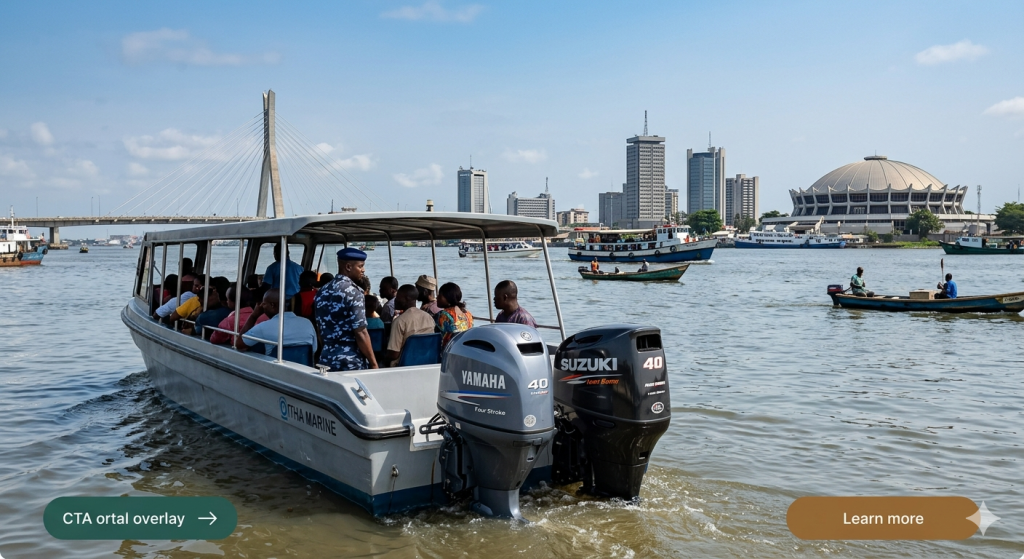
Yamaha remains the most searched and trusted brand in Nigeria. In 2026, the focus has shifted from the legendary 2-stroke 40HP to the Yamaha F-Series (4-Stroke).
- The Advantage: Unbeatable resale value and a spare parts network that reaches from Alaba International Market to the furthest reaches of the Delta.
- 2026 Tech: Look for the Helmaster EX system, which is becoming a favorite for Lagos luxury charters due to its joystick docking precision.
Suzuki: The Efficiency Challenger
Suzuki has seen a massive surge in Nigerian market share this year. Why? Lean Burn Control.
- The Advantage: Suzuki engines are engineered to run on a thinner fuel-to-air ratio during cruising. For long-distance transport (e.g., Lagos to Badagry), Suzuki is often the most “pocket-friendly” option.
- Key Model: The Suzuki DF150 is currently the “Gold Standard” for medium-sized commercial ferries.
Mercury: The Performance Powerhouse
Mercury Marine is the choice for those who need speed and high-tech integration, particularly security agencies and government patrol vessels.
- The Advantage: Mercury’s Verado and SeaPro lines are built for high-hour, high-stress environments.
- The 2026 Edge: Mercury’s digital gauges and SmartCraft technology provide the best fuel-tracking data, allowing managers to monitor exactly how much fuel their pilots are using.
2. Re-Powering: The Secret to Commercial Longevity
Most boat owners think they need a new boat when performance drops. In 2026, the trend is Re-Powering.
By keeping your existing fiberglass or reinforced wooden hull and installing a new 2026-model engine, you achieve:
- Lower Capital Expenditure: A new engine is significantly cheaper than a whole new boat.
- Instant Reliability: New engines come with warranties that “Tokunbo” (used) engines simply cannot match.
- Advanced Filtration: Modern 4-strokes are better equipped to handle the “dirty fuel” challenges often found in local jetties when paired with the right water-separator filters.
3. Navigating the “Nigeria Factor”
Success in Nigerian waters requires more than just a good engine. You must account for local environmental stressors:
Fuel Quality Management
In 2026, “bad fuel” remains the #1 killer of outboard engines. Modern EFI engines have tiny injector nozzles that clog easily. The Oitha Marine Standard is to never run an engine without a 10-micron external filter. If your dealer isn’t talking about filtration, they aren’t looking out for your investment.
Silt and Saltwater Corrosion
The Lagos Lagoon is high in silt, while the offshore waters are aggressively salty.
- Flushing is Mandatory: In 2026, the best engines come with easy-access freshwater flushing ports. Use them after every trip to prevent the internal cooling passages from “calcifying” under the Nigerian sun.
4. 2026 Price Trends: What to Expect
While the Naira remains volatile, we are seeing a stabilization in the “Value-per-HP” ratio.
- Portable Engines (8HP – 20HP): Essential for local fishing; prices have risen but remain accessible for small businesses.
- Mid-Range (40HP – 115HP): The “Workhorse” bracket. This is where the most competition between Yamaha and Suzuki exists.
- High-Power (200HP+): Primarily USD-pegged and used for offshore security and high-end tourism.
The 2026 Nigerian Outboard FAQ
Q1: Is it really worth switching from 2-stroke to 4-stroke at 2026 fuel prices?
Yes. If you operate your boat more than 15 hours a week, the fuel savings of a 4-stroke engine will literally pay for the engine’s price difference within 12 to 14 months. Additionally, you save on the cost of 2T mixing oil, which has also spiked in price this year.
Q2: Which brand has the best spare parts availability in Nigeria?
Yamaha still holds the crown for the widest availability of parts. However, Suzuki has closed the gap significantly in 2026 with new authorized service centers opening in Lagos and Port Harcourt. Mercury parts are easily found for commercial and government specs but may require more specialized technicians.
Q3: Can my old Nigerian-built wooden boat handle a modern 4-stroke engine?
Caution is required. 4-stroke engines are generally heavier than 2-strokes. At Oitha Marine, we recommend a transom inspection before re-powering. You may need to reinforce the back of your boat with marine-grade plywood or steel plates to handle the extra weight and torque.
Q4: How do I identify a “Fake” Yamaha engine in the market?
Fake engines often have slight misspellings on the internal components or use low-quality stickers that peel easily. Always check the Serial Number Plate and verify it with an authorized dealer. If the price is “too good to be true” in 2026, it is likely a counterfeit or a gray-market import with no warranty.
Q5: What is the most common cause of engine failure in the Niger Delta?
Water contamination in fuel. The humidity and storage conditions in the Delta lead to water condensation in fuel tanks. Without a high-quality water separator, this water enters the engine, leading to “hydro-lock” or rusted injectors.
Conclusion: Partner with Oitha Marine
The maritime industry in Nigeria is not for the faint of heart. It requires precision, data, and the right hardware. Whether you are looking to audit your fleet’s fuel consumption or you are ready to re-power with the latest 2026 technology, Oitha Marine is your strategic partner.
Don’t let high fuel prices sink your business. Upgrade your power, reduce your costs, and own the water.
[Visit our Outboard Re-Powering Audit Tool to calculate your savings today!]
Outboard Motors Nigeria: The 2026 Guide to Marine Engines & Re-Powering | www.oithamarine.com
Recent Comments