
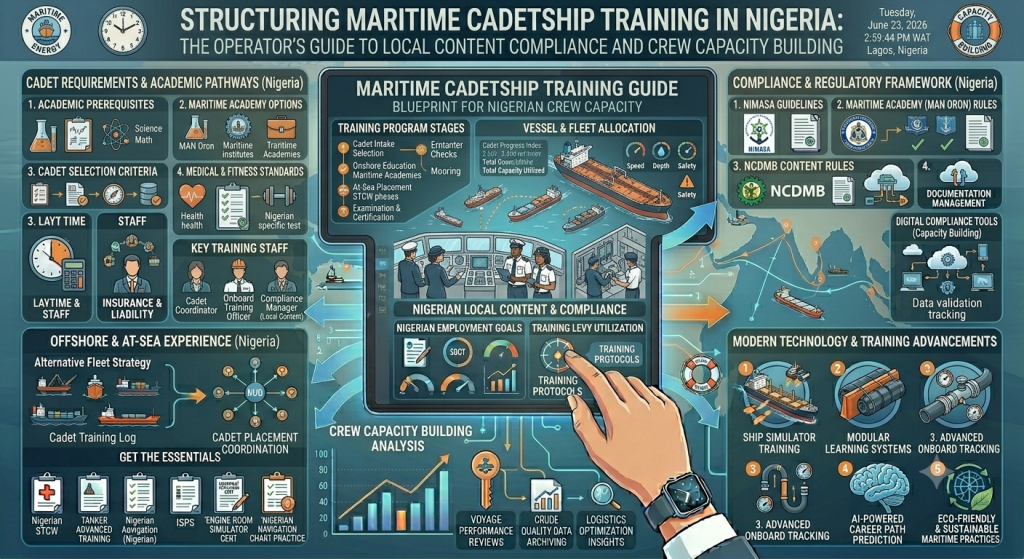
In the global shipping and offshore energy markets, operational resilience depends heavily on the availability of qualified seafarers. As the maritime industry navigates a projected global shortage of STCW-compliant officers—estimated by the BIMCO/ICS Seafarer Workforce Report to reach a shortfall of over 89,500 officers—international shipowners, offshore operators, and crewing managers are looking for new talent pools.
Within the West African sub-region, and specifically the Gulf of Guinea, Nigeria stands out as a major source of maritime professionals. However, transforming raw talent into qualified, sea-certified officers requires structured maritime cadetship training in Nigeria, robust administrative oversight, and reliable sea-time placement programs.
For international shipowners, national oil companies (NOCs), and offshore service vessel (OSV) operators, establishing a reliable cadetship pipeline is more than just a CSR initiative; it is a strategic requirement for local content compliance under regional maritime regulations.
The Strategic Value of Nigerian Cadetship for International Shipowners
For foreign shipowners and operators transiting West African waters, utilizing local seafarers is essential for regulatory compliance. Understanding the local regulatory landscape is key to optimizing crewing operations.
+————————————————————————-+
| THE CADET COMPLIANCE AND MONETIZATION LOOP |
+——————-+—————————+————————-+
| Phase 1: Academics| Phase 2: Sea-Time Gap | Phase 3: Deployment |
| Cadet graduates | Oitha Marine screens and | Fully certified junior |
| from accredited | coordinates compliant sea-| officer deployed to the |
| regional academy. | time onboard OSVs/Tankers.| fleet, satisfying NIMASA.|
+——————-+—————————+————————-+
Navigating the Cabotage Act and Local Content Rules
In Nigeria, maritime operations are governed by the Coastal and Inland Shipping (Cabotage) Act and the Nigerian Oil and Gas Industry Content Development (NOGICD) Act. These laws require vessels operating within Nigerian territorial waters and exclusive economic zones to be built, owned, and crewed by Nigerian citizens.
Non-compliance can lead to detention, heavy fines, or the loss of lucrative charter contracts with oil majors. By integrating structured maritime cadetship training in Nigeria into your crewing strategy, your company can build a pipeline of compliant junior officers, streamline your operations, and secure long-term charter agreements.
The Sea-Time Bottleneck: The Core Challenge in Cadet Development
The traditional cadetship path is split into two phases: classroom study and practical onboard training. While regional academies produce thousands of graduates, many struggle to secure the sea-time required for certification.
+—————————————+
| THE CADET DEVELOPMENT PIPELINE |
+—————————————+
|
+——————————-+——————————-+
| |
v v
[ACADEMIC INSTITUTIONS] [ONBOARD SEA-TIME]
• Classroom theory. • 12 months minimum sea service.
• Basic safety training (STCW). • Practical navigation & engineering.
• Simulator-based drills. • Direct cadet logbook assessment.
Why Sea-Time Placements Fail Without Structured Management
To obtain an STCW Certificate of Competency (CoC) as a watchkeeper, a cadet must complete a minimum of 12 months of certified sea-time training. Without structured support, several factors can delay placements:
- Administrative Friction: Direct shipowners often do not have the internal bandwidth to coordinate individual cadet training record books (TRBs) across their fleets.
- Safety and Compliance Risks: Cadet placements must align with safety management systems (SMS) and International Safety Management (ISM) codes.
- Vessel Compatibility Issues: Cadets must be matched with vessels that have the correct tonnage, engine capacity, and trading routes to meet regulatory requirements.
How Oitha Marine Coordinates Cadet Management for Shipowners
Oitha Marine acts as a key intermediary between international ship operators, regional training academies, and regulatory authorities. We provide the administrative and technical oversight needed to manage compliant cadetship programs.
+————————————————————————+
| Oitha Marine’s Cadetship Integration |
+————————————————————————+
| |
| +————————————————————–+ |
| | SHIPOWNER / VESSEL | |
| +————————————————————–+ |
| \ \ | | | | | | / / |
| \ Sea- \ | | | | | | / Cadet / |
| Time Slot \ | Audited Training | Placement / |
| \ | | | | | | / |
| / / \ | | | | | | / \ \ |
| / / \ / \ \ |
| +————————————————————–+ |
| | OITHA MARINE | |
| +————————————————————–+ |
| | | |
| v v |
| [STCW Training Audits] [Academic Screening] |
| |
+————————————————————————+
Our Core B2B Cadetship Solutions
- Structured Screening Protocols: We vet cadets before placement to ensure they hold valid STCW certificates, medical clearances, and clean backgrounds.
- Sea-Time Program Management: We coordinate training schedules, monitor cadet logbooks, and ensure all activities align with flag-state and NIMASA guidelines.
- Regulatory Liaison Services: We manage Cabotage and local content documentation, helping you prove compliance to regional regulators and port authorities.
Ethical Crewing and MLC 2006 Compliance
A reliable cadetship program must be built on safe, ethical, and fully compliant practices. Managing cadet welfare and maintaining clear operating principles are critical to program integrity.
+——————————————————————-+
| THE ETHICAL MANNING CRITERIA |
+——————————————————————-+
| 1. STCW and MLC 2006 Compliance |
| Guaranteeing safe working conditions and fair cadet stipends. |
+——————————————————————-+
|
v
+——————————————————————-+
| 2. Professional and Merit-Based Selection |
| Filtering applicants based strictly on academic performance. |
+——————————————————————-+
|
v
+——————————————————————-+
| 3. Zero-Fee Placement Policy |
| No placement or recruitment fees are charged to cadets. |
+——————————————————————-+
Our Zero-Fee Placement Policy
Under Regulation 1.4 of the Maritime Labour Convention (MLC 2006), seafarers and cadets must not pay recruitment or placement fees to find work onboard.
Strict Operational Notice: Oitha Marine operates in full compliance with MLC 2006. Oitha Marine does not ask for or receive payments of any kind from cadets to guide, assist, or place them onboard vessels. All our recruitment and placement programs are fully funded by our corporate partners and shipowners.
By maintaining high ethical standards, we protect our shipowning partners from regulatory audits, labor violations, and reputational risks.
Career Progression: From Deck Cadet to Captain
Developing qualified officers is a long-term investment. A clear progression path helps seafarers build valuable, specialized skills over time.
Partner with Oitha Marine for Structured Crewing Solutions
Managing crew pipelines and regional local content regulations requires a trusted, experienced partner.
Oitha Marine provides specialized marine logistics, vessel chartering, and crew placement services across West Africa. We help shipowners build compliant, high-performing crews while ensuring full alignment with international safety standards.
Our Capabilities
- STCW-Compliant Placement Networks: We connect vetted cadets and qualified junior officers with leading global shipping lines and offshore operators.
- Local Content Consulting: We help international companies navigate regional compliance, including NIMASA Cabotage and NOGICD Act requirements.
- Operational Crewing Support: We manage crewing logistics, travel, scheduling, and payroll, letting you focus on your core maritime operations.
Protect your projects, ensure compliance, and build a reliable talent pool. Partner with Oitha Marine to secure your maritime future.
Frequently Asked Questions (FAQ)
Q: Why is sea-time training so important for maritime cadets in Nigeria?
A: Sea-time training is a mandatory regulatory requirement under STCW guidelines. Cadets must complete at least 12 months of documented onboard sea service to qualify for their Certificate of Competency (CoC) examinations, which are required to work as watchkeeping officers.
Q: How does Oitha Marine support international shipowners with local content laws?
A: We help shipowners comply with the Cabotage Act and NOGICD guidelines by structuring, placing, and managing qualified Nigerian seafarers and cadets onboard their vessels, ensuring compliant operations within regional waters.
Q: Does Oitha Marine charge cadets any fees for sea-time placement?
A: No. In strict compliance with MLC 2006 regulations, Oitha Marine does not charge cadets any placement, registration, or recruitment fees. All our placement programs are funded by shipowners and corporate partners.
Q: What qualifications must a cadet hold before being placed through Oitha Marine?
A: Candidates must have graduated from an accredited maritime academy, hold valid STCW safety certificates, pass a comprehensive medical exam (Eng 1 or equivalent), and clear Oitha Marine’s technical screening process.
Build a Reliable, Compliant Crew Pipeline Today Ensure full local content compliance and build a qualified maritime talent pool. Contact Oitha Marine’s 24/7 commercial desk at md@oithamarine.com or visit our corporate office at 1, Funmi Okere Str, Maryland Estate, Lagos, Nigeria to discuss your custom cadetship management program.
Recent Comments