
By: Chief Engineer Emmanuel Adebayo, Marine Technical Director at Oitha Marine
Technical Review by: Capt. Jonathan Vance, FNI, Marine Compliance & Carbon Logistics Lead
Published: July 2026 | Topic: Marine Engineering & Regulatory Compliance (IMO MEPC 84)
Author Note: At Oitha Marine, our bunker broking and transshipment teams handle the practical realities of fuel blending across West Africa and global shipping hubs daily. This technical brief is designed for technical superintendents, fleet managers, and bunker buyers navigating the transition from energy-weighted accounting to the strict June 2026 mass-weighted IMO compliance framework.
The maritime industry’s transition toward net-zero greenhouse gas (GHG) emissions is no longer an abstract timeline; it is an active regulatory mandate. As the International Maritime Organization (IMO) tightens its Data Collection System (DCS) and Carbon Intensity Indicator (CII) frameworks, vessel owners, operators, and bunkering managers face immediate compliance hurdles.
While long-term alternatives like ammonia and hydrogen face deep scalability and infrastructure bottlenecks, drop-in marine biofuels offer a vital pathway to intermediate decarbonization. However, using these fuels requires rigorous compliance with the newest regulatory changes.
The regulatory landscape has evolved significantly following the Marine Environment Protection Committee’s eighty-fourth session (MEPC 84) and the subsequent issuance of MEPC.1/Circ.905/Rev.1 on June 1, 2026. Transitioning from the old energy-weighted accounting models to a strict mass-weighted calculation methodology radically reshapes how blended bio-bunkers impact a vessel’s attained CII.
Concurrently, executing a successful bio-bunker strategy demands deep engineering knowledge of FAME infrastructure compatibility, chemical stability, and storage risks.
1. The Regulatory Shift: Deconstructing MEPC.1/Circ.905/Rev.1 Mass-Weighted Verification
For years, bunker suppliers and vessel operators calculated the carbon conversion factor () of biofuel blends using an energy-weighted approach based on the Lower Calorific Value (LCV) of the respective components. The regulatory update issued in June 2026 (MEPC.1/Circ.905/Rev.1) fundamentally changes this framework, mandating that as of the 2027 reporting year, the carbon factor of marine biofuel blends must be calculated using a mass-weighted average.
This change aims to remove data inconsistencies and align DCS reporting directly with the physical bunkered mass recorded on the Bunker Delivery Note (BDN).
The Mathematical Reality of the New Mass-Weighted Calculation
Under the updated MEPC 84 guidelines, the aggregate carbon factor () for a blended fuel—such as a B30 blend consisting of 30% Fatty Acid Methyl Esters (FAME) and 70% Very Low Sulfur Fuel Oil (VLSFO)—is determined strictly by the physical mass fractions of the constituent fuels.
The generalized equation for the mass-weighted carbon factor is expressed as:
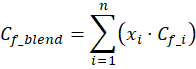
Where:
is the mass fraction of fuel component
in the blend (
).
is the specific carbon conversion factor of fuel component
expressed in
.
Sustainability Thresholds and Well-to-Wake (WtW) Verification
To claim a reduced or zero value for the biogenic portion under the interim guidance, the marine biofuel must meet strict international sustainability baselines:
- Certification Requirement: The fuel must be certified by an international certification scheme recognized by the IMO (such as the International Sustainability and Carbon Certification – ISCC, or CORSIA-approved schemes).
- GHG Reduction Threshold: The biofuel must achieve a Well-to-Wake (WtW) greenhouse gas emissions reduction of at least 65% compared to the fossil Marine Gas Oil (MGO) baseline value of
. This means the absolute emissions intensity of the sustainable fuel cannot exceed
.
If the fuel satisfies these criteria, its Tank-to-Wake (TtW) can be adjusted based on its verified lifecycle carbon footprint. The operational
value is derived from the verified Well-to-Wake GHG emissions value (
) detailed in the Proof of Sustainability (PoS), multiplied by the fuel’s specific Lower Calorific Value (LCV).
Critical Compliance Warning: If a marine biofuel blend is bunkered without a valid Proof of Sustainability (PoS), or if the biogenic component fails to meet the 65% WtW reduction threshold, the interim rules dictate that the biogenic portion must be assigned a equal to the equivalent fossil fuel type in its entirety. In short, without certified documentation, a B30 blend will be treated as 100% fossil fuel for CII and DCS compliance.
2. Worked Engineering Example: B30 VLSFO vs. FAME Mass-Weighted Assessment
To illustrate the technical and commercial impact of this regulatory shift, let us examine a real-world compliance scenario for a Capesize bulk carrier bunkering 500 metric tons (mt) of a certified B30 marine biofuel blend.
Scenario Parameters
- Total Bunkered Blend Mass:
- Blend Composition: 30% Sustainable FAME / 70% VLSFO by mass fraction.
- VLSFO Baseline (
):
- FAME Bio-Component Properties (from PoS):
- Verified GHG Intensity:
(Complies with the
requirement).
- Tested Lower Calorific Value (LCV):
(
).
- Verified GHG Intensity:
Step 1: Compute the Carbon Factor () of the Pure Bio-Component
Using the verified PoS and LCV metrics, the specific carbon factor for the unblended FAME component is calculated:

Converting this to standard regulatory units yields:

Step 2: Apply the MEPC 84 Mass-Weighted Blend Equation
Next, we calculate the combined of the B30 mixture by applying the mass fractions (
,
):



Rounding to three decimal places per standard EEDI/CII guidelines results in an operational conversion factor of .
Step 3: Quantify the Emissions Impact for DCS Reporting
When evaluating the total carbon footprint of this bunkering operation for the vessel’s annual DCS submittal:

By comparison, burning 500 mt of unblended fossil VLSFO would generate:


This reduction directly lowers the vessel’s annual attained CII score, helping protect its operational rating from slipping into non-compliant D or E bands.
3. Technical Risks & On-Board Realities of Biofuel for Maritime Shipping
While the mathematical compliance of marine biofuels looks highly favorable on paper, translating these blends into successful shipboard operations requires addressing significant chemical and physical fuel management risks.
Fatty Acid Methyl Esters (FAME) possess distinct properties that differ sharply from conventional petroleum-based distillates and residual fuel oils.
Chemical Mechanisms of FAME-Induced Degradation
The widespread introduction of FAME into marine fuel networks brings three primary technical challenges:
[FAME Molecular Structure]
│
├─► High Affinity for Water ──► Hydrolytic Cleavage ──► Free Fatty Acids (Corrosion) + Microbial Growth
│
└─► Unsaturated Double Bonds ─► Autoxidation ─────────► Polymerization (Sludge, Filter Clogging)
1. Autoxidation and Oxidative Instability
Unlike highly stable mineral oils, FAME contains unsaturated hydrocarbon chains characterized by carbon-carbon double bonds. These structural locations are highly susceptible to atmospheric oxygen attack, initiating an autoxidation chain reaction.
This process accelerates when the fuel is exposed to elevated temperatures in fuel storage tanks or trace catalytic metals such as copper, nickel, or iron. The breakdown products include hydroperoxides, which eventually polymerize into insoluble gums, resins, and organic sludges that clog fuel filters, centrifuge disks, and fuel injection equipment.
2. Hydrolytic Degradation and Microbial Proliferation
FAME is hygroscopic, meaning it absorbs and retains significantly more dissolved water than conventional VLSFO or MGO. This moisture retention triggers hydrolytic cleavage, breaking the ester bonds to form free fatty acids (FFAs).
The accumulation of FFAs increases the Total Acid Number (TAN) of the fuel blend, accelerating the chemical corrosion of fuel injectors, pumps, and cylinder liners. Furthermore, the presence of free water at the bottom of storage tanks creates an ideal environment for microbial proliferation, forming thick biological mats (bacterial slime) that can blind fuel filtration systems within hours of operation.
3. Cold Flow Performance Alteration
The cold flow properties of biofuels are governed by their source feedstocks (such as used cooking oil, animal fats, or palm oil). Biofuels generally exhibit higher Cloud Points (CP) and Pour Points (PP) than petroleum distillates.
When operating in cold climates, the saturated fatty acids within FAME can crystallize rapidly, precipitating out of solution as solid wax. This can solidify the fuel in unheated storage or transfer piping, stranding the fuel management system.
4. Operational Risk Mitigation Strategies for Shipboard Personnel
To successfully handle marine biofuels without risking machinery downtime or mechanical failure, shipowners must incorporate strict, specific handling and maintenance protocols into their Ship Energy Efficiency Management Plans (SEEMP) and standard engine room workflows.
Storage and Stabilizer Management
- Enforce Storage Time Limits: Due to FAME’s limited oxidative stability, unblended B100 feedstocks or high-concentration blends should not be stored on board for more than six months. For standard B20 or B30 residual blends, fuel management plans should mandate complete consumption within three to four months of bunkering to prevent advanced polymerization.
- Dosing Antioxidant Additives: When bunkering blends with low verified oxidative stability (as measured by the ASTM D2274 or ISO 12205 rancidity tests), crew members should inject specialized fuel-soluble antioxidant stabilizers (such as hindered phenols or phenylenediamines) directly into the bunker manifold during fuel transfer.
- Continuous Dewatering Protocols: High-frequency tank stripping protocols must be executed. Storage tank bottoms must be checked and drained daily using dedicated water paste or automated sensors to extract free water before it can trigger hydrolysis or microbial growth.
Centrifuge Optimization and Temperature Tuning
- Adjusting Centrifuge Throughput: FAME blends exhibit different specific gravities and viscometric profiles than pure mineral oils. To ensure efficient separation of cat fines and water without stripping out biogenic components, fuel treatment systems should operate with a reduced centrifuge throughput—ideally maintaining a feed rate between 50% and 60% of the maximum rated capacity.
- Purifier Temperature Calibration: Heavy residual VLSFO-biofuel blends must be centrifuged at a precise temperature of
to maintain correct fuel viscosity inside the separation bowl. Conversely, when processing lighter distillate biofuel blends (such as B30 MGO), the purification temperature must be lowered to
–
to avoid flashing off lighter fractions and disrupting the sealing water ring.
Material Compatibility and Seal Inspections
- Elastomer Degradation Replacement: Traditional nitrile rubber (NBR), fluorosilicone, and low-fluorine synthetic rubbers dissolve, swell, and degrade when exposed to FAME concentrations above B100 or even B30 over extended periods. Technical superintendents must ensure that all fuel system gaskets, O-rings, and flexible hoses are retrofitted with highly fluorinated elastomers, such as Viton (FKM) or polytetrafluoroethylene (PTFE).
5. Carriage Requirements and Logistics of Biofuel for Maritime Shipping
Managing marine biofuels also requires navigating complex regulatory requirements governing maritime carriage and international transport. The intersection of MARPOL Annex I (petroleum oils) and MARPOL Annex II (noxious liquid substances) historically created operational challenges for bunkering vessels transporting high-concentration biofuel blends.
Understanding the 75% Mass Threshold Framework
To resolve these logistical bottlenecks on an interim basis, the IMO established a strict framework through MSC-MEPC.2/Circ.17 and recent updates under MEPC 83/84 via MEPC.1/Circ.917:
| Biofuel Content by Volume | Regulating Convention | Vessel Type Certification Required |
| MARPOL Annex I | Standard Conventional Oil Tanker / Bunker Barge | |
| MARPOL Annex II / IBC Code | Chemical Tanker (Type 2 or Type 3) under specific product entries | |
| MARPOL Annex II / IBC Code | Chemical Tanker (Type 2) with full Annex II certification |
The Bunker Vessel Relief Provision
Recognizing that requiring chemical tankers to deliver intermediate blends like B30 would disrupt local supply chains, the IMO introduced a key exception. Under current interim guidance, standard conventional bunkering vessels certified under MARPOL Annex I are permitted to carry biofuel blends up to B30 (30% biofuel content by volume) without needing full MARPOL Annex II chemical tanker conversion or modifications to their International Oil Pollution Prevention (IOPP) certificate.
However, any residues or tank washings generated during tank cleaning after carrying these B30 blends must be systematically discharged to shore reception facilities rather than being decanted at sea, unless the vessel utilizes an approved Oil Discharge Monitoring Equipment (ODME) system calibrated for the blend.
6. Technical FAQ: Frequently Asked Questions on Marine Biofuels
Q1: Why is the industry moving toward mass-weighted calculations for biofuel for maritime shipping?
The shift from energy-weighted to mass-weighted calculations means your fuel’s carbon factor () is determined strictly by the physical mass fractions listed on your BDN, rather than being adjusted by the differing energy content (LCV) of the fuels. For high-energy biogenic components blended with dense residual fuels, this mass-weighted methodology establishes a direct, predictable link between the bunkered mass fraction and your reported carbon emissions reduction. This simplifies compliance audits and provides a clearer path for lowering your vessel’s annual attained CII.
Q2: Can FAME blends be safely used in dual-fuel marine engines without modifying fuel injection timing?
Yes, most modern low-speed and medium-speed marine diesel engines are fully typed-approved to burn FAME blends up to B30 without requiring mechanical modifications or adjustments to fuel injection timing. Because FAME possesses a high cetane number, it burns efficiently. However, when transitioning to high-concentration blends (B50 to B100), the electronic fuel injection system’s control parameters should be reviewed with the engine manufacturer (OEM) to account for the slightly lower energy density of pure biofuel and ensure optimal combustion.
Q3: What exact parameters must be verified on the Bunker Delivery Note (BDN) to ensure full compliance with the updated 2026 IMO guidelines?
The BDN must explicitly state the product’s commercial name, the exact volumetric and mass percentage fractions of the biogenic and fossil components, the fuel’s density at , and its kinematic viscosity. Crucially, the BDN must be accompanied by a recognized Proof of Sustainability (PoS) document detailing a valid carbon lifecycle tracking number and confirming a verified Well-to-Wake greenhouse gas emissions intensity of
(or a minimum 65% reduction against the fossil baseline).
Q4: Why is a high Total Acid Number (TAN) dangerous when using bio-bunkers, and how can ship crews mitigate it?
A high TAN indicates a elevated concentration of free fatty acids (FFAs) within the biofuel blend, which often points to advanced hydrolytic degradation from water contamination. These acids are corrosive to the high-pressure steel components found within fuel injection pumps and nozzles. Crew members can mitigate this risk by running frequent TAN laboratory tests on fuel samples, ensuring strict separation and daily draining of water from storage tanks, and using specialized chemical corrosion inhibitors if the TAN approaches or exceeds .
Q5: Are there any specific restrictions against physical blending of biofuels with VLSFO or MGO while a vessel is underway?
Yes, onboard physical blending of biofuels with fossil fuels during a voyage to create a new fuel mixture is strictly prohibited under international maritime regulations. All fuel blending operations must occur within certified onshore blending terminals or via authorized refinery infrastructure prior to bunkering. The vessel must receive a pre-blended, homogeneous product accompanied by a uniform BDN issued at the port of delivery.
Recent Comments