
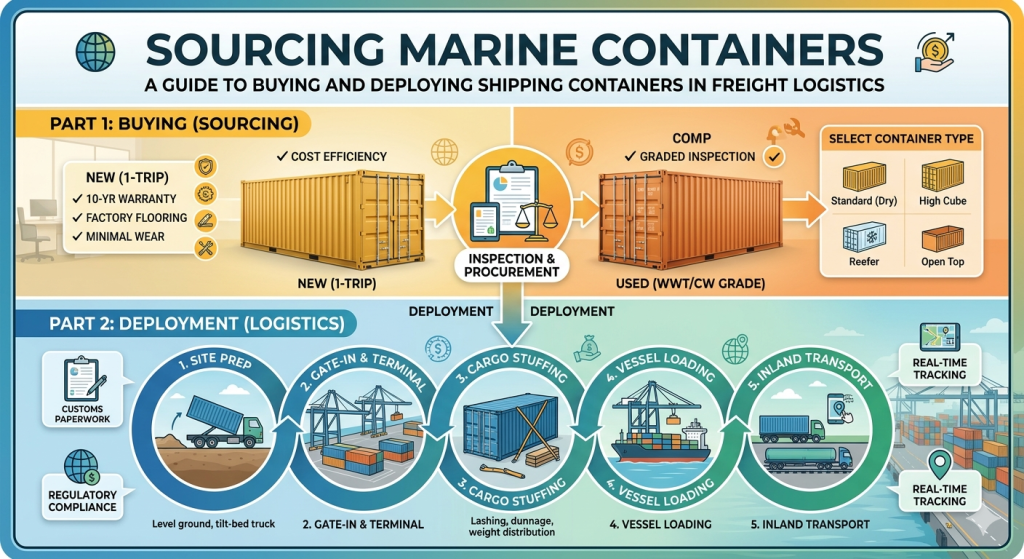
The modernization of global trade is built on a single, standardized asset: the intermodal shipping container. Developed to enable seamless transitions between ocean-going vessels, rail networks, and terrestrial trucking fleets, the marine container has revolutionized supply chain predictability. For procurement managers, construction contractors, and export-import logistics coordinators, acquiring these steel structures is a major operational milestone.
Whether you are looking to purchase standard freight boxes for international cargo shipping, or sourcing durable units to convert into secure offshore site offices and localized storage fields, navigating the secondary container market requires careful planning. This comprehensive guide breaks down the financial and technical parameters of container acquisition, analyzes sizing and grading frameworks, and details the logistical workflows required to safely deploy these structures.
The Economics of Container Sourcing: Buy vs. Lease
When a logistics department requires containerized space, the primary decision centers on whether to purchase the physical units outright or utilize a commercial leasing framework. Both strategies carry distinct structural financial profiles.
+——————————————————————-+
| CONTAINER PROCUREMENT DECISION MATRIX |
+———————————+———————————+
| OUTRIGHT ACQUISITION (BUY) | COMMERCIAL LEASING |
| • Permanent asset ownership | • Flexible, project-based OpEx |
| • Full modification freedom | • Zero disposal overhead costs |
| • High initial CapEx outlay | • Immediate global fleet access |
+———————————+———————————+
The Long-Term Value of Outright Purchasing
For organizations with continuous, predictable cargo routes or permanent onshore storage demands, deciding to buy a shipping container is often the most cost-effective path. Owning the physical asset eliminates ongoing monthly lease fees and grants the organization complete freedom to structurally modify the interior. This is particularly valuable for engineering firms modifying containers into ruggedized offshore power generator housings, water treatment modules, or secure tool rooms for remote worksites.
The Agility of the Leasing Model
Conversely, for one-off export voyages or temporary project timelines, leasing preserves essential working capital. Container leasing companies manage vast, global pools of equipment, allowing logistics teams to pick up units at an export hub and drop them off at a destination terminal without worrying about empty container return repositioning costs or long-term asset depreciation.
Sourcing Metrics: Dimensions, Conditions, and Cost Factors
Navigating the secondary container market requires an understanding of standard maritime classifications. Sourcing a container without verifying its grade can leave you with an asset that is legally barred from loading onto an ocean-going vessel.
Standard Sizing Frameworks
The international shipping market relies primarily on two ISO-standard configurations:
- 20-Foot Standard Container (1 TEU): Measuring
feet, this compact footprint is ideal for heavy, dense cargoes like machinery, minerals, and bulk liquids.
- 40-Foot High-Cube Container (2 TEU): Measuring
feet, high-cube units provide an extra foot of vertical clearance, making them the preferred choice for voluminous, lightweight consumer goods and commercial freight.
Understanding Marine Grading Categories
When inquiring where can i buy a shipping container, prices are dictated almost entirely by the unit’s structural grading:
| Container Grade | Structural Condition | Best Operational Use Case |
| One-Trip / New | Pristine condition; built overseas and used for a single ocean crossing. | Premium modular architecture, high-value asset storage. |
| Cargo Worthy (CW) | Minor cosmetic dents/rust; structural framing is fully verified sound. | Active international marine transport and intermodal freight. |
| Wind and Watertight (WWT) | Noticeable wear; doors seal fully, and walls are completely free of holes. | Affordable onshore industrial storage, construction site tools. |
Step-by-Step Logistics Checklist for Container Buyers
Purchasing a container is only half the battle. Safely transporting and positioning a multi-ton steel structure requires strict operational oversight.
1
Verify the CSC Safety Approval Plate
Step 1
1.Verify the CSC Safety Approval Plate:Step 1.
If you plan to use the container for international shipping, it must feature a valid CSC (International Convention for Safe Containers) plate. This metal plate acts as the unit’s passport, proving it has passed mandatory structural pressure and weight stack tests. Without a valid CSC plate, ocean liners will refuse to load the unit onto their vessels.
2
Site Preparation and Foundation Leveling
Step 2
2.Site Preparation and Foundation Leveling:Step 2.
Before the container arrives at your facility, you must engineer a level foundation. Placing a container directly on raw soil leads to moisture retention, accelerated rust, and structural twisting that jams the locking doors. Foundations should utilize concrete footings, heavy timber blocks, or gravel pads at all four corner castings to keep the structure elevated and stable.
3
Coordinate Specialized Transport and Delivery
Step 3
3.Coordinate Specialized Transport and Delivery:Step 3.
Shipping containers cannot be moved via standard flatbed trucks without specialized crane assistance. Buyers must arrange delivery via a Tilt-Bed (Landoll) truck or a flatbed paired with an industrial crane or heavy-duty forklift. Ensure the site features clear overhead clearance, free of low-hanging utility lines or soft mud that could trap the delivery vehicle.
Frequently Asked Questions (FAQ)
Q: What is a CSC plate, and why is it mandatory for international shipping?
A: The CSC (Convention for Safe Containers) plate is a legally required safety label attached to marine containers. It certifies that the unit has been independently inspected and meets strict global structural standards regarding stacking weight and wall pressure capability. Without an active, valid CSC plate, shipping lines will legally bar the container from being loaded onto a vessel.
Q: How much does it typically cost to buy a shipping container?
A: Sourcing costs depend heavily on the size and grade of the unit. Standard used Wind and Watertight (WWT) 20-foot containers generally range from $1,500 to $2,500, while brand-new or “One-Trip” 40-foot High-Cube configurations can command anywhere from $4,000 to over $6,500, fluctuating based on global steel prices and regional port availability.
Q: Can I place a shipping container directly on bare ground?
A: Placing a steel container directly on the ground is highly discouraged. Doing so traps moisture underneath the structure, leading to rapid, destructive rust on the floor crossmembers. Over time, uneven soil settling will twist the container’s frame, making it incredibly difficult to open or close the heavy locking cargo doors. Always elevate the corner castings using concrete blocks, gravel beds, or treated timbers.
Q: What is the mechanical difference between a standard container and a High-Cube container?
A: Standard containers feature an exterior height of 8 feet 6 inches. High-Cube (HC) containers provide an additional foot of vertical space, measuring 9 feet 6 inches in height. This makes High-Cube units highly sought after for voluminous, lightweight cargo transport and modular office conversions, as it allows for comfortable internal ceiling heights after insulation is installed.
Need Intermodal Container Logistics and Freight Transport Management? Oitha Marine provides seamless, fully compliant cargo logistics, vessel chartering, and intermodal freight management across regional and international trading corridors. Whether you need to transport custom modified containers, arrange bulk cargo movements, or secure reliable time-charter support crafts, our commercial ops desk ensures pinpoint execution. Contact our team today at oithamarine.com for a comprehensive freight estimate.
Recent Comments