
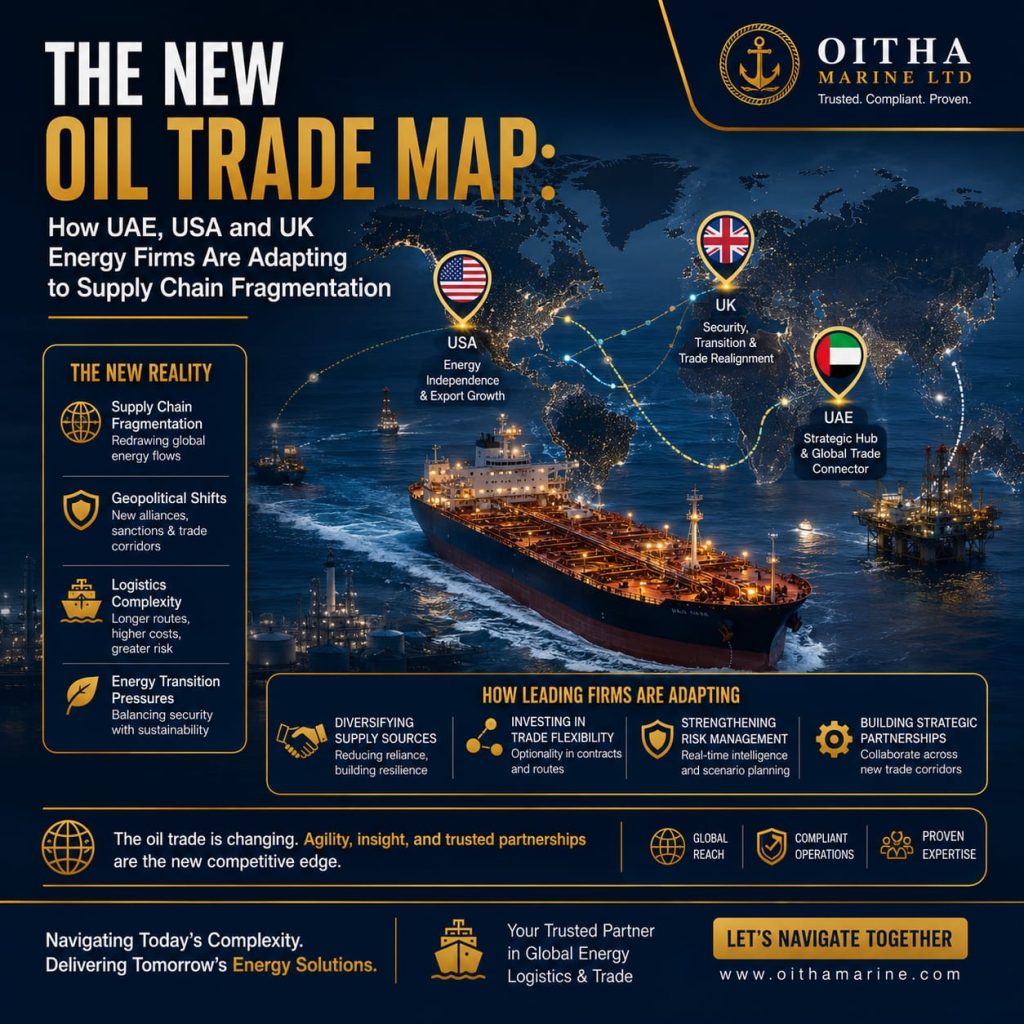
The structural fragmentation of global maritime energy corridors in 2026 has transformed logistics from an operational overhead into an existential balance sheet hazard for energy majors, trading desks, and private equity syndicates. Institutional capital deployed across the USA, UAE, UK, and Singapore now faces immediate impairment from cascading geopolitical war risk surcharges, strict-liability sanctions regimes, and non-compliance penalties that directly threaten corporate solvency and credit facilities.
The Economic Impact: Balance Sheet Exposure and ROI Fragmentation
For institutional investors, infrastructure funds, and energy C-suites, the realignment of global seaborne crude and refined product trades is not merely a geographic nuisance—it is a financial shock. As traditional maritime chokepoints face elevated kinetic threats, regulatory enforcement, and environmental compliance mandates, the cost of moving energy capital across water has decoupled from historical freight benchmarks.
+———————————————————————————–+
| 2026 MARITIME FINANCIAL SHOCK VECTORS |
+———————————————————————————–+
| [Geopolitical Disruptions] –> [JWLA-032 Hull War Premium Hikes (Up to 1.5%)] |
| [EU ETS 100% Phase-In] –> [Methane Slip Penalties (28x CO2 Multiplier)] |
| [Sanctions Enforcement] –> [Strict Liability Asset Seizure & Vessel Freeze] |
+———————————————————————————–+
|
v
+———————————————————-+
| RESULT: Debt Covenant Breach & Impairment of NOI/DSCR |
+———————————————————-+
Capital Stack Volatility and Covenant Risk
The financial architecture of modern offshore infrastructure and vessel fleets relies heavily on layered capital, primarily Senior Secured Debt & Mezzanine Financing. These credit agreements contain strict financial covenants linked to Net Operating Income (NOI), Debt Service Coverage Ratios (DSCR), and asset valuation thresholds.
When an oil tanker or Liquefied Natural Gas (LNG) carrier is forced to detour around the Cape of Good Hope rather than transiting the Red Sea or Suez Canal, voyage length increases by 10 to 14 days. This extension inflates bunker consumption, elevates crew wages, and increases daily charter equivalent (DCE) overhead.
VOYAGE COST DISRUPTION
Direct Suez Transit:
[========================] (14-18 Days | Standard Insurance Rate)
Cape Route Detour:
[==================================================] (28-34 Days | +35% Fuel | +100% War Risk)
Without contractual pass-through mechanisms, the operating entity absorbs these unhedged expenses. A 30% surge in voyage expenses directly compresses operating margins, triggering technical defaults under Senior Secured Debt & Mezzanine Financing agreements. Once a debt covenant is breached, lenders retain the right to accelerate repayment schedules, restrict dividend distributions, or demand immediate cash injection equity cures, crippling corporate liquidity.
Escalating Insurance Friction and War Risk Surges
The underwriting baseline for marine hull and cargo policies has shifted permanently. Underwriters at Lloyd’s and across international syndicates no longer price war risk as a nominal add-on.
In designated high-risk maritime zones, Breach Extra Premiums (AP) for Asset Seizure & Hull War Risk have spiked from nominal basis points to upwards of 1.0% to 1.5% of total insured vessel value per single passage. For a modern Suezmax or Very Large Crude Carrier (VLCC) valued at $120 million, a single 7-day transit through a listed area can demand an additional $1.2 million in war risk premium alone.
If a vessel is detained, seized, or blocked due to local conflicts or port state enforcement, “blocking and trapping” clauses within traditional war policies typically require a 6-to-12-month waiting period before paying out a total loss claim. During this window, debt service obligations on the underlying asset remain fully active while revenue drops to zero.
The 2026 Carbon Tax Multiplier
Compounding physical war risks is the full 100% phase-in of the European Union Emissions Trading System (EU ETS) for maritime transport, alongside tightening International Maritime Organization (IMO) decarbonization targets.
Starting in 2026, energy companies shipping crude, LNG, or refined products into or out of EU/EEA ports must surrender EU Allowances (EUAs) for 100% of their verified emissions on intra-EU voyages and 50% on extra-EU voyages. Crucially, the 2026 framework expands beyond carbon dioxide () to enforce mandatory surrenders for methane (
) and nitrous oxide (
).
EU ETS 2026 EMISSIONS COVERAGE & EXPANSION
2024 Scope: [CO2 Only] ——> 40% Allowance Surrender
2025 Scope: [CO2 Only] ——> 70% Allowance Surrender
2026 Scope: [CO2 + CH4 + N2O] -> 100% Allowance Surrender <– FULL FINANCIAL EXPOSURE
For dual-fuel LNG carriers and dual-fuel crude tankers, unburned methane escaping through the exhaust stack—known as methane slip—is calculated at a Global Warming Potential (GWP) 28 times greater than . Energy charterers relying on regulatory default slip factors (which assume up to 3.1% fuel mass loss on un-optimized engines) face punitive EUA surrender obligations. At projected EUA carbon prices, unmitigated methane slip can add millions of dollars in unbudgeted compliance costs per vessel per year, directly eroding project IRR for infrastructure investors.
| Voyage & Asset Corridor | Primary 2026 Risk Vector | Balance Sheet & Capital Stack Exposure | Primary Financial Risk Mitigation |
| Middle East Gulf to Western Europe (via Cape of Good Hope) | Cape detour operational inflation & JWC Circular re-zoning | Margin compression; potential breach of Senior Secured Debt DSCR covenants | Parametric Insurance Premiums linked to transit delay indices |
| US Gulf Coast to EU/EEA Ports | EU ETS 100% phase-in; methane slip surcharges ( | Direct operational cost expansion; elevated ESG Disclosure Liability | Continuous telemetry monitoring & verified engine slip factors |
| Red Sea / Bab el-Mandeb Transit | Kinetic attack, Asset Seizure & Hull War Risk, AI navigation claims | Total loss of asset revenue; 12-month cash flow void during blocking/trapping | Up-front war risk wrappers & pre-approved JWC breach notifications |
| Global Transshipment Hubs (UAE, SG, UK) | Shadow fleet interaction; strict liability sanctions enforcement | Asset arrest, banking freeze, uninsurable Arbitration & Litigation Costs | Real-time automated OFAC Sanctions Compliance charterparty clauses |
The Compliance, Regulatory, and Legal Framework
Managing maritime supply chain risk in 2026 requires navigating an interlocking web of international regulations, underwriter warranties, and statutory liability regimes. Ignorance of regulatory shifts is no longer defensible in court or before underwriting syndicates.
1. OFAC Sanctions Compliance and Strict Liability Standard
The United States Department of the Treasury’s Office of Foreign Assets Control (OFAC), alongside the UK Office of Financial Sanctions Implementation (OFSI) and the European Union, has shifted to a strict liability model for sanctions enforcement.
Energy traders, asset owners, and financiers in the USA, UAE, UK, and Singapore can no longer hide behind third-party broker representations.
- Dark Fleet Contagion: The proliferation of dynamic ship-to-ship (STS) transfers, Automatic Identification System (AIS) spoofing, and obscure flags of convenience means clean cargoes can easily mix with sanctioned crude.
- Seizure and Asset Freezing: Under OFAC Sanctions Compliance guidelines, engaging a vessel that has breached price-cap mechanisms or transported sanctioned oil—even unknowingly—can lead to vessel arrest, freezing of corporate bank accounts, and denial of access to Western maritime insurance markets.
- Litigation Exposure: When a transaction is blocked due to sanctions non-compliance, indemnification disputes trigger costly Arbitration & Litigation Costs under London Maritime Arbitrators Association (LMAA) or Singapore International Arbitration Centre (SIAC) rules.
SANCTIONS CONTAGION CASCADE
[Unmonitored STS Transfer / AIS Spoofing]
│
▼
[Inadvertent Breach of Price Cap / Sanctions Regime]
│
▼
[OFAC / OFSI Strict Liability Enforcement Notice]
│
┌─────────────┴─────────────┐
▼ ▼
[Vessel Arrest & Fleet [Bank Liquidity Freeze &
Insurance Cancellation] Immediate Default on Debt]
2. Joint War Committee (JWC) Circulars and Breach Warnings
Underwriting syndicates enforce strict navigational limits set by the Joint War Committee (JWC) of Lloyd’s and International Underwriting Association Companies.
The publication of updated Joint War Committee (JWC) Circulars, such as JWLA-032, has fundamentally altered navigation boundaries across the Indian Ocean, Gulf of Aden, Southern Red Sea, Persian Gulf, and adjacent waters.
JWC JWLA-032 HIGH-RISK NAVIGATION MANDATE
+————————————————————————-+
| Vessel Approaches JWLA-032 Boundary (e.g., Red Sea / Persian Gulf) |
+————————————————————————-+
│
▼
+————————————————————————-+
| MANDATORY ACTION: Advance Underwriter Notification & AP Quote Acceptance |
+————————————————————————-+
│ │
▼ (Failure to Notify) ▼ (Notification Approved)
+———————————–+ +———————————–+
| Hull War Cover Voided | | Vessel Enters Listed Zone |
| Total Unhedged Exposure | | Premium Bound & Asset Covered |
+———————————–+ +———————————–+
Under JWLA-032 guidelines, shipowners and charterers are legally required to provide advance notification to war risk underwriters prior to entering any listed area.
Failure to submit timely notice or obtain pre-approval for the additional war premium renders the vessel’s war risk coverage void ab initio (from the beginning) for that voyage. Should a vessel suffer kinetic damage or Asset Seizure & Hull War Risk events while operating in an unnotified JWC listed zone, the owner and financier absorb 100% of the financial loss without insurance recourse.
3. AI-Driven Navigation Liability in High-Risk Basins
To mitigate crew fatigue and optimize routes around conflict zones, ship operators are rapidly adopting autonomous bridge systems and AI-driven navigation algorithms. However, this technology introduces a novel legal liability vector.
- Algorithmic Deviation Claims: If an AI navigation system autonomously adjusts a vessel’s course to avoid a perceived drone threat, entering territorial waters or a JWC-restricted zone without human master authorization, who holds primary liability?
- Unseaworthiness Assertions: Marine insurers are challenging claims by alleging that un-audited or un-certified AI software constitutes “unseaworthiness” under Section 39(1) of the UK Marine Insurance Act 1906. If a court or arbitration panel agrees, hull and machinery indemnification is invalidated.
4. ESG Disclosure Liability and Carbon Accounting Audits
The era of self-reported, estimated corporate sustainability metrics has ended. Under the SEC Climate Disclosure Rules in the United States, the EU Corporate Sustainability Due Diligence Directive (CSDDD), and global ISSB standards, energy executives face direct legal scrutiny over supply chain emissions representations.
Falsifying, miscalculating, or underreporting maritime Scope 1 and Scope 3 emissions exposes boards to severe ESG Disclosure Liability. Investors funding infrastructure through green bonds or sustainability-linked loans face reputational damage, regulatory fines, and derivative lawsuits from activist shareholders if underlying fleet assets violate carbon intensity indicators (CII) or underreport methane slip under EU ETS mandates.
Strategic Recommendations: 3 Actionable Steps for C-Suite Executives
To insulate corporate capital, maintain compliance, and preserve enterprise value amid global trade fragmentation, energy executives and institutional asset managers should implement three strategic interventions immediately.
C-SUITE INSULATION FRAMEWORK
+————————————————————————-+
| 1. RESTRUCTURE COVERAGE |
| Layer standard H&M with Parametric Insurance Premiums for instant |
| liquidity during transit delays and blocking/trapping events. |
+————————————————————————-+
│
▼
+————————————————————————-+
| 2. CONTRACTUAL AUTOMATION & TELEMATICS |
| Embed real-time OFAC compliance checks, AI geofencing, and automated |
| JWLA-032 breach notifications into standard charterparties. |
+————————————————————————-+
│
▼
+————————————————————————-+
| 3. VERIFIED METHANE SLIP & CARBON INDEMNITY |
| Conduct engine-specific CH4 testing to replace punitive defaults; |
| insert bilateral EU ETS EUA surrender indemnities in contracts. |
+————————————————————————-+
Step 1: Restructure Marine Coverages with Parametric Wrappers
Traditional indemnity insurance is often too slow to respond during high-velocity geopolitical crises. When a transit corridor is blocked, claims processing, loss adjusting, and coverage disputes can lock up tens of millions of dollars in working capital for months.
Energy CEOs and treasurers should complement standard Hull & Machinery (H&M) and Cargo covers with bespoke Parametric Insurance Premiums.
Unlike traditional policies that require physical proof of loss, parametric policies pay out automatically based on verified third-party data triggers—such as AIS track data confirming a vessel has been delayed at a specific geographic waypoint for more than 72 hours.
TRADITIONAL vs. PARAMETRIC CLAIMS RESPONSE
Traditional Indemnity Cover:
[Event] –> [Loss Adjustment] –> [Dispute/Audit] –> [Payout: 6-12 Months]
Parametric Trigger Cover:
[Event] –> [Automated AIS Telematics Verification] –> [Payout: 48-72 Hours]
This immediate liquidity funds debt service on Senior Secured Debt & Mezzanine Financing, covers charter hire extensions, and pays sudden Breach Premiums without drawing down corporate cash reserves.
Step 2: Implement Real-Time Telematics & OFAC Charterparty Safeguards
Standard BIMCO sanctions and war risk clauses drafted a decade ago are insufficient for the speed of modern maritime enforcement. Legal counsel must update all charterparties, bill of lading contracts, and joint venture agreements with dynamic risk allocation terms:
- Automated AIS Geofencing: Require all chartered vessels to maintain dual-redundant, tamper-evident satellite telemetry. Contracts must stipulate that any unannounced AIS signal loss exceeding 30 minutes in high-risk zones constitutes a material breach of contract, granting the charterer the immediate right to terminate hire and arrest freight payments.
- Dynamic OFAC & Sanctions Indemnities: Insert strict liability indemnification clauses requiring vessel owners or charterers to fully cover all Arbitration & Litigation Costs, legal defense fees, and financial losses resulting from inadvertent interaction with dark fleet vessels or price-cap violators.
- JWC Notice Automation: Integrate real-time vessel monitoring directly with war risk broker platforms to automate breach notifications under Joint War Committee (JWC) Circulars like JWLA-032, eliminating human error and preventing accidental coverage voidance.
Step 3: Audit Engine Methane Slip to Eliminate EUA Surcharges
With methane now fully integrated into carbon pricing frameworks, relying on standard regulatory default factors for LNG and dual-fuel engines is an expensive mistake. Default factors assume high baseline emissions, subjecting operators to maximum carbon allowance surrenders.
METHANE SLIP COMPLIANCE SAVINGS
Default Slip Factor (Un-optimized):
[==================================================] ($3.1% Mass Loss | Max EUA Surrender)
Engine-Specific Verified Testing:
[==================] (<0.5% Mass Loss | Up to 80% Reduction in Carbon Tax Liability)
- Engine-Specific Testing: Energy operators must perform continuous stack monitoring and engine-load testing to establish verified, actual methane slip factors. Submitting verified lower slip factors to regulatory bodies under EU MRV/ETS guidelines drastically reduces the volume of required EUA surrenders.
- Contractual Carbon Indemnification: Structure charterparties to explicitly assign liability for EUA surrender obligations. Charterers who dictate vessel speeds and routes must contractually absorb carbon tax surcharges, protecting shipowners from unexpected ESG Disclosure Liability and margin erosion.
De-Risking Offshore Assets with Specialized Risk Advisory
Navigating the fragmented maritime trade map requires more than standard insurance broking—it demands institutional-grade risk engineering, legal foresight, and dynamic capital protection. At Oitha Marine, our advisory desk bridges the gap between Tier-1 Lloyd’s underwriting syndicates, global energy majors, and private equity investors across North America, Europe, the Middle East, and Asia.
Whether your enterprise requires structured Parametric Insurance Premiums to protect debt service covenants, comprehensive compliance audits to satisfy OFAC Sanctions Compliance, or bespoke coverage against Asset Seizure & Hull War Risk, our specialists deliver tailormade risk-transfer solutions.
Protect your balance sheet from geopolitical instability and regulatory exposure. Contact the Maritime Risk Advisory Team at Oitha Marine today to schedule a confidential underwriting review and audit your maritime capital stack.
Recent Comments