
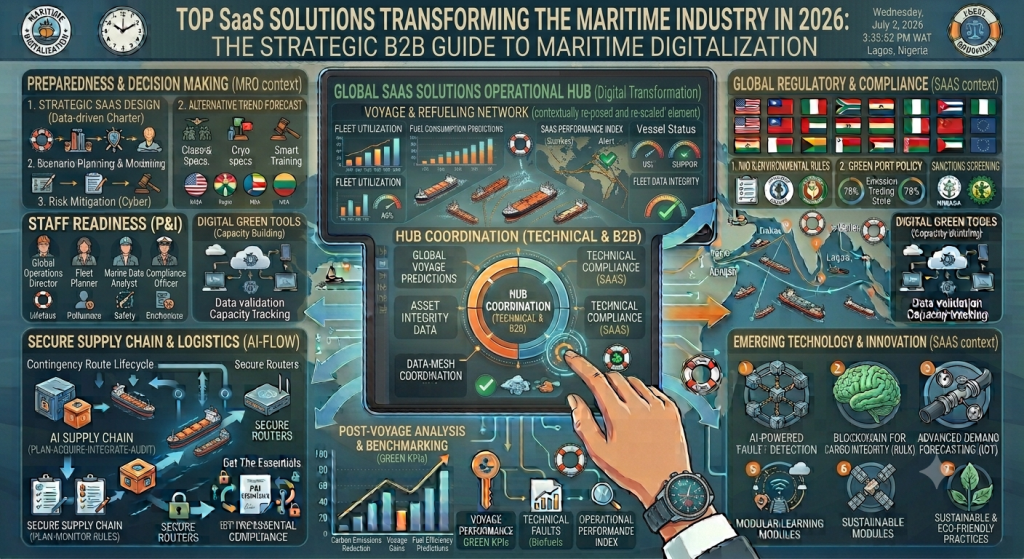
The global shipping sector is no longer just about moving physical assets across oceans. Operating in 2026, fleet managers, shipowners, and maritime logistics companies face a challenging operational environment characterized by stricter environmental regulations, rising marine fuel costs, and complex cross-border compliance demands.
To maintain profitability and protect margins, forward-thinking maritime businesses are turning to Software-as-a-Service (SaaS) models. This guide highlights the top enterprise-grade maritime SaaS platforms transforming the industry, with a focus on structural deployment, key features, and real-world Return on Investment (ROI).
Real-Time Digital Fleet Management & Planned Maintenance (PMS)
Modern, cloud-based fleet management SaaS tools serve as the central operating system for marine fleets. Rather than relying on static, disconnected spreadsheets, these platforms integrate Technical Maintenance, Spare Parts Inventory, and Crew Procurement into a single database.
[ Integrated Maritime ERP & PMS Architecture ]
│
┌────────────────────────────────┼────────────────────────────────┐
▼ ▼ ▼
[ Technical PMS ] [ Spares & Inventory ] [ Procurement PMS ]
• Planned Maintenance • QR-Code Part Tracking • Automated Requisitions
• Running-Hour Triggers • Critical Stock Thresholds • Digital RFQs & POs
• Anomaly & Wear Alerts • Multi-Vessel Stock Audits • API Integration to Suppliers
Leading Enterprise Platforms to Know
- Veson IMOS Platform: The industry standard for commercial voyage management, chartering, and post-fixture financial analytics.
- DNV ShipManager: A robust technical ship management suite that excels in managing maintenance, drydock planning, and structural compliance tracking.
- AMOS by SpecTec: A highly integrated ERP designed for planned maintenance, procurement, and HSQE (Health, Safety, Quality, and Environment) compliance.
Key B2B Benefits:
- Preventative vs. Reactive Repairs: Maintenance triggers are calculated automatically based on engine running hours or real-time IoT sensor data, reducing unexpected machine breakdowns.
- Inventory Optimization: These platforms link maintenance tasks directly to warehouse and shipboard spare parts counts to prevent critical stockouts.
Voyage Management and Supply Chain Optimization SaaS
In global maritime logistics, port delays and inefficient routing can cost vessel operators tens of thousands of dollars per day. Voyage Management Systems (VMS) use real-time weather routing and port performance data to streamline commercial cargo movement.
[ Voyage Optimization Cycle ]
│
┌─────────────────────────────┴─────────────────────────────┐
▼ ▼
[ Traditional Routing ] [ SaaS Optimized Routing ]
• Static great-circle paths • AI-driven weather routing
• High risk of heavy weather damage • Fuel & ETA trade-off models
• Port congestion wait times • Just-in-Time (JiT) port arrivals
Leading Enterprise Platforms to Know
- MarineTraffic (API Services): Delivers precise, real-time vessel tracking and predictive ETA metrics to optimize port logistics and fleet coordinates.
- Searoutes: A transit optimization platform that helps logistics managers calculate and verify the lowest-emissions routes for cargo transits.
- Veslink Voyage: A cloud-based platform that allows shipboard crews and shore-based operators to track voyage performance and fuel consumption in real time.
Operational Insight: Adopting Just-In-Time (JIT) arrival SaaS systems allows vessels to adjust their speed mid-voyage based on real-time port congestion data, helping fleets reduce fuel burn by up to 15% while avoiding long anchorage wait times.
AI-Powered Predictive Analytics and Fuel Optimization
Fuel costs typically make up 50% to 60% of a vessel’s total voyage operating expenses. AI-driven maritime SaaS platforms help operators optimize fuel use by analyzing weather patterns, ocean currents, and hull performance metrics.
How Machine Learning Lowers Fuel OPEX:
- Dynamic Weather Routing: Machine learning models analyze real-time meteorological forecasts, tidal currents, and wave resistance to identify the most fuel-efficient voyage path.
- Hull Fouling Detection: By comparing actual speed-power ratios with baseline sea-trial data, AI models can detect hull fouling (marine growth accumulation) and recommend optimal hull cleaning schedules to minimize fuel drag.
Cybersecurity SaaS for Modern Smart Ships
The rapid adoption of maritime IoT, remote diagnostics, and satellite connectivity (such as Starlink Maritime) has made ships more vulnerable to cyber threats.
[ Vessel Attack Surfaces in 2026 ]
│
┌─────────────────────────────┴─────────────────────────────┐
▼ ▼
[ Information Technology (IT) ] [ Operational Technology (OT) ]
• Crew Wi-Fi Networks • ECDIS Navigation Systems
• Port Agent & Customs Portals • Engine Control Units (ECUs)
• Administrative Shipboard PCs • Ballast & Cargo Control Systems
To secure both systems, modern maritime cybersecurity SaaS platforms provide endpoint protection, network segment monitoring, and automated compliance reporting in line with the International Maritime Organization’s (IMO) cybersecurity guidelines.
- Network Isolation: These platforms segment crew internet connections from critical bridge navigation systems (ECDIS) and engine control networks.
- Unified Threat Management: Maritime security software helps shore-based IT teams monitor and patch distributed vessel networks worldwide via a single cloud dashboard.
Digital Crewing, Payroll, and HR SaaS
Managing maritime crews involves coordinating international payrolls, tracking diverse flag-state certifications, and scheduling rotations across multiple time zones.
Leading Enterprise Platforms to Know
- SeaFare: A dedicated maritime payroll and crew HR platform designed to manage multi-currency disbursements and international tax compliance.
- DNV ShipManager (Crewing Module): Integrates certification tracking with rotation scheduling to ensure every vessel sails with fully compliant, properly licensed mariners.
By digitizing crew administration, ship managers can automate expiry alerts for critical seafarer certifications (such as STCW endorsements). This reduces the risk of compliance-related port detentions and ensures smoother crew handovers.
Environmental Compliance & ESG Reporting SaaS
The regulatory framework for global shipping has tightened significantly. With the IMO and the European Union enforcing strict limits on greenhouse gas emissions—including the EU Emissions Trading System (EU ETS) and Carbon Intensity Indicator (CII) metrics—ocean-going vessels must systematically track and report their emissions.
[ Fuel Flow Meters ] ──► [ Edge IoT Processing ] ──► [ Cloud SaaS Engine ] ──► [ Audit-Ready CII Reports ]
SaaS compliance platforms streamline this tracking process:
- Automated CII Calculation: Software automatically collects fuel consumption data to calculate and forecast a vessel’s annual Carbon Intensity Indicator (CII) rating, helping operators avoid regulatory penalties.
- Audit-Ready ESG Portals: These cloud systems generate verified, audit-ready carbon emissions reports for charterers, financial institutions, and port authorities.
Technical FAQ: Maritime SaaS Deployments
Q1: How do SaaS platforms maintain connectivity while vessels are far out at sea?
Modern maritime SaaS tools are designed to operate over hybrid-cloud architectures. They use lightweight on-board databases that cache operational data locally. When satellite connections (such as Starlink or VSAT) are down or weak, the system functions offline and synchronizes back to the main cloud servers once connectivity is restored.
Scale Computing
Q2: What is the average implementation timeline for an enterprise ship management SaaS?
For small to mid-sized fleets (5 to 15 vessels), a standard deployment can take 3 to 6 months. For large, multi-vessel global fleets with custom integrations (connecting to existing ERPs like SAP or Microsoft Dynamics), deployment may take 9 to 18 months, requiring structured phases for database migration and crew training.
Q3: How do maritime SaaS solutions protect vessels from GPS spoofing or AIS hacking?
Advanced voyage security platforms monitor AIS (Automatic Identification System) transmissions and cross-reference satellite position data with radar signals and inertial guidance systems. If a discrepancy is detected, the software alerts the bridge crew and shore-based security teams to potential spoofing attempts.
Q4: Can maritime SaaS platforms help reduce hull and machinery insurance premiums?
Yes. Insurance underwriters often offer favorable premiums to fleet operators who can provide verifiable maintenance records from a recognized Planned Maintenance System (PMS). Showing a history of systematic, preventative maintenance demonstrates a lower risk of machinery failure at sea.
9. Contextual B2B Ad Placement Opportunities
For maritime publishers, digital advertisers, and maritime service providers, this highly structured technical guide is optimized to support premium B2B ad placements:
- Technical Ad Placements: The technical breakdowns of planned maintenance and emissions tracking provide natural placements for ad units from Tier-1 marine engine manufacturers (such as Wärtsilä, Caterpillar, or MAN Energy Solutions) and satcom providers (Starlink Maritime, Inmarsat).
- Conversion Optimization: The clear headings and detailed comparison tables make this content highly readable for decision-makers, creating effective opportunities to showcase enterprise software demos, maritime consultancies, and specialized shipyard services.
Partner with Oitha Marine for Maritime Digitalization and Advisory
Successfully integrating advanced SaaS systems with physical ship operations requires a partner with hands-on technical experience. At Oitha Marine, we help shipowners, charterers, and port operators evaluate and deploy modern marine technologies while maintaining regulatory compliance.
SpecTec
Optimize your fleet’s digital workflow. Contact our technical advisory team today at oithamarine.com or visit Oitha Marine Technical Insights to schedule an operational assessment.
Recent Comments