
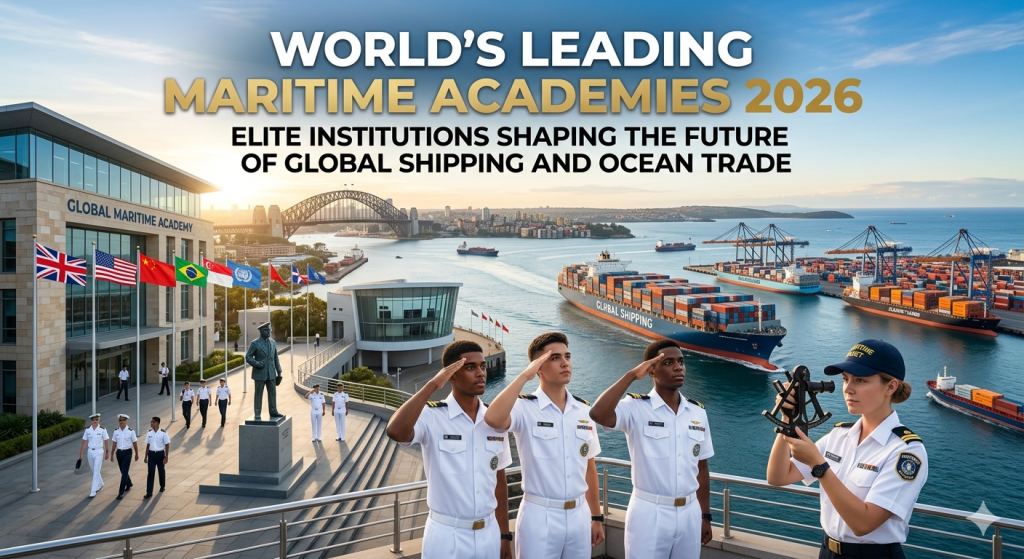
The global maritime industry remains the primary engine of international trade, carrying over 80% of world cargo volume across ocean routes. In 2026, as merchant fleets face tightening IMO 2026 Carbon Intensity Indicator (CII) metrics, real-time digital navigation platforms, and automated vessel propulsion systems, the structural demand for highly qualified maritime officers has reached a critical threshold.
According to the joint 2026 BIMCO/ICS Seafarer Workforce Report, the global commercial fleet faces an acute shortage of 39,100 STCW-certified officers. This structural deficit is projected to expand to 113,735 officers by 2030 unless institutional pipeline throughput increases substantially.
GLOBAL OFFICER SUPPLY DEFICIT (STCW CERTIFIED)
Current Shortage (2026): [████████████] 39,100 Officers
Projected Gap (2030): [███████████████████████████████████] 113,735 Officers
Required Annual Intake: ~22,747 New Officers / Year
Consequently, top maritime academies have evolved from traditional seamanship schools into tech-integrated research hubs and strategic talent pipelines for multinational carriers, offshore energy conglomerates, defense forces, and port authorities.
Executive Summary: Strategic Drivers of Maritime Education in 2026
Modern maritime education operates at the intersection of regulatory compliance, environmental engineering, software integration, and high-risk operational leadership. Four main forces shape curriculum development and recruitment partnerships in 2026:
- IMO Decarbonization Mandates: Compliance with MARPOL Annex VI, EEXI standards, and CII ratings requires chief engineers and deck officers to manage alternative fuel systems (LNG, green ammonia, methanol) alongside dynamic route-optimization platforms.
- Autonomous & AI-Assisted Operations: Navigation bridge design now relies heavily on digital twin systems, automated radar plotting aids (ARPA), and AI-driven collision-avoidance telemetry.
- Offshore Energy Transition: Expansion in fixed and floating offshore wind, deep-sea mineral survey work, and Subsea Umbilicals, Risers, and Flowlines (SURF) operations demands specialized dynamic positioning (DP) skill sets.
- Maritime Cyber Resilience: As vessels become interconnected Internet-of-Things (IoT) ecosystems, maritime academies must integrate ISO/IEC cybersecurity standards into marine transportation degree programs.
World’s Elite Maritime Academies in 2026: Institutional Analysis
GLOBAL ACADEMY MATRIX
NORTH AMERICA EUROPE ASIA-PACIFIC
┌─────────────────┐ ┌─────────────────┐ ┌─────────────────┐
│ • USMMA (USA) │ │ • WMU (Sweden) │ │ • SMU (China) │
│ • MMA (USA) │ │ • NMU (Neth.) │ │ • DMU (China) │
└─────────────────┘ └─────────────────┘ │ • KMOU (S.Korea)│
│ • AMC (Aust.) │
└─────────────────┘
The elite institutions below were selected based on international accreditation standards, simulator technology investments, sea-time program integration, research output, and post-graduation placement rates with Tier-1 carriers.
1. World Maritime University (WMU) — Malmö, Sweden
- Governance Focus: Global Maritime Policy, Maritime Law, Ocean Sustainability, Environmental Administration.
- Key Strategic Advantage: Established under the auspices of the International Maritime Organization (IMO), WMU serves as the global benchmark for postgraduate maritime education, ocean governance, and policy formulation.
Academic & Industry Footprint
WMU produces senior maritime administrators, port authority directors, and policymakers. Its research centers lead global studies on maritime decarbonization strategies, gender diversity in seafarer workforces, and international maritime law enforcement.
Key Metrics
- Focus Level: Postgraduate (M.Sc., Ph.D.)
- Primary Career Destinations: IMO, UN Agencies, National Maritime Administrations, Classification Societies (DNV, ABS, Lloyd’s Register).
2. United States Merchant Marine Academy (USMMA) — Kings Point, USA
- Specializations: Marine Engineering, Nautical Science, Marine Transportation, Naval Architecture.
- Key Strategic Advantage: Combines rigorous academic coursework with the “Sea Year” program, where midshipmen spend an entire academic year gaining hands-on operational experience aboard commercial merchant vessels and naval ships.
Academic & Industry Footprint
USMMA graduates hold dual credentials: a Bachelor of Science degree and an uninspected Coast Guard license as a Third Mate or Third Assistant Engineer. Graduates fulfill service obligations as commissioned officers in any military branch or as licensed officers in the U.S. Merchant Marine.
Key Metrics
- Graduate Placement Rate: ~100% within 6 months.
- Primary Career Destinations: U.S. Military Sealift Command, Commercial Energy Fleets, Defense Contracting, Intermodal Logistics Management.
3. Shanghai Maritime University (SMU) — Shanghai, China
- Specializations: Smart Port Operations, Shipping Logistics Management, Supply Chain Automation, Marine Engineering.
- Key Strategic Advantage: Positioned alongside the Port of Shanghai—the world’s busiest container port—SMU maintains direct pipeline agreements with state-owned shipping enterprises (e.g., COSCO Shipping) and global terminal operators.
Academic & Industry Footprint
SMU houses deep-sea navigation simulation centers and container port engineering labs. Its maritime law and economics programs drive policy development for trans-Pacific shipping corridors and Asian regional supply chains.
Key Metrics
- Specialized Infrastructure: Deep-Water Port Simulation Complex.
- Primary Career Destinations: International Logistics Conglomerates, Port Terminal Operators, Ocean Freight Trading Firms.
4. Dalian Maritime University (DMU) — Dalian, China
- Specializations: Navigation Science, Marine Technology, Offshore Operations, Marine Environmental Protection.
- Key Strategic Advantage: Designated as a key maritime institution by the Chinese Ministry of Transport, DMU operates its own ocean-going training vessels and advanced nautical engine room simulators.
Academic & Industry Footprint
DMU focuses heavily on the technical aspects of seamanship, marine engineering, and smart vessel operational safety. It supplies deck and engineering officers to major Asia-Pacific carriers while generating academic research in autonomous ship control systems.
Key Metrics
- Fleet Support: Dedicated Ocean-Going Training Vessels.
- Primary Career Destinations: Global Container Carriers, Tanker Operators, Ship Design Institutes.
5. Australian Maritime College (AMC) — Launceston, Australia
- Specializations: Ocean Engineering, Maritime Engineering, Naval Architecture, Offshore Hydrodynamics.
- Key Strategic Advantage: AMC operates premier hydrodynamic research facilities, including a 100-meter towing tank, a cavitation tunnel, and a specialized model test basin.
Academic & Industry Footprint
AMC serves as the primary maritime training and research center for the Indo-Pacific region. Its curriculum emphasizes offshore energy engineering (both oil/gas and offshore wind infrastructure), marine spatial planning, and naval architecture.
Key Metrics
- Research Infrastructure: Australia’s Premier Hydrodynamic Test Basins.
- Primary Career Destinations: Offshore Renewable Energy Firms, Naval Engineering Contractors, Defense Maritime Agencies.
6. STC Publishing / Netherlands Maritime University — Rotterdam, Netherlands
- Specializations: Maritime Economics, Port Management, Green Shipping Logistics, Inland Waterway Operations.
- Key Strategic Advantage: Integrated directly within the Port of Rotterdam logistics ecosystem, focusing heavily on short-sea shipping, inland navigation, and sustainable supply chains.
Academic & Industry Footprint
NMU excels in executive maritime education and applied professional master’s programs. Its focus centers on transition management—helping shipping enterprises convert fleets to low-carbon fuels and digitize port logistics operations.
Key Metrics
- Industry Connection: Direct integration with Port of Rotterdam corporate networks.
- Primary Career Destinations: European Port Authorities, Global Freight Forwarding Organizations, Maritime Finance Houses.
7. Maine Maritime Academy (MMA) — Castine, USA
- Specializations: Vessel Operations, Power Engineering, Marine Systems Infrastructure, Small Vessel Operations.
- Key Strategic Advantage: Hands-on operational focus supported by the training ship State of Maine, offering immersive sea-time experiences across international voyages.
Academic & Industry Footprint
MMA routinely records high career placement rates due to its emphasis on applied mechanical engineering and real-world sea-time training. Its graduates are recruited by commercial shipping, offshore drilling, power generation, and facility management companies.
Key Metrics
- Hands-on Focus: High simulator-to-student and vessel-to-student training ratios.
- Primary Career Destinations: Commercial Merchant Fleets, Offshore Support Operators, Energy Utility Engineering.
8. Korea Maritime & Ocean University (KMOU) — Busan, South Korea
- Specializations: Advanced Shipbuilding Technology, Marine Engine Systems, Ocean Resource Development, Maritime IT Integration.
- Key Strategic Advantage: Located in Busan—adjacent to global shipbuilding hubs like HD Hyundai, Samsung Heavy Industries, and Hanwha Ocean.
Academic & Industry Footprint
KMOU plays a critical role in South Korea’s maritime export economy. Its curriculum integrates marine engineering with cutting-edge vessel design, including smart ship sensors, LNG fuel storage systems, and automated propulsion mechanics.
Key Metrics
- Industrial Alignment: Direct technological collaboration with major South Korean shipyards.
- Primary Career Destinations: Ship Construction Enterprises, Classification Societies, Marine Equipment Manufacturers.
Technical & Operational Benchmark Comparison
| Academy Name | Primary Geographic Focus | Core Specialization | On-Site Research / Vessel Assets | Primary Recruiter Types |
| World Maritime Univ. | Global / International | Governance, Law, Policy | IMO Policy Labs & Research Hubs | UN Agencies, Governments, Flag States |
| USMMA | North America / Global | Deck & Engine Officers, Naval Architecture | Sea Year Commercial Fleet Integration | Merchant Navy, Military Sealift, Energy |
| Shanghai Maritime Univ. | Asia-Pacific | Smart Logistics, Port Engineering | Deep-Water Port Simulators | COSCO, Terminal Operators, Supply Chain |
| Dalian Maritime Univ. | Asia / Global | Navigation Science, Engine Tech | Dedicated Ocean-Going Training Ships | Container Fleets, Tanker Lines, Shipyards |
| Australian Maritime College | Indo-Pacific / Global | Offshore Engineering, Hydrodynamics | 100m Towing Tank & Cavitation Tunnel | Offshore Wind, Defense Contractors, SURF |
| Netherlands Maritime Univ. | Europe | Port Economics, Sustainable Logistics | Port of Rotterdam Live Logistics Labs | European Port Authorities, Logistics |
| Maine Maritime Academy | North America | Practical Marine Systems & Vessel Ops | Training Ship State of Maine | Commercial Shipping, Power Plants |
| Korea Maritime & Ocean Univ. | East Asia / Global | Shipbuilding Tech, Smart Vessels | Smart Ship Testbeds & Engine Labs | Shipyards, Tech Suppliers, Engine Makers |
Five Quality Identifiers of Tier-1 Maritime Academies
To retain elite status in 2026, maritime academies must meet five operational criteria:
QUALIFYING CRITERIA FOR TIER-1 STATUS
[STCW & IMO Accreditation] ────> Global Ticket Validity
[Full-Mission Simulators] ────> Real-Time Emergency Scenarios
[Sea-Time Berth Guarantees] ────> Accelerated License Readiness
[Alternative Fuel Labs] ────> Compliance with IMO 2026 / CII
[Corporate Pipelines] ────> Direct Placement with Tier-1 Carriers
- Full STCW Compliance & IMO Flag-State Recognition: Curricula must be fully aligned with the International Convention on Standards of Training, Certification and Watchkeeping for Seafarers (STCW), ensuring cadet sea-time certificates are recognized globally.
- Full-Mission Bridge & Engine Room Simulators: High-fidelity simulation facilities capable of replicating adverse weather, emergency shiphandling, dynamic positioning, and cyber-attack response scenarios.
- Structured Cadets-to-Berth Pipelines: Guaranteed sea-time placement agreements with commercial vessel owners to ensure students complete mandatory engine or deck watchkeeping hours without operational delays.
- Alternative Fuels & Clean-Tech Infrastructure: Hands-on training modules covering cryogenic fuel handling (LNG/ammonia), battery-hybrid propulsion systems, and scrubber system mechanics.
- Direct Recruitment Partnerships with Tier-1 Carriers: Strategic hiring channels established with global ocean carriers (e.g., Maersk, MSC, CMA CGM, Hapag-Lloyd) and offshore operators.
Post-Graduation Career Horizons & Salary Expectations
Graduates entering the maritime sector benefit from competitive compensation structures due to the specialized nature of shipboard operations and the current global officer shortage.
CAREER PATHWAY & PAY SCALE
[ Cadets / Junior Officers ] ──> $45,000 – $75,000 / year
│
▼
[ Senior Officers / Engineers ] ──> $90,000 – $140,000 / year
│
▼
[ Master Mariners / Chief Eng. ] ──> $130,000 – $220,000+ / year
│
▼
[ Shore-Based Marine Executives ] ──> $110,000 – $250,000+ / year
High-Demand Career Paths
- Master Mariner (Ship Captain): Overall command of commercial vessels, responsible for navigation safety, crew management, cargo integrity, and regulatory compliance.
- Chief Marine Engineer: Head of shipboard engineering, overseeing main engine propulsion, power generation, auxiliary equipment, and fuel efficiency systems.
- Offshore Dynamic Positioning (DP) Operator: Specialist responsible for maintaining vessel position during subsea construction, drilling, or offshore wind installation.
- Port Operations & Terminal Manager: Shore-based executive supervising container terminal logistics, berth allocation, automated crane operations, and intermodal freight connections.
- Maritime Safety Inspector & Marine Surveyor: Technical auditor assessing vessel structural integrity, safety gear, engine maintenance, and flag-state compliance.
- Naval Architect & Marine Engineer: Shore-based designer developing energy-efficient hull forms, propulsion integration, and structural layouts for newbuild ships.
Strategic Talent Sourcing: A Blueprint for Corporate Maritime Recruiters
For shipping operators, offshore contractors, and logistics companies seeking to address the officer shortage, relying solely on traditional recruiting channels is no longer sufficient. Enterprise HR teams should deploy a proactive sourcing strategy:
- Sponsor Cadet Sea-Time Berths: Partner directly with academies like USMMA, DMU, or MMA to sponsor cadet training berths on active commercial vessels, creating early employer brand loyalty.
- Fund Custom Simulator Training Modules: Invest in specialized software suites (e.g., dual-fuel engine handling, DP3 operations) at target institutions to ensure graduates are trained on your fleet’s exact technical configurations.
- Establish Continuous Education Scholarships: Provide mid-career engineering and deck officers with funding for postgraduate specialization at institutions like World Maritime University or Australian Maritime College.
Frequently Asked Questions (FAQ)
What is the single most important factor when choosing a maritime academy?
The most critical factor is STCW certification and flag-state accreditation. Without recognized STCW credentials, sea-time and academic credits will not count toward international officer licenses (Third Mate / Third Assistant Engineer).
How does the current seafarer officer shortage affect new academy graduates?
The officer shortfall reported by BIMCO/ICS (over 39,000 officers needed currently) translates into strong placement rates, signing bonuses, and faster career progression paths for newly licensed deck and engineering officers.
Are shore-based maritime careers accessible directly after graduation?
Yes. While many graduates spend their initial years at sea to earn higher-level licenses (Chief Engineer / Master Mariner), degree tracks in Maritime Logistics, Port Engineering, Naval Architecture, and Shipping Finance lead directly to shore-based corporate roles.
How are environmental regulations (IMO 2026/CII) changing academy curricula?
Academies have updated engine room training to cover dual-fuel systems (methanol, LNG, ammonia), ballast water treatment systems, scrubber operation, and digital voyage optimization to meet stricter international carbon intensity mandates.
What is the standard duration of a maritime academy degree program?
Most Bachelor of Science degree programs run 4 years, which includes required academic coursework, full-mission simulator hours, and mandatory sea-time training onboard merchant or training vessels.
Build Your Future-Proof Maritime Talent Pipeline
The global shipping industry relies on skilled human capital to navigate digital transitions and decarbonization requirements. Whether you are a corporate recruiter securing qualified officers or an enterprise executive building technical capacity, partnering with top maritime institutions is essential.
- For Maritime Enterprise Leaders: Contact our industry partnership team to evaluate customized cadet sponsorship models, simulator integration programs, and executive training frameworks.
- For Technical Recruiters: Request our 2026 Global Maritime Graduate Benchmark Report to analyze hiring trends across elite international institutions. visit our contact page
Recent Comments